
Gold prices decline amid escalating Middle East tensions
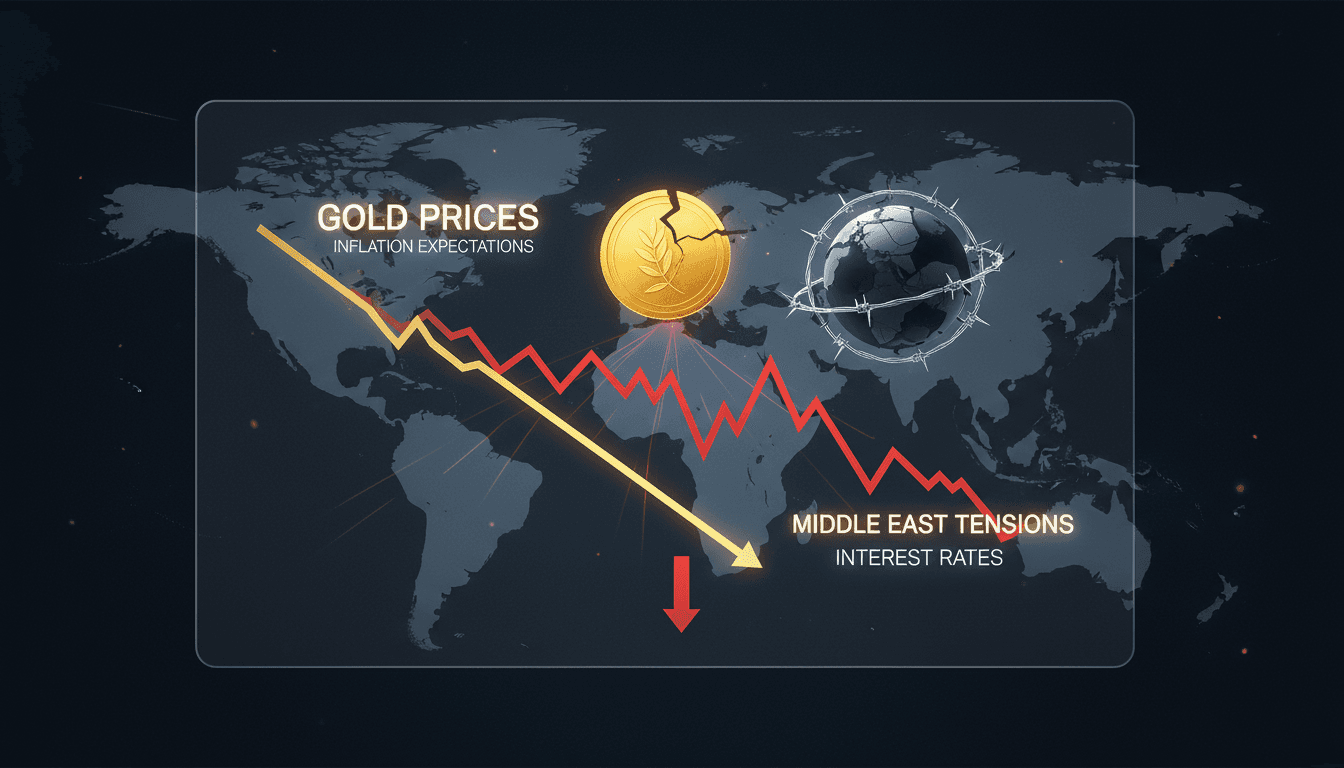
Here's what it means for you.
The recent decline in gold prices signals a shift in market sentiment as geopolitical tensions rise. Investors are increasingly concerned about inflation and potential interest rate hikes by the U.S. Federal Reserve, which could reshape financial strategies. As the situation develops, stakeholders will need to reassess their positions in commodities and other assets. The ongoing conflict in the Middle East is likely to have lasting implications for global markets, particularly in commodities. Traders are already pricing in a significant chance of interest rate adjustments, which could further influence investment decisions.
What happened
Gold prices have fallen significantly as the conflict in the Middle East escalates, impacting inflation expectations. Spot gold was down 0.6% at $4,034.42 per ounce, while U.S. gold futures for August delivery lost 0.3% to $4,039.90. The renewed hostilities have also contributed to rising oil prices, which are now a concern for inflation.
Market sentiment has shifted dramatically, erasing previous optimism regarding easing inflation. Traders are now pricing in a 73% chance of a Federal Reserve interest rate hike in December, reflecting heightened concerns about the economic outlook. Recent U.S. inflation figures indicated a slowdown, but the latest geopolitical tensions may alter this trend.
The Context
The escalation of conflict in the Middle East has led to increased oil prices, which in turn raises concerns about inflation and potential interest rate hikes by the Federal Reserve. The U.S. has launched attacks on Iran's coastal defenses and missile sites, prompting Iran to retaliate by targeting U.S. military sites in neighboring countries. This cycle of hostilities has created a volatile environment for investors.
As the situation evolves, market participants are closely monitoring inflation data and Federal Reserve communications. The interplay between geopolitical events and economic indicators will be crucial in shaping future market dynamics. Stakeholders must remain vigilant as these developments unfold.
Takeaway
The ongoing conflict in the Middle East is likely to continue influencing gold prices and inflation expectations in the near future. Observers should watch for remarks from Federal Reserve officials, which could provide insight into future monetary policy. Additionally, further developments in the Middle East conflict may significantly impact global markets and commodity prices.
As traders adjust their strategies in response to these events, the potential for volatility remains high. The interplay between geopolitical tensions and economic indicators will be critical in determining the trajectory of gold and other commodities.
Global markets, investing, and macroeconomics from a premier financial newsroom.
"Bloomberg is respected for in-depth financial reporting and data-driven analysis."
— A47 Editor
Gold Heads for Weekly Fall as Hormuz Strikes Raise Fed-Hike Bets
Gold prices are poised for their largest weekly decline since early June, primarily driven by escalating tensions in the Middle East, particularly renewed hostilities involving U.S. military actions in Iran. This situation has heightened speculation ...
Regional and international reporting focused on Middle Eastern politics, diplomacy, and economics.
"Asharq Al-Awsat is a Saudi-owned international newspaper reflecting mainstream Gulf political perspectives."
— A47 Editor
Gold Falls as Mideast Conflict Dims Easing Inflation Hopes
Gold prices have fallen as escalating tensions in the Middle East, particularly between the U.S. and Iran, have dimmed hopes for easing inflation. The price of gold dropped by 0.6% to $4,034.42 per ounce, reflecting investor concerns over rising oil ...
Business, markets, economy, and corporate news with strong UAE and regional relevance.
"Emirates 24|7 business coverage tends to center UAE markets, property, regulation, and regional economic developments."
— A47 Editor
Gold falls as Mideast escalation dims hopes of easing inflation
Gold prices declined by 0.6% to $4,034.42 per ounce amid escalating tensions in the Middle East, particularly following U.S. military actions against Iran, which have driven oil prices higher and raised inflation concerns. This drop in gold prices re...