
Gold prices decline as Middle East tensions escalate
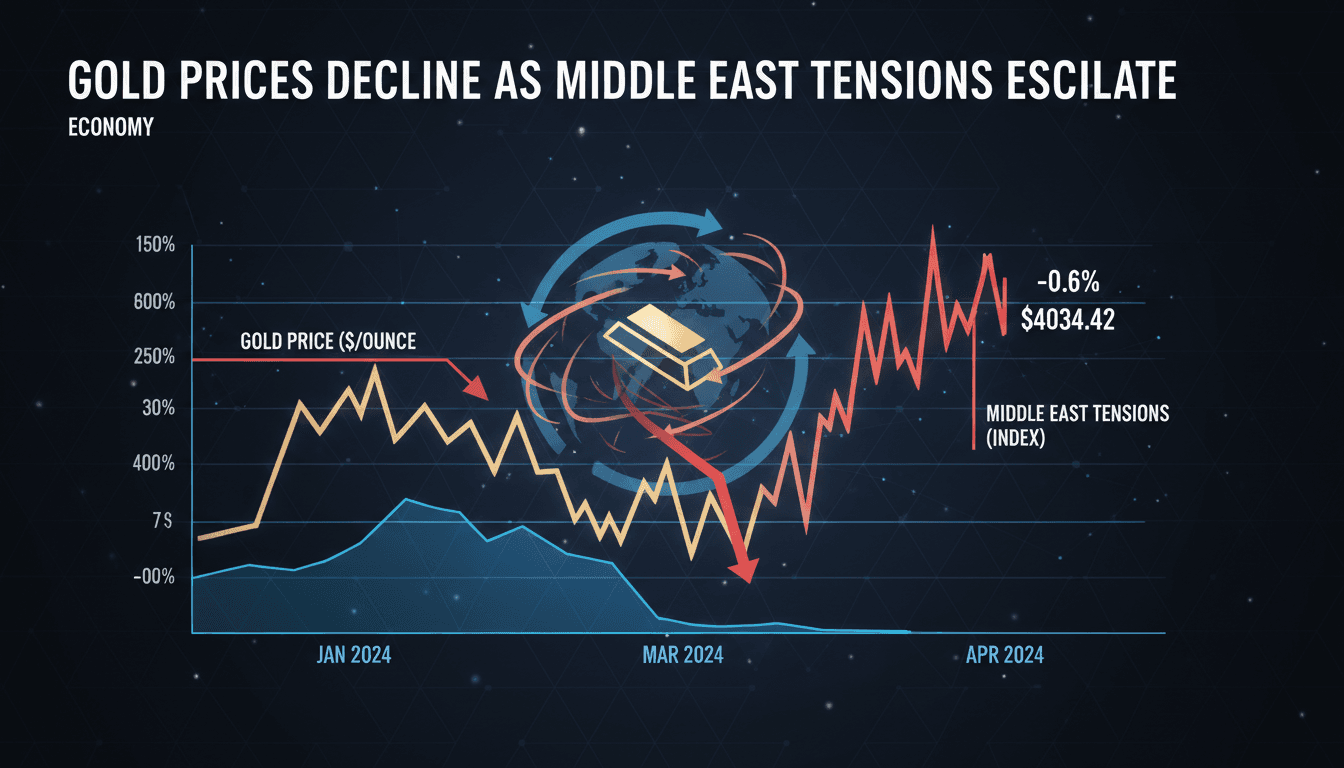
Here's what it means for you.
The recent decline in gold prices signals a shift in investor sentiment as geopolitical tensions rise in the Middle East. This drop follows a period of optimism regarding inflation, indicating that market dynamics are heavily influenced by external conflicts. Investors should be prepared for continued volatility in precious metal prices as the situation develops. As tensions escalate, the implications for economic stability become more pronounced. Stakeholders in the commodities market will need to closely monitor these developments to navigate potential risks and opportunities.
What happened
Gold prices fell by 0.6% to $4034.42 per ounce amid escalating tensions in the Middle East. This decline comes after a previous increase of over 2% driven by inflation concerns. The drop in gold prices reflects broader anxieties regarding economic stability as geopolitical conflicts unfold.
In addition to gold, other precious metals also experienced declines, with silver down 1.1% and platinum down 0.6%. The market is reacting to the uncertainty created by these tensions, which could lead to further fluctuations in precious metal prices.
The Context
The recent decline in gold prices is significant as it highlights the interplay between geopolitical events and market sentiment. Investors are increasingly concerned about the implications of ongoing conflicts in the Middle East, which have overshadowed previous optimism regarding inflation easing.
The timing of this decline is crucial, as it follows a notable rise in gold prices just a day prior. As stakeholders assess the situation, the potential for continued volatility in precious metals becomes apparent, making it essential for investors to stay informed.
Takeaway
Looking ahead, the ongoing conflict in the Middle East may continue to impact precious metal prices in the near future. Investors should monitor developments in regional geopolitical tensions and their potential effects on market dynamics. Additionally, changes in inflation rates will be critical to watch as they could further influence commodity prices.
The outlook for gold and other precious metals remains uncertain, emphasizing the need for vigilance among investors. As the situation evolves, the market will likely respond to both regional developments and broader economic indicators.
Sports reporting with a focus on Saudi and regional competitions.
"Okaz sports coverage is broad and audience-friendly, with strong attention to Saudi teams and leagues."
— A47 Editor
الذهب يتراجع مع تصاعد التوترات في الشرق الأوسط
Gold prices have declined today as tensions in the Middle East continue to escalate, with spot gold dropping 0.6% to $4,034.42 per ounce and August futures falling 0.3% to $4,039.90. Other precious metals also saw declines, with silver down 1.1% to $...
Pan-Arab news coverage spanning politics, business, sports, and regional affairs.
"Asharq Al-Awsat reflects a broad Arab editorial perspective with strong attention to regional geopolitics."
— A47 Editor
الذهب يتراجع مع تصاعد التوتر في الشرق الأوسط
Gold prices have declined as tensions in the Middle East escalate, undermining recent optimism regarding inflation reduction. This drop reflects a broader concern about geopolitical instability affecting market stability.
Arabic-language economic and business reporting with strong UAE market relevance.
"Emarat Al Youm business coverage often centers UAE property, banking, consumer issues, and economic policy."
— A47 Editor
تراجع أسعار الذهب والفضة تراجع أسعار الذهب والفضة
Gold prices have declined today following a rise of over 2% in the previous session, as the increase in oil prices has raised inflation concerns.