
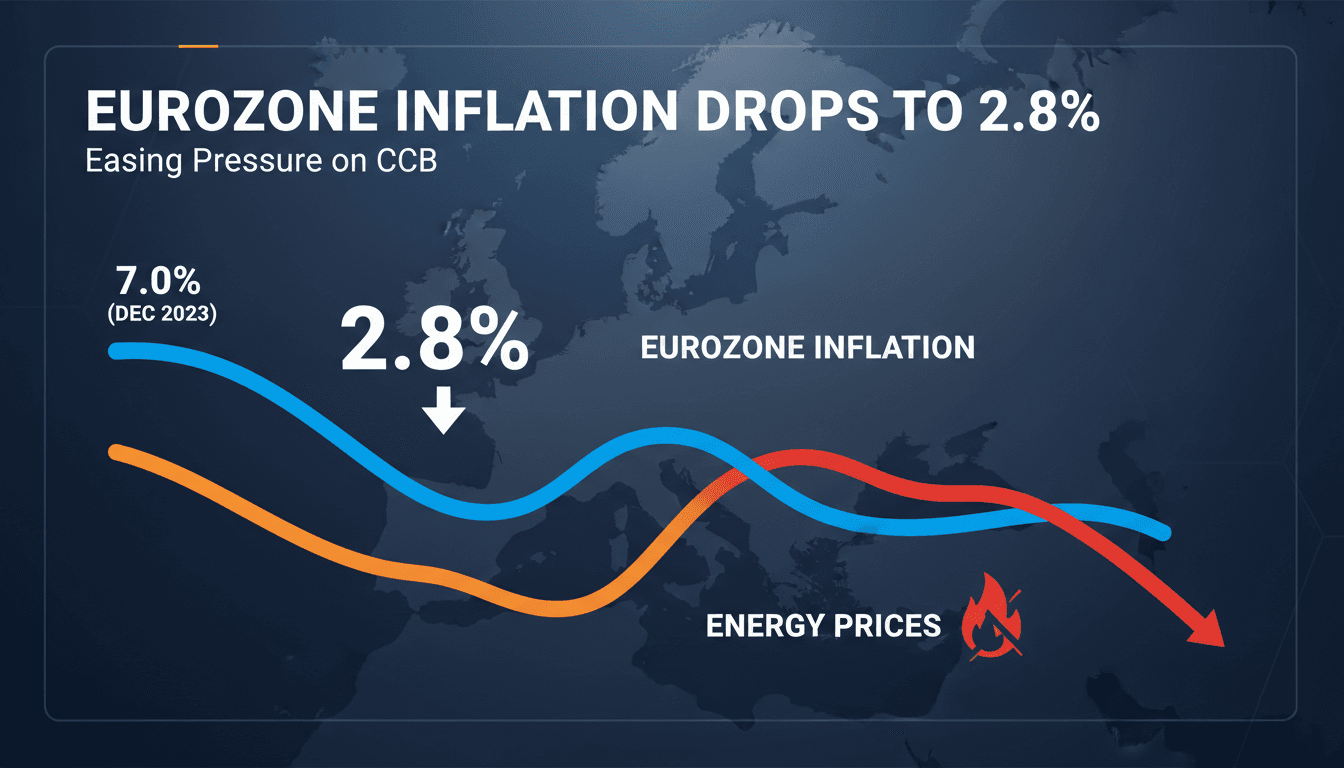
Eurozone inflation drops to 2.8% easing pressure on ECB
Here's what it means for you.
The recent decline in Eurozone inflation to 2.8% signals a potential shift in monetary policy for the European Central Bank (ECB). This easing of inflationary pressures, primarily driven by falling energy prices, may allow the ECB to adopt a more cautious approach to interest rate hikes. For businesses and consumers, this could mean a more stable economic environment in the near future. As inflation stabilizes, the ECB may prioritize economic growth over aggressive monetary tightening. This shift could foster a more favorable climate for investment and spending across the Eurozone.
What happened
In June, Eurozone inflation fell to 2.8%, marking a significant easing of pressures on the European Central Bank. This decline is attributed to decreasing energy costs, which have played a crucial role in alleviating inflationary concerns. Notably, this is the first slowdown in inflation in France since the onset of the Iran war, highlighting a broader trend across the region.
The current inflation rate of 2.8% is significant for monetary policy decisions, as it reduces the urgency for the ECB to raise interest rates. This development comes at a critical time when economic stability is paramount for the Eurozone.
The Context
The decline in inflation is a welcome relief for the ECB, which has faced mounting pressure to combat rising prices. Stakeholders, including businesses and consumers, are closely monitoring these developments, as they have direct implications for economic growth and stability. The timing of this inflation drop is particularly relevant, given the ongoing geopolitical tensions that have influenced energy prices.
As energy prices stabilize, the ECB may find itself in a position to maintain current interest rates. This could alleviate concerns over aggressive rate hikes that might hinder economic recovery in the region.
Takeaway
Looking ahead, the ECB's upcoming policy decisions will be crucial in shaping the economic landscape of the Eurozone. With inflation easing, the central bank is likely to adopt a more cautious stance in its monetary policy. Observers should watch for further trends in energy prices and their impact on inflation, as these factors will play a significant role in the ECB's decision-making process.
The potential for a more stable economic environment could support growth and investment, benefiting both businesses and consumers in the region.
Social/economic commentary and analysis relevant to business and markets.
"WSJ blends data-driven economic insight with commentary on policy and society."
— A47 Editor
Eurozone Inflation Declines as Energy Shock Fades in Relief for ECB
Eurozone inflation has decreased to 2.8% in June, a significant drop that suggests the European Central Bank (ECB) may opt to maintain interest rates in its upcoming meeting. This decline is attributed to a reduction in energy costs, which has allevi...
Pan-Arab news coverage spanning politics, business, sports, and regional affairs.
"Asharq Al-Awsat reflects a broad Arab editorial perspective with strong attention to regional geopolitics."
— A47 Editor
تراجع التضخم في منطقة اليورو إلى 2.8 في المائة خلال يونيو بأكثر من التوقعات
Inflation in the Eurozone decreased to 2.8% in June, surpassing expectations and easing pressure on the European Central Bank to continue raising interest rates this month.
Global markets, investing, and macroeconomics from a premier financial newsroom.
"Bloomberg is respected for in-depth financial reporting and data-driven analysis."
— A47 Editor
French Inflation Eases to Lowest Since March as Oil Prices Drop
French inflation has eased to its lowest level since March, primarily due to a decline in energy costs, marking the first slowdown since the onset of the Iran conflict. This development alleviates pressure on the European Central Bank (ECB) regarding...