
Central Banks Maintain Hawkish Stance Despite US-Iran Peace Agreement
Here's what it means for you.
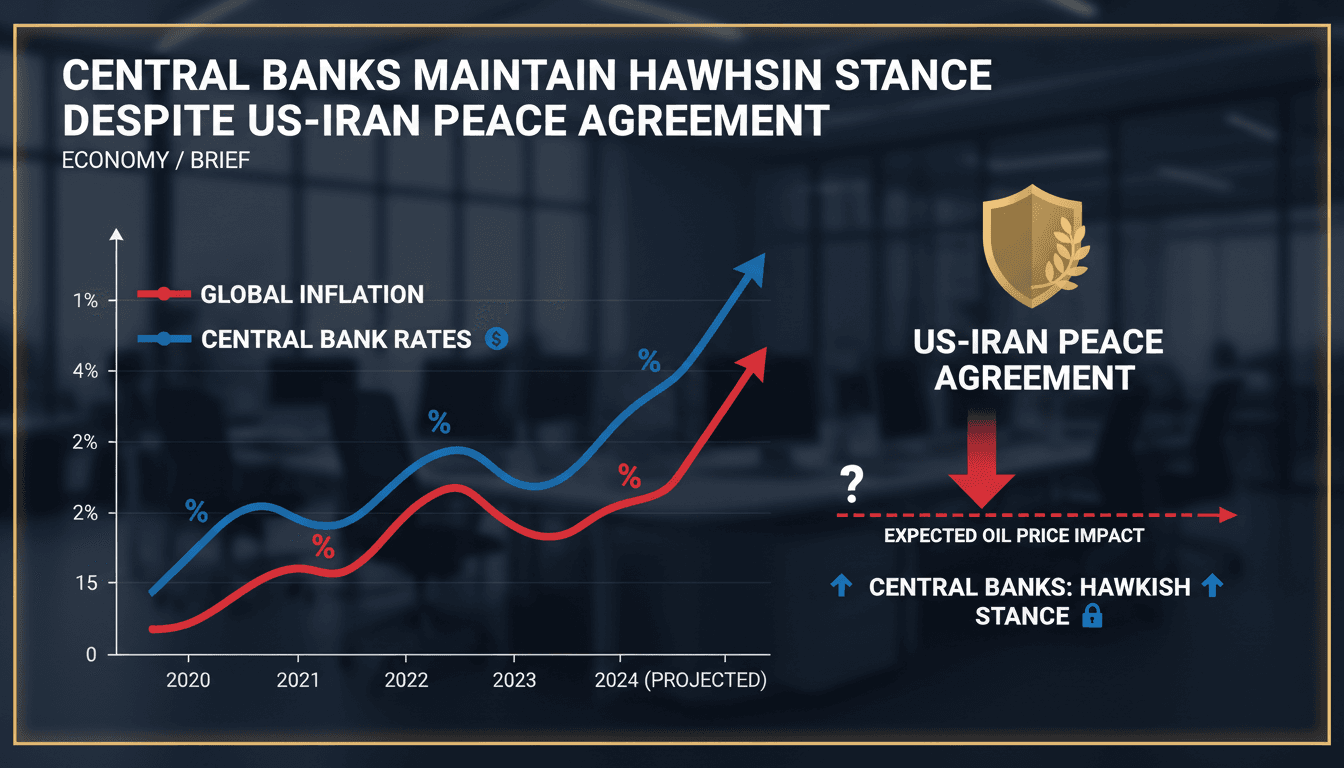
The recent peace agreement between the US and Iran has not shifted the monetary policy landscape for major central banks. The US Federal Reserve and the European Central Bank remain focused on combating inflation, indicating that interest rates may continue to rise. This cautious approach suggests that market participants should prepare for potential rate hikes despite geopolitical developments. Central banks are signaling that their strategies will remain closely tied to economic data and market conditions. As inflation continues to be a pressing concern, the implications for borrowing costs and investment strategies could be significant.
What happened
Despite the recent peace agreement between the US and Iran, major central banks, including the US Federal Reserve and the European Central Bank, are unlikely to change their interest rate policies. Officials have indicated that the deal may not significantly impact their strategies to combat inflation, suggesting that further rate hikes could still be on the table. The US Federal Reserve is currently holding interest rates steady at 0%, reflecting a cautious approach amid ongoing inflation concerns.
The ECB has expressed skepticism regarding the Iran deal's ability to resolve the ongoing energy shock. This stance underscores the central banks' commitment to controlling inflation, even in the face of geopolitical developments. As a result, the central banks are expected to continue tightening monetary policy as necessary.
The Context
The backdrop of this situation involves a complex interplay of geopolitical events and economic realities. The peace agreement between the US and Iran is seen as a temporary measure, and central banks are focused on the long-term implications for inflation and energy prices. The ECB and the US Federal Reserve are key stakeholders in this narrative, as their policies directly influence global financial markets.
Central banks have been grappling with rising inflation rates, which have prompted them to adopt a hawkish stance. The timing of their decisions is critical, as they must balance the potential benefits of geopolitical agreements against the pressing need to stabilize prices. This ongoing tension highlights the challenges faced by policymakers in navigating both economic and political landscapes.
Takeaway
Looking ahead, market participants should closely monitor upcoming central bank meetings for potential rate changes. Economic indicators that could influence inflation and interest rate decisions will be crucial in shaping the future monetary policy landscape. The central banks' commitment to tightening suggests that they will remain vigilant in their efforts to address economic challenges.
As geopolitical events unfold, the relationship between these developments and central bank policies will be essential to watch. The ongoing economic challenges may prompt further adjustments in monetary policy, even in light of recent agreements.
Pan-Arab news coverage spanning politics, business, sports, and regional affairs.
"Asharq Al-Awsat reflects a broad Arab editorial perspective with strong attention to regional geopolitics."
— A47 Editor
البنوك المركزية تواصل التشدد رغم اتفاق واشنطن وطهران
Despite a temporary peace agreement between the United States and Iran, major central banks continue to adopt a strict approach in combating inflation. This indicates that the financial institutions are prioritizing economic stability over geopolitic...
Macro commentary, policy analysis, growth/inflation themes, and global outlooks.
"Contextual macro coverage that complements day-to-day market headlines."
— A47 Editor
Iran peace not stopping central banks from raising borrowing costs
Despite a recent peace deal between the United States and Iran, central banks, including the Federal Reserve and the Bank of England, are expected to maintain or raise interest rates due to ongoing inflation concerns. The Federal Reserve is likely to...
UAE-based English-language newspaper covering regional politics, economics, and global affairs.
"The National reflects Emirati policy perspectives while maintaining international editorial standards."
— A47 Editor
US Fed holds rates steady as more officials see increase as next move
The US Federal Reserve has decided to hold interest rates steady, indicating a cautious approach amid ongoing economic uncertainties, particularly inflation concerns linked to geopolitical tensions, including the conflict with Iran. This decision was...
Global markets, investing, and macroeconomics from a premier financial newsroom.
"Bloomberg is respected for in-depth financial reporting and data-driven analysis."
— A47 Editor
ECB Officials Say Iran Deal Isn’t Enough to Fix Energy Shock
European Central Bank officials have indicated that a peace deal between the US and Iran may not be sufficient to prevent further interest rate hikes, despite the potential for reduced inflationary pressures. This stance reflects ongoing concerns abo...