
Indian Rupee Hits Two-Month Low Amid Rising Oil Prices and Geopolitical Tensions
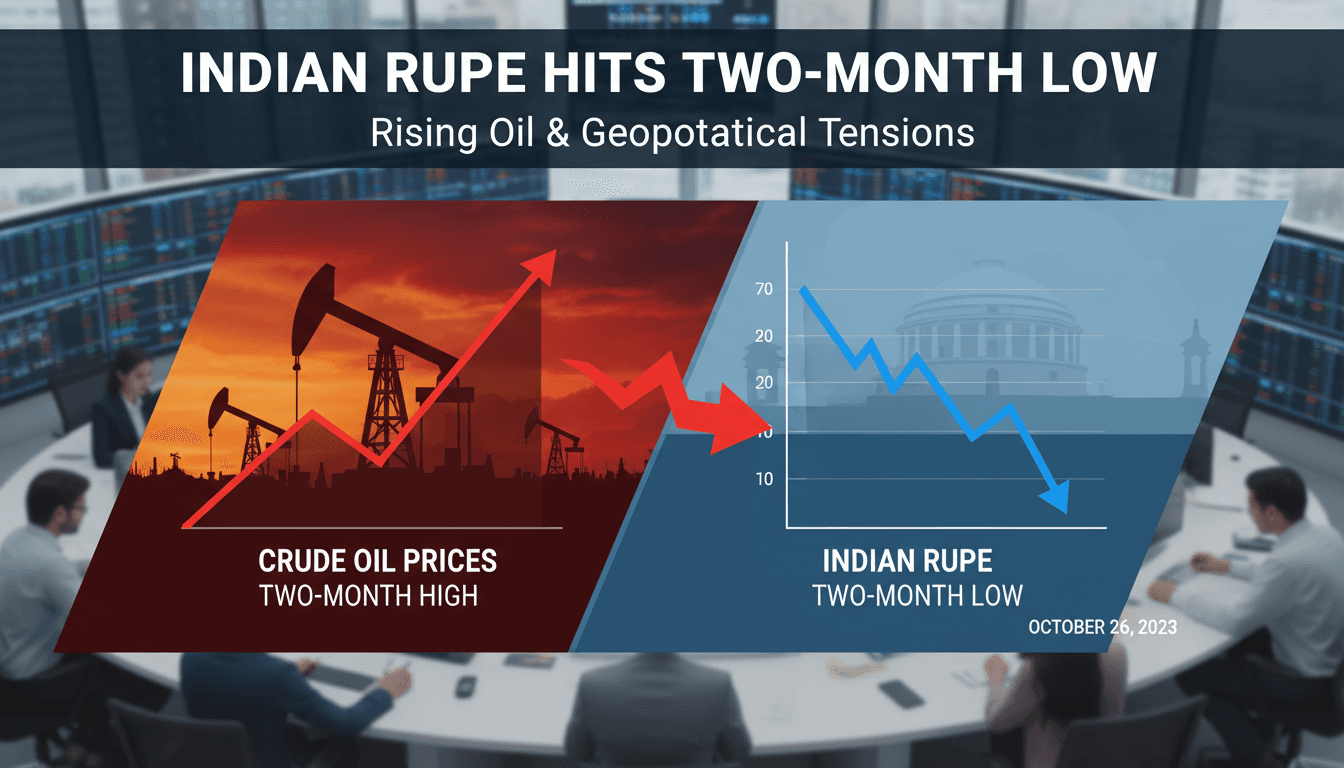
Here's what it means for you.
The recent decline of the Indian rupee to a two-month low signals potential challenges for the Indian economy, particularly as rising oil prices exert pressure on the currency. This situation may lead to increased costs for consumers and businesses alike, impacting inflation and economic growth. The Reserve Bank of India's intervention in the foreign exchange market underscores the urgency of stabilizing the rupee amid these pressures. As geopolitical tensions in the Middle East continue to escalate, market sentiment remains fragile. Stakeholders should remain vigilant as these developments could influence monetary policy and economic stability in the coming months.
What happened
The Indian rupee has weakened significantly, reaching its lowest point in two months, prompting intervention from the Reserve Bank of India (RBI). This decline is primarily attributed to rising crude oil prices, which have been influenced by escalating geopolitical tensions in the Middle East. The RBI's actions in the foreign exchange market aim to support the rupee and mitigate further depreciation.
As the rupee approaches record lows against the US dollar, market participants are closely monitoring the situation. The volatility in oil prices and the ongoing geopolitical climate are key factors affecting the currency's performance.
The Context
Rising crude oil prices are having a pronounced impact on the Indian economy, which is heavily reliant on oil imports. The rupee's recent decline reflects broader economic challenges, particularly as it nears record lows against the dollar. Geopolitical tensions in the Middle East are contributing to market instability, further complicating the economic landscape.
The RBI's intervention highlights the critical role of central banks in stabilizing currencies during periods of volatility. As the situation evolves, stakeholders must consider the implications for inflation, trade balances, and overall economic health.
Takeaway
Looking ahead, the Indian rupee may continue to face downward pressure as oil prices remain volatile and geopolitical tensions persist. Monitoring crude oil price trends will be essential for understanding their impact on the rupee's performance. Additionally, further interventions by the RBI could be anticipated as the central bank seeks to stabilize the currency.
Stakeholders should remain alert to developments in both the oil market and geopolitical landscape, as these factors will likely influence economic conditions in India. The ongoing situation necessitates close observation of market conditions and central bank actions.
Currency market headlines, FX rates, central-bank chatter, and macro drivers moving major pairs.
"Investing.com’s forex stream is useful for fast updates across USD, EUR, JPY, GBP and emerging-market FX."
— A47 Editor
Indian rupee hits two-month low on oil price concerns
The Indian rupee has fallen to a two-month low, primarily driven by rising oil prices, which have raised concerns about inflation and economic stability in the country. This depreciation reflects ongoing pressures in the currency market as investors ...
Pan-Arab news coverage spanning politics, business, sports, and regional affairs.
"Asharq Al-Awsat reflects a broad Arab editorial perspective with strong attention to regional geopolitics."
— A47 Editor
الروبية الهندية عند أدنى مستوى في شهرين وعوائد السندات ترتفع مع قفزة النفط
The Indian rupee has fallen to its lowest level in two months on Monday, driven by rising oil prices amid escalating tensions in the Middle East. This decline reflects the ongoing economic pressures faced by India as global oil prices continue to sur...
Global markets, investing, and macroeconomics from a premier financial newsroom.
"Bloomberg is respected for in-depth financial reporting and data-driven analysis."
— A47 Editor
RBI Intervenes to Support Rupee as Currency Nears Record Low
The Reserve Bank of India (RBI) has intervened in the foreign exchange markets to support the Indian rupee, which has been approaching a record low due to rising crude oil prices that have negatively impacted market sentiment. This action reflects th...