
City Labs launches world's first commercial nuclear-powered satellite BOHR
Here's what it means for you.
The successful launch of BOHR marks a pivotal moment in the evolution of space technology, particularly in the realm of energy sources. As the demand for sustainable and efficient power solutions in space grows, the implications of this nuclear-powered satellite could reshape future missions. This development not only highlights the potential of nuclear energy but also sets the stage for a new era in spacecraft design and operation. The introduction of nuclear power systems like BOHR could significantly reduce reliance on traditional solar energy, which has been the standard for decades. This shift may lead to longer-lasting and more reliable energy sources for satellites and other space missions, ultimately enhancing the capabilities of space exploration.
What happened
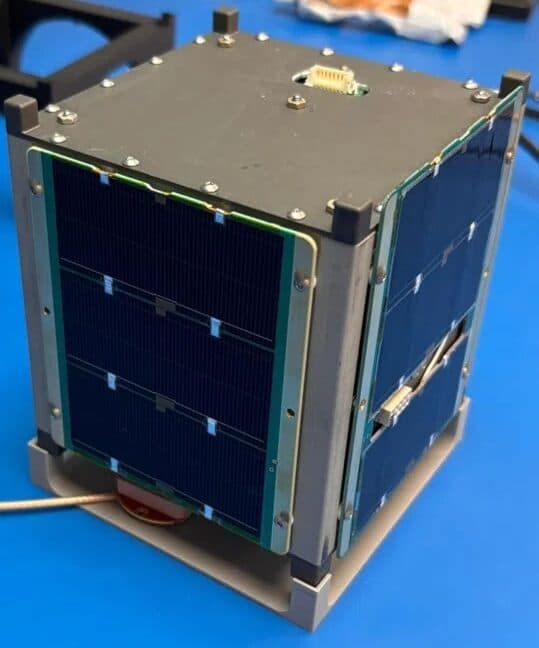
City Labs successfully launched BOHR, the first commercial nuclear-powered CubeSat, into orbit aboard a SpaceX Falcon 9 rocket on July 7, 2026. This mission represents a significant milestone in the application of nuclear power for space, showcasing an alternative to conventional solar energy. The satellite, roughly the size of a softball, was part of a rideshare mission that included 80 other payloads.
BOHR is designed to test a betavoltaic power source utilizing tritium decay for electricity generation. This innovative approach aims to demonstrate the viability of nuclear power in the harsh environment of space, potentially transforming how future spacecraft are powered.
The Context
The launch of BOHR is a groundbreaking achievement for City Labs, a Miami-based company focused on advancing space technology. The mission serves as a pathfinder for future nuclear-powered spacecraft, highlighting the potential for more sustainable energy solutions in space exploration. As the space industry evolves, the need for alternative energy sources becomes increasingly critical, particularly for long-duration missions.
The successful deployment of BOHR not only showcases the capabilities of nuclear power but also emphasizes the importance of innovation in addressing the challenges of space travel. By demonstrating the effectiveness of a nuclear power system, City Labs is paving the way for future advancements in energy technology for space applications.
Takeaway
The success of BOHR could lead to the development of more advanced nuclear power systems for future space missions. As the industry continues to explore sustainable energy solutions, the implications of this launch may extend beyond CubeSats to larger spacecraft and missions. Future developments in nuclear power technology for space exploration will be closely monitored, as they could revolutionize how we approach energy in the cosmos.
Potential applications of BOHR's technology in other space missions could further enhance the capabilities of satellites and contribute to more efficient energy use in space. The ongoing evolution of energy sources in space will be a critical area to watch in the coming years.
Opinionated AI coverage for general audiences.
"TNW’s AI vertical covering tools, ethics, and trends."
— A47 Editor
A tritium ‘nuclear battery’ just reached orbit for the first time
City Labs, a Miami-based company, has successfully launched BOHR, the world's first commercial nuclear-powered satellite and the first nuclear CubeSat, aboard a SpaceX Falcon 9 rocket on July 7. This innovative satellite, roughly the size of a softba...
Tech news, hardware, and AI tools coverage.
"PC/tech site increasingly covering AI hardware and apps."
— A47 Editor
A new satellite wants to prove nuclear power can work in space without solar panels
The BOHR satellite is set to test a novel power source in orbit, utilizing City Labs' NanoTritium system, which converts beta particles from tritium decay directly into electricity through a semiconductor. This approach differs from traditional nucle...
In-depth reporting on tech, policy, and science including AI.
"Respected analysis for technically savvy readers, including AI topics."
— A47 Editor
Miami-based City Labs achieves a first for commercial nuclear power in space
Miami-based City Labs has achieved a significant milestone by successfully launching the BOHR mission, marking the first instance of commercial nuclear power being utilized in space. This mission serves as a pioneering effort in the development of nu...
In-depth coverage of hardware, software, science, and policy.
"Ars Technica provides expert technology news, hardware reviews, and analysis for a technically savvy audience."
— A47 Editor
Miami-based City Labs achieves a first for commercial nuclear power in space
Miami-based City Labs has achieved a significant milestone by successfully launching the BOHR mission, marking the first instance of commercial nuclear power being utilized in space. This mission serves as a pioneering effort in the development of nu...