
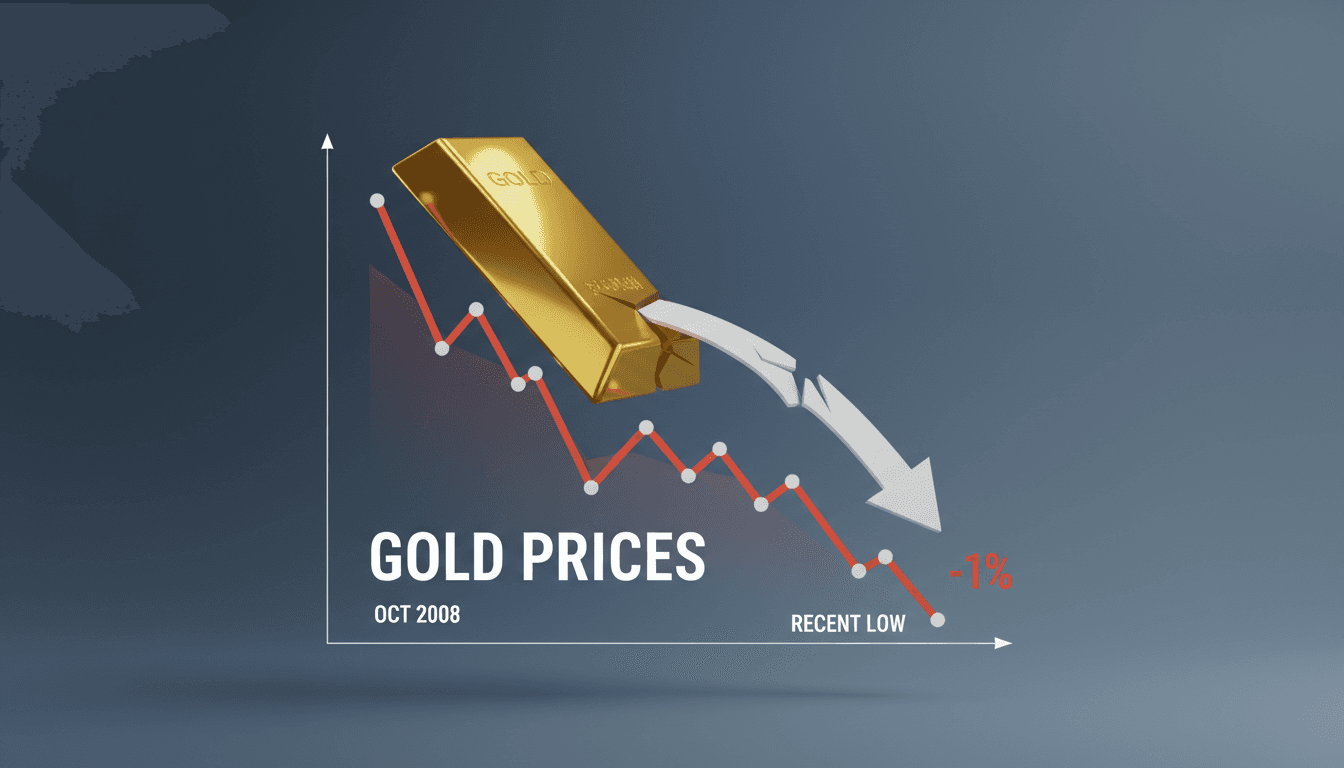
Gold prices experience largest monthly decline since October 2008
Here's what it means for you.
The recent decline in gold prices signals a shift in market dynamics, primarily driven by the U.S. Federal Reserve's tightening policies aimed at curbing inflation. Investors are increasingly losing confidence in gold as a safe haven, which may lead to a reevaluation of investment strategies in precious metals. This trend could influence consumer purchasing decisions, as the economic landscape continues to evolve. As gold prices drop, the implications extend beyond just the commodity market, affecting broader economic conditions and investor sentiment. Stakeholders should remain vigilant as these changes unfold.
What happened
Gold prices have fallen over 1%, marking the largest monthly decline since October 2008. This downturn is largely attributed to the tightening of U.S. Federal Reserve policies designed to control high inflation. Since the beginning of June 2026, gold has lost approximately 12.7% of its value, indicating a significant market shift.
This decline represents the fourth consecutive monthly decrease for gold, with similar losses observed in silver, platinum, and palladium. As of the end of June 2026, gold prices in spot transactions have reached $3956.92 per ounce.
The Context
The current downturn in the gold market is a response to the Federal Reserve's aggressive measures to combat inflation. As interest rates rise, investor confidence in gold as a safe haven diminishes, prompting many to delay purchases. This shift is critical as it reflects broader economic uncertainties that could impact various sectors.
The second quarter of 2026 has seen a total loss of 14% in gold's value, highlighting the ongoing volatility in precious metals. Stakeholders, including investors and consumers, must navigate this challenging environment as they reassess their strategies in light of these developments.
Takeaway
Looking ahead, it is essential to monitor U.S. Federal Reserve announcements regarding interest rates, as these will significantly influence gold and other precious metals. Changes in geopolitical conditions could also affect market stability, making it crucial for investors to stay alert to economic indicators.
The ongoing economic conditions may continue to pressure gold prices, suggesting that volatility in the precious metals market is likely to persist. Stakeholders should prepare for potential shifts in consumer behavior as the market landscape evolves.
Egyptian politics, economy, and society coverage.
"Al Masry Al Youm is a major Egyptian newspaper with broad national coverage."
— A47 Editor
أكبر انخفاض منذ 2013.. تراجع الذهب يدفع المستهلكين لتأجيل قرار الشراء (تقرير)
The global gold market is experiencing its largest quarterly decline since April 2013, with a loss of approximately 14% in value during the second quarter of 2026. This marks the first quarterly drop after five consecutive quarters of gains.
Sports reporting with a focus on Saudi and regional competitions.
"Okaz sports coverage is broad and audience-friendly, with strong attention to Saudi teams and leagues."
— A47 Editor
الذهب يتهاوى لأدنى مستوياته منذ 2008
Gold prices have fallen by more than 1% today, heading towards their largest monthly decline since October 2008, driven by reduced geopolitical uncertainty and expectations of U.S. interest rate hikes to curb high inflation. The spot price of gold dr...
Pan-Arab news coverage spanning politics, business, sports, and regional affairs.
"Asharq Al-Awsat reflects a broad Arab editorial perspective with strong attention to regional geopolitics."
— A47 Editor
الذهب يتجه لتسجيل أكبر خسارة شهرية منذ أواخر 2008 مع تشدد «الفيدرالي»
Gold prices fell by more than 1% on Tuesday, heading towards their largest monthly loss since October 2008, amid tightening measures from the Federal Reserve. This decline reflects growing concerns about economic stability and the impact of monetary ...