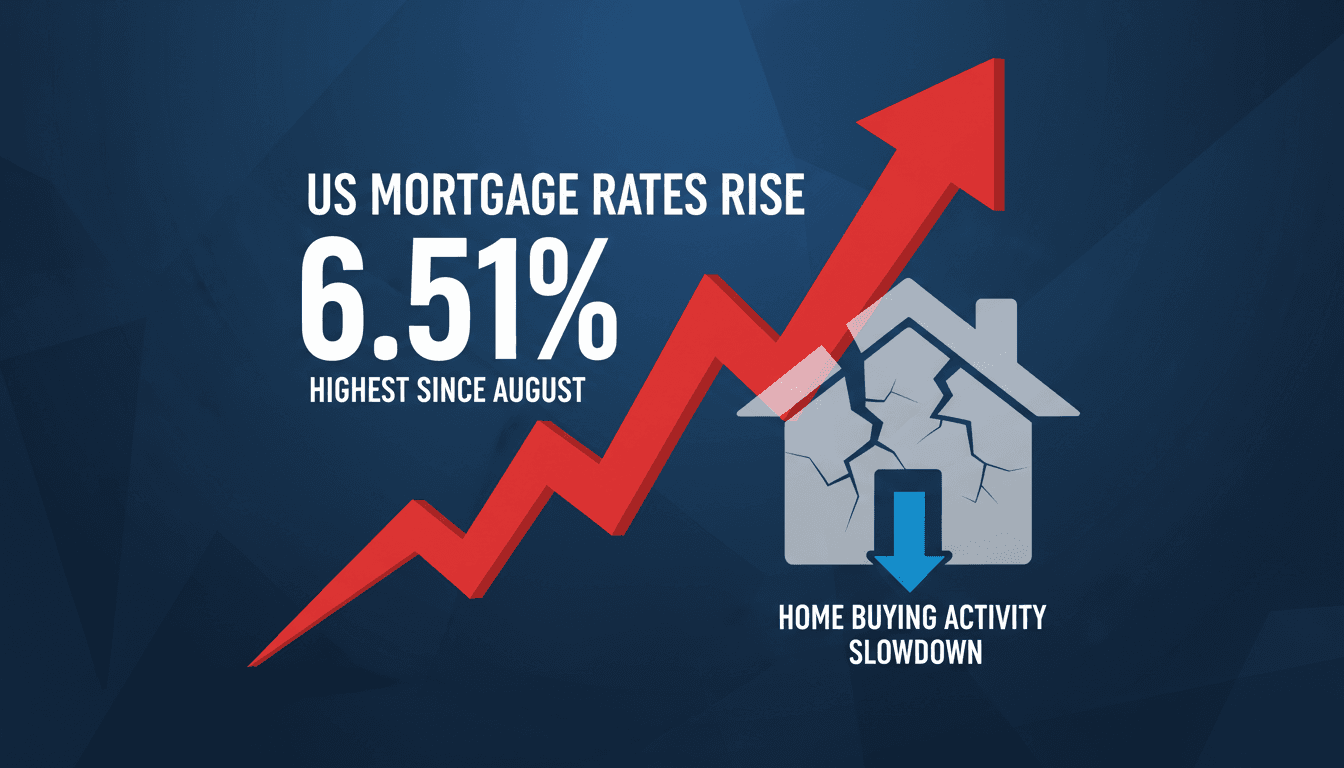
US mortgage rates reach highest level since August 2025 at 6.51%

Here's what it means for you.
The recent surge in the average 30-year fixed mortgage rate to 6.51% presents significant challenges for homebuyers across the U.S. As affordability tightens, many potential buyers may find themselves priced out of the market. This situation could lead to a slowdown in home sales, particularly during the critical spring selling season when demand typically peaks. With rising rates, buyers will need to reassess their purchasing power and consider their options carefully. The implications of this trend extend beyond individual buyers, potentially affecting the broader housing market dynamics.
What happened
The average 30-year fixed mortgage rate in the U.S. has risen to 6.51%, marking a notable increase that has not been seen since August 2025. This rise represents a 15 basis point increase from the previous week and is the largest jump since the end of March 2026. Freddie Mac reported this new rate on May 21, 2026, highlighting the ongoing inflationary pressures and economic conditions influencing the housing market.
As mortgage rates surpass the 6.5% threshold, homebuyers are facing heightened challenges in securing affordable financing. The timing of this increase coincides with the spring selling season, a critical period for home sales, which may further complicate the market landscape.
The Context
This increase in mortgage rates is primarily driven by inflationary pressures and broader economic conditions that are affecting consumer confidence. The fact that rates have not exceeded 6.5% since last summer underscores the volatility in the housing market. As affordability decreases, many potential buyers are being pushed out of the market, which could have significant implications for housing sales during this pivotal time.
Stakeholders, including real estate agents and potential homebuyers, are closely monitoring these developments. The spring selling season typically sees heightened activity, making the current rate environment particularly impactful for those looking to buy or sell homes.
Takeaway
As mortgage rates continue to rise, the housing market may experience a slowdown in sales as buyers reassess their financial capabilities. It will be crucial to monitor economic indicators that could influence future mortgage rates, as well as any potential policy changes aimed at stabilizing the housing market. The current landscape suggests that maintaining buyer demand will be a challenge in the coming months.
Looking ahead, stakeholders should remain vigilant about the evolving economic conditions and their potential impact on mortgage rates and housing affordability. The interplay between these factors will be critical in shaping the future of the housing market.
Stock market news, investing ideas, and trading analysis.
"TheStreet provides market news and retail-investor-focused analysis."
— A47 Editor
Mortgage rate experts send strong message as rates soar
Freddie Mac reported a significant increase in mortgage rates, with the average 30-year fixed mortgage rate rising by 15 basis points to 6.51% on May 21, marking the first time it has surpassed 6.5% since August. This spike represents the largest wee...
Corporate finance news, M&A, deals, and executive interviews.
"Finance Monthly serves a professional readership with corporate finance coverage."
— A47 Editor
US Mortgage Rates Jump to 6.51% as Homebuyers Get Locked Out of the Market
US mortgage rates have surged to 6.51%, the highest level since last summer, making homeownership increasingly difficult for potential buyers as monthly budgets tighten. This rise in rates is attributed to ongoing economic pressures and inflation con...
Global markets, investing, and macroeconomics from a premier financial newsroom.
"Bloomberg is respected for in-depth financial reporting and data-driven analysis."
— A47 Editor
Mortgage Rates Hit Highest Since August as War Fans Inflation
US mortgage rates have surged to their highest level since August, with the average rate for 30-year fixed loans rising to 6.51% from 6.36%, marking the largest weekly increase since March, according to Freddie Mac. This spike threatens to disrupt th...
Macro commentary, policy analysis, growth/inflation themes, and global outlooks.
"Contextual macro coverage that complements day-to-day market headlines."
— A47 Editor
Freddie Mac 30-year mortgage rate rises to 6.51%
Freddie Mac has reported an increase in the national average for a 30-year fixed mortgage rate, which has risen to 6.51%, reflecting ongoing fluctuations in the housing market. This marks a continuation of a trend where mortgage rates have been on th...
Social/economic commentary and analysis relevant to business and markets.
"WSJ blends data-driven economic insight with commentary on policy and society."
— A47 Editor
Mortgage rates this week rose to the highest level since August, more bad news for home shoppers during what is usually the busiest time of the year for home sales
This week, the 30-year mortgage rate rose to 6.51%, marking the highest level since August, which poses additional challenges for home shoppers during a typically busy sales period.