
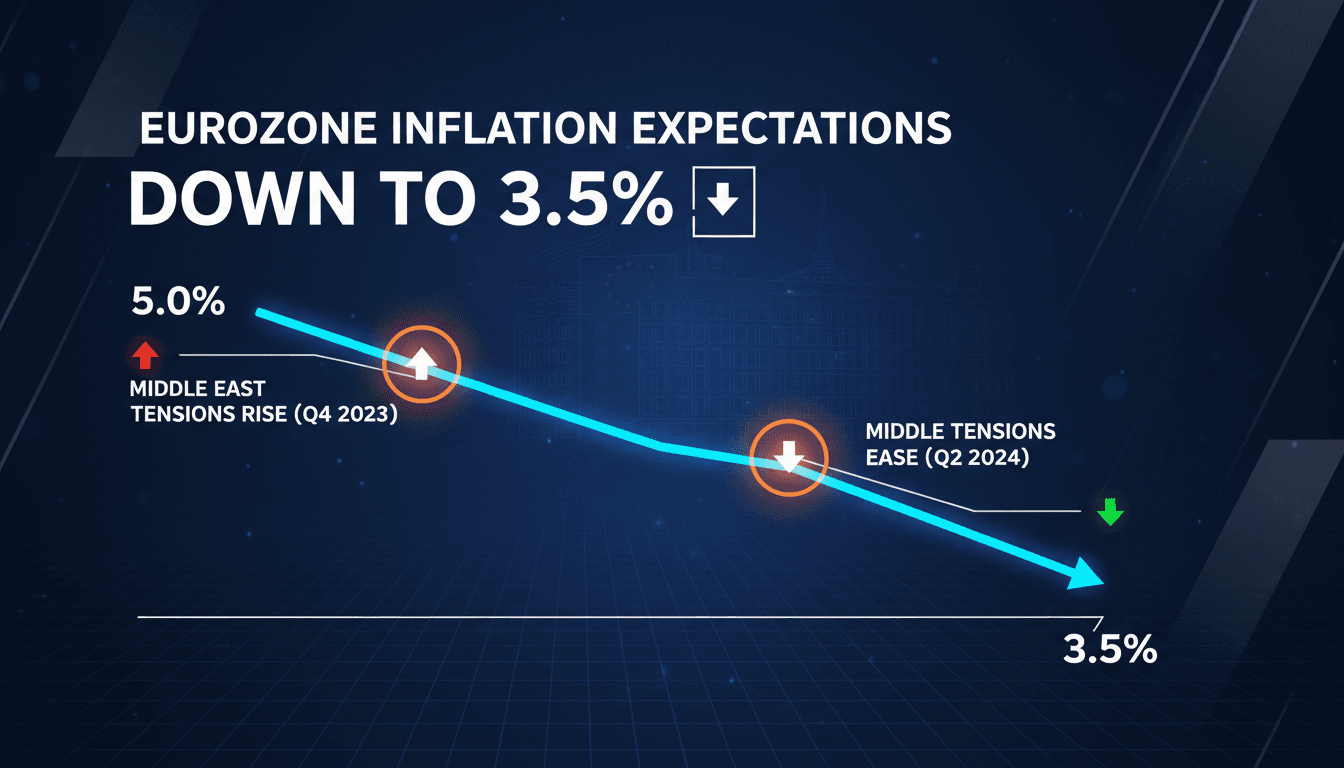
Eurozone Consumers Lower Inflation Expectations to 3.5%
Here's what it means for you.
The recent decline in inflation expectations among Eurozone consumers signals a potential shift in economic stability. With expectations now at 3.5%, this change may provide the European Central Bank (ECB) with greater flexibility in its monetary policy. A more favorable economic environment could emerge if these trends continue, positively impacting both consumers and businesses. As inflation concerns ease, stakeholders across various sectors should monitor how this influences ECB policy decisions. The interplay between consumer sentiment and geopolitical factors will be crucial in shaping future economic conditions.
What happened
Eurozone consumers have lowered their inflation expectations for the upcoming year, now standing at 3.5%. This significant drop reflects a response to easing geopolitical tensions, particularly in the Middle East. The latest survey results, released on June 26, 2026, indicate a notable shift in consumer sentiment regarding inflation.
This change is likely to reassure ECB policymakers who have been concerned about rising price pressures. The reduction in expectations suggests that consumers are becoming less worried about inflation, which could influence economic dynamics in the region.
The Context
The decline in inflation expectations is set against a backdrop of recent geopolitical developments that have contributed to a more stable consumer outlook. The ECB's survey highlights a broader trend of shifting consumer sentiment, which is essential for understanding economic health.
As inflation expectations stabilize, the ECB may find itself in a position to adjust its monetary policy more effectively. This could lead to a more favorable economic environment in the Eurozone, benefiting both consumers and businesses alike.
Takeaway
The decline in inflation expectations may pave the way for more stable economic conditions in the Eurozone. Stakeholders should closely monitor ECB responses to these changing expectations, as they could signal shifts in monetary policy.
Additionally, further geopolitical developments will be critical in shaping consumer sentiment and economic outlook. Observing these trends will be essential for understanding the future landscape of the Eurozone economy.
Regional and international reporting focused on Middle Eastern politics, diplomacy, and economics.
"Asharq Al-Awsat is a Saudi-owned international newspaper reflecting mainstream Gulf political perspectives."
— A47 Editor
Euro Zone Consumers Cut Inflation Bets for the Next Year
Euro Zone consumers have reduced their inflation expectations for the upcoming year, indicating a shift in sentiment amid ongoing economic pressures. This change comes as the European Central Bank (ECB) faces challenges related to rising inflation, i...
Pan-Arab news coverage spanning politics, business, sports, and regional affairs.
"Asharq Al-Awsat reflects a broad Arab editorial perspective with strong attention to regional geopolitics."
— A47 Editor
مستهلكو منطقة اليورو يخفضون توقعات التضخم قصير المدى إلى 3.5 %
A survey conducted by the European Central Bank revealed that consumers in the Eurozone have lowered their short-term inflation expectations to 3.5% in May. This adjustment reflects changing perceptions among consumers regarding future price stabilit...
Social/economic commentary and analysis relevant to business and markets.
"WSJ blends data-driven economic insight with commentary on policy and society."
— A47 Editor
Eurozone Household Inflation Expectations Cooled in May
Inflation expectations among Eurozone households decreased in May, reflecting a response to easing geopolitical tensions in the Middle East, which may provide reassurance to European Central Bank (ECB) policymakers concerned about rising price pressu...