
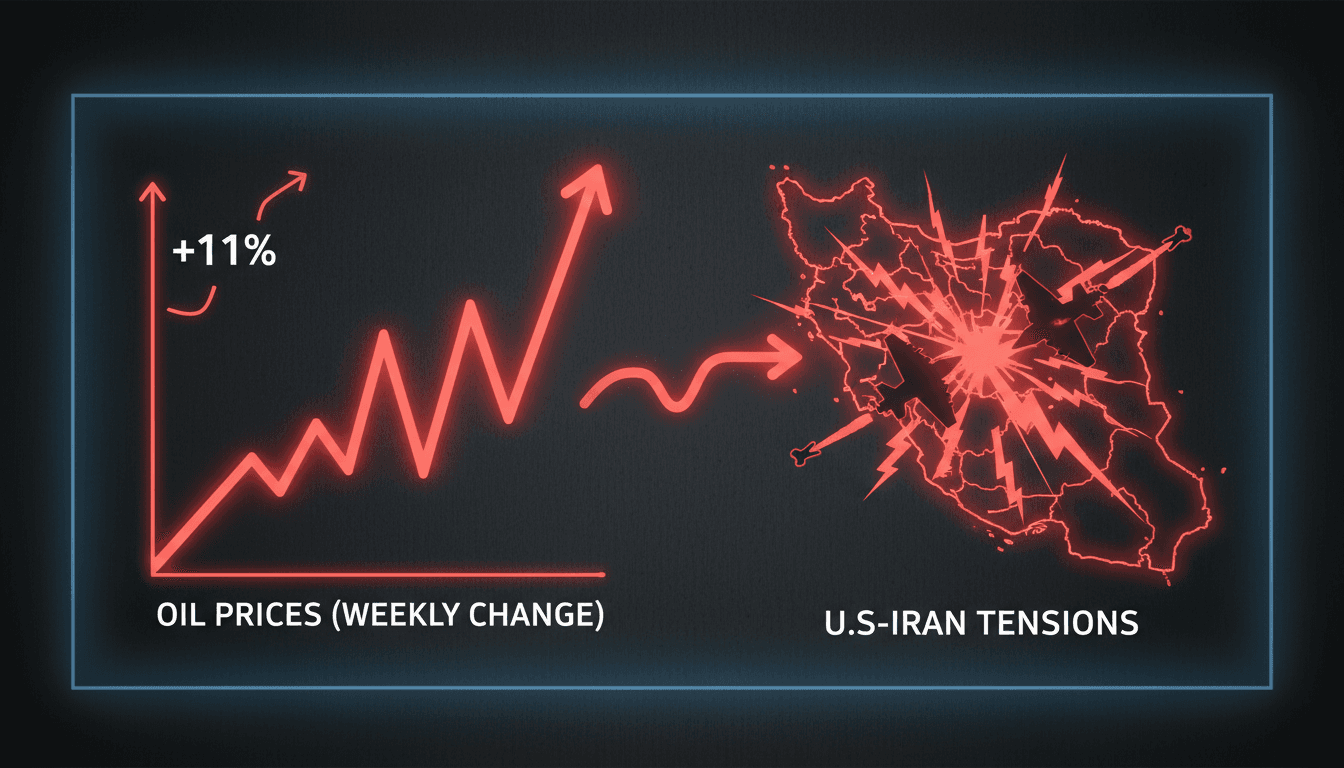
Oil prices rise over 11% amid U.S.-Iran tensions
Here's what it means for you.
The recent surge in oil prices signals heightened volatility in the energy market, driven by geopolitical tensions. As traders navigate these fluctuations, businesses and consumers alike may face increased costs. Policymakers will need to monitor these developments closely, as they could influence energy strategies and economic stability. The implications of this rise extend beyond immediate market reactions, potentially affecting global supply chains and inflation rates. Stakeholders in the energy sector should prepare for ongoing uncertainty as the situation evolves.
What happened
Oil prices have surged over 11% this week, reaching one-month highs amid escalating geopolitical tensions. The immediate catalyst for this increase was the recent U.S. military actions against Iranian facilities, which have raised concerns about potential disruptions in oil supply from the Middle East. Although prices dipped slightly, they remain elevated as traders balance profit-taking with ongoing geopolitical concerns.
The market's reaction underscores the fragility of oil prices in response to international relations. As tensions continue to escalate, traders are closely monitoring developments that could further impact supply and prices.
The Context
The current volatility in the oil market is largely driven by the strained relations between the U.S. and Iran. Recent military actions have heightened fears of a broader conflict, which could disrupt oil supplies from a region critical to global energy markets. Traders are reacting to these geopolitical developments while also considering profit-taking strategies.
As oil prices stabilize at one-month highs, the market remains sensitive to any further escalations in U.S.-Iran relations. The interplay between military actions and market responses highlights the interconnectedness of global politics and energy economics.
Takeaway
Looking ahead, the oil market is expected to remain volatile as geopolitical tensions evolve. Traders will need to keep a close watch on U.S.-Iran relations, as any significant developments could have immediate impacts on oil supply and pricing. Additionally, ongoing profit-taking trends will likely influence market dynamics in the coming weeks.
Stakeholders should prepare for potential fluctuations and consider strategies to mitigate risks associated with rising oil prices. The situation underscores the importance of staying informed about geopolitical developments that could affect the energy landscape.
Oil, metals, and agriculture: supply/demand headlines, OPEC chatter, inventories, and price action.
"Solid tape for energy and metals traders tracking macro and micro catalysts."
— A47 Editor
Oil prices muted after soaring more than 11% this week, remain at one-month highs
Oil prices have remained muted after experiencing a significant surge of over 11% earlier this week, currently stabilizing at one-month highs. This fluctuation reflects ongoing geopolitical tensions, particularly in the Middle East, which continue to...
Pan-Arab news coverage spanning politics, business, sports, and regional affairs.
"Asharq Al-Awsat reflects a broad Arab editorial perspective with strong attention to regional geopolitics."
— A47 Editor
النفط يرتفع لليوم الرابع مع تصاعد المخاوف من اتساع المواجهة الأميركية - الإيرانية
Oil prices rose on Thursday, marking the fourth consecutive day of increases, driven by renewed fears of an extensive U.S.-Iran confrontation following a new wave of American strikes on Iranian military facilities.
Global markets, investing, and macroeconomics from a premier financial newsroom.
"Bloomberg is respected for in-depth financial reporting and data-driven analysis."
— A47 Editor
Latest Oil Market News and Analysis for July 16
Oil prices experienced a dip on July 16, although they remain elevated for the week as traders navigate profit-taking against concerns over potential disruptions in Middle Eastern oil flows. This fluctuation is influenced by ongoing geopolitical tens...