
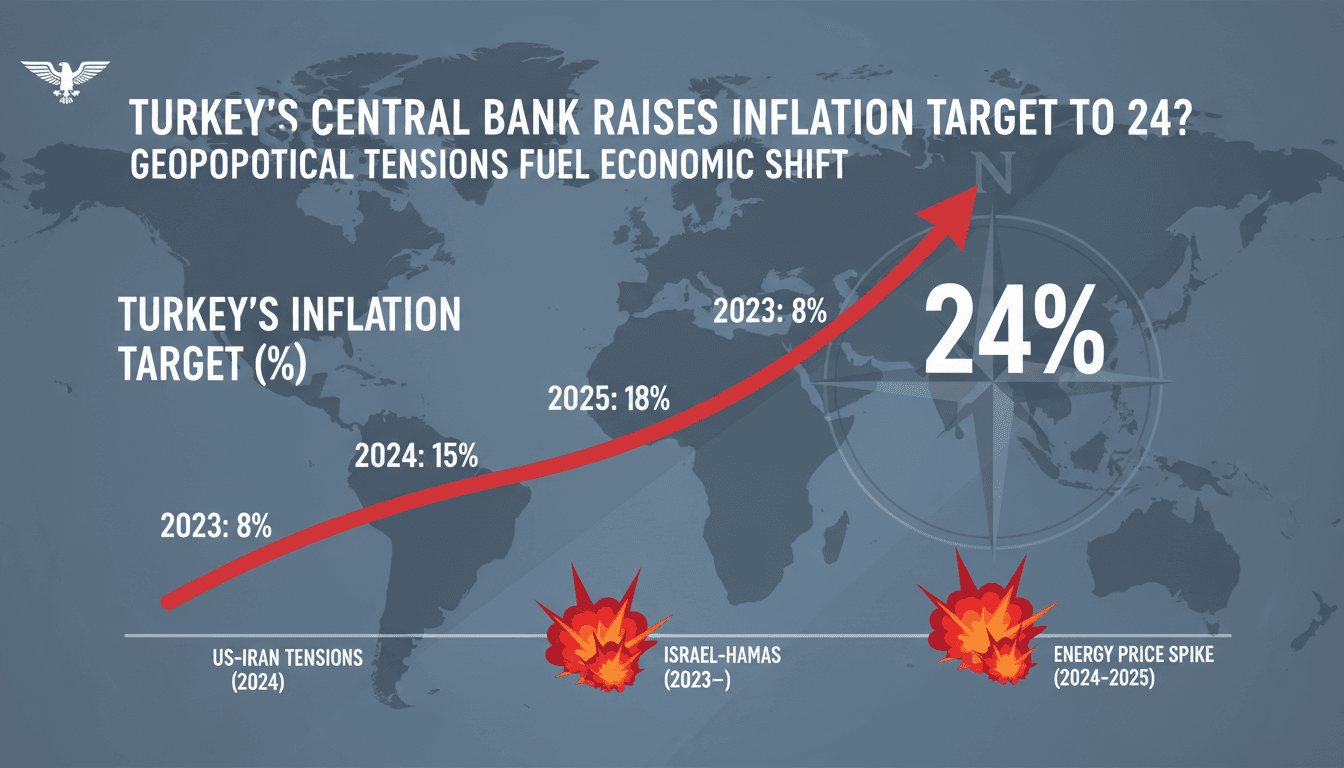
Turkey's central bank raises inflation target to 24% amid geopolitical tensions
Here's what it means for you.
This adjustment signals potential economic instability that could affect global markets.
What happened
Turkey's central bank revised its inflation target for the end of 2026 to 24%.
The Context
- Rising energy prices: The revision is a response to increased energy prices linked to the Iran war.
- Previous target: The previous inflation target was set at 16%.
- Economic pressures: The adjustment indicates growing economic pressures in Turkey.
Takeaway
The adjustment in inflation targets may lead to further economic measures by Turkey's central bank in response to ongoing geopolitical issues.
This article was generated by AI from 3 verified sources and reviewed by A47 editorial systems.
Pan-Arab news coverage spanning politics, business, sports, and regional affairs.
"Asharq Al-Awsat reflects a broad Arab editorial perspective with strong attention to regional geopolitics."
— A47 Editor
تركيا: «المركزي» يعدل هدف التضخم بنهاية العام إلى 24 %
The Central Bank of Turkey has revised its inflation forecast for the end of the year to 24%, up from a previous target of 16%, amid the repercussions of the ongoing conflict in Iran. Additionally, the overall inflation expectation for the current ye...
Regional and international reporting focused on Middle Eastern politics, diplomacy, and economics.
"Asharq Al-Awsat is a Saudi-owned international newspaper reflecting mainstream Gulf political perspectives."
— A47 Editor
Türkiye Raises End-2026 Inflation Target to 24%
Türkiye has raised its end-2026 inflation target to 24%, reflecting ongoing economic challenges and adjustments in monetary policy. This decision comes as the country navigates a complex economic landscape marked by regional conflicts and fluctuating...
Global markets, investing, and macroeconomics from a premier financial newsroom.
"Bloomberg is respected for in-depth financial reporting and data-driven analysis."
— A47 Editor
Turkey Lifts Year-End Inflation Target to 24%, Citing Iran War
Turkey's central bank has raised its year-end inflation target to 24%, attributing this adjustment to the impact of rising energy prices stemming from the ongoing US-Israeli conflict with Iran. This revision reflects growing economic pressures within...