
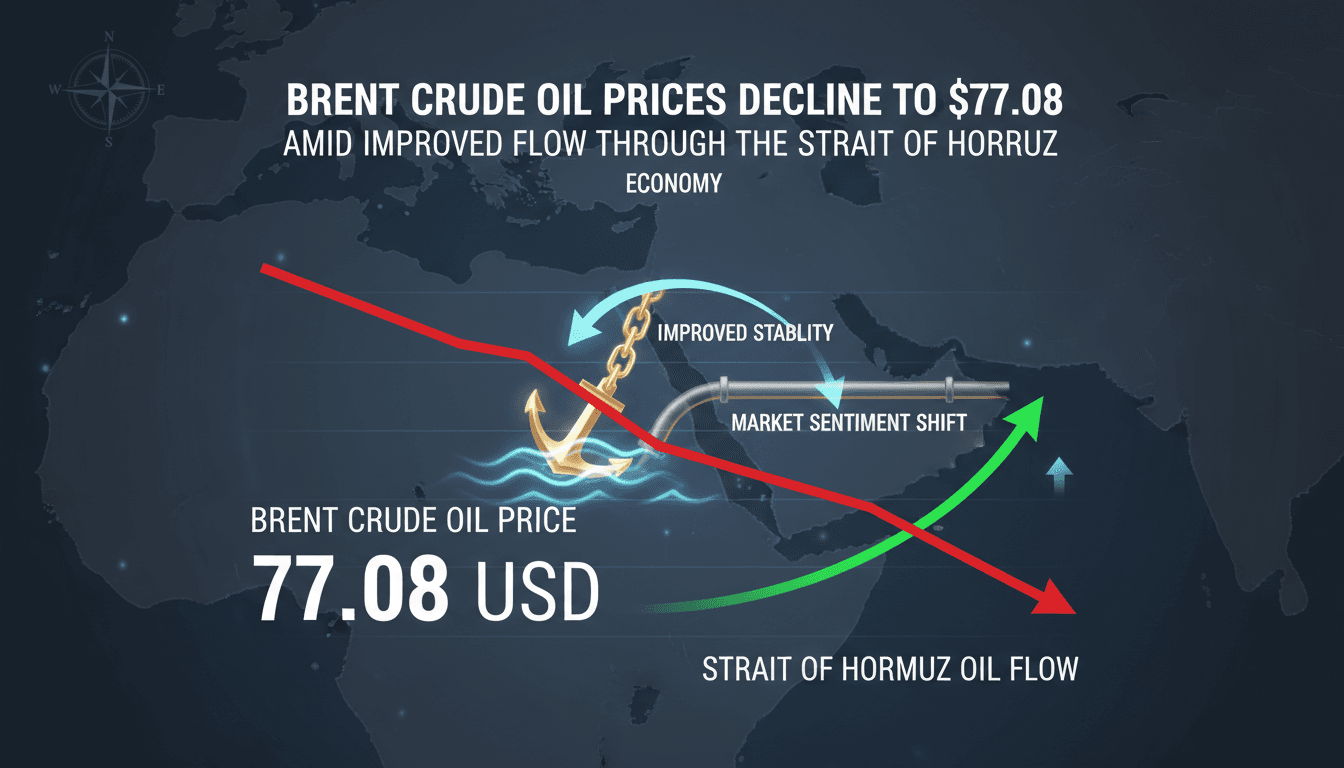
Brent crude oil prices decline to $77.08 amid improved flow through the Strait of Hormuz
Here's what it means for you.
The recent decline in Brent crude oil prices signals a shift in market sentiment, primarily influenced by improved oil flow through the critical Strait of Hormuz. For industry stakeholders, this development may suggest a temporary stabilization in prices, yet the underlying volatility remains a concern. Policymakers and investors should remain alert to geopolitical factors that could further impact supply and demand dynamics. As oil prices settle below $78, the market's sensitivity to changes in geopolitical tensions is heightened. This situation underscores the importance of monitoring developments in key regions that affect global oil supply.
What happened
Brent crude oil prices have fallen by approximately 1% to $77.08 per barrel, reflecting a notable shift in market conditions. This decline is attributed to signs of progress in restoring oil flow through the Strait of Hormuz, a vital passage for global oil transportation. During the trading session, prices decreased by 82 cents, or 1.1%, indicating a broader trend of declining oil prices.
The recent price movements highlight ongoing volatility in the oil market, as traders adjust to new information regarding supply chain stability. The market's reaction underscores the interconnectedness of geopolitical developments and oil pricing.
The Context
The decline in oil prices comes amid indications of improved oil flow through the Strait of Hormuz, which is crucial for global energy markets. As prices stabilize below $79, the market is experiencing a new wave of declines, reflecting the complexities of current geopolitical tensions. Stakeholders, including traders and policymakers, are closely monitoring these developments to gauge their potential impact on future pricing.
The situation in the Strait of Hormuz remains a focal point for global oil supply, with any disruptions likely to have significant repercussions. The interplay of market dynamics and geopolitical factors continues to shape the landscape of the oil industry.
Takeaway
Looking ahead, the oil market may continue to experience fluctuations as geopolitical factors evolve. Traders should keep a close watch on developments in oil flow through the Strait of Hormuz, as well as potential changes in global demand and supply dynamics. The ongoing volatility suggests that market participants must remain vigilant for signals that could indicate further price movements.
As the situation unfolds, the implications for pricing and supply chain stability will be critical for stakeholders across the energy sector.
Arabic-language economic and business reporting with strong UAE market relevance.
"Emarat Al Youm business coverage often centers UAE property, banking, consumer issues, and economic policy."
— A47 Editor
انخفاض أسعار النفط بنحو 1% وبرنت يسجل 77.08 دولارا للبرميل انخفاض أسعار النفط بنحو 1% وبرنت يسجل 77.08 دولارا للبرميل
Oil prices fell by approximately 1% at settlement on Tuesday, with Brent crude decreasing by 82 cents, or 1.1%, to reach $77.08 per barrel. This decline reflects ongoing fluctuations in the oil market, influenced by various economic factors.
Pan-Arab news coverage spanning politics, business, sports, and regional affairs.
"Asharq Al-Awsat reflects a broad Arab editorial perspective with strong attention to regional geopolitics."
— A47 Editor
«برنت» أقل من 77 دولاراً... النفط يعكس اتجاهه ويتراجع 1%
Oil prices have declined by more than 1% during trading on Tuesday, with Brent crude falling below $77 amid signs of progress in restoring crude oil flows through the Strait of Hormuz.
Jordanian news and regional updates.
"Roya News is a Jordanian outlet focused on breaking news and local affairs."
— A47 Editor
النفط عالميا.. الأسعار تهبط بأكثر من 1.4% وتستقر دون الـ 79 دولارا
Global oil prices have experienced a decline of over 1.4%, stabilizing below the $79 mark, indicating a significant downturn in the energy markets. This recent drop reflects ongoing volatility and uncertainty within the sector, impacting both produce...