
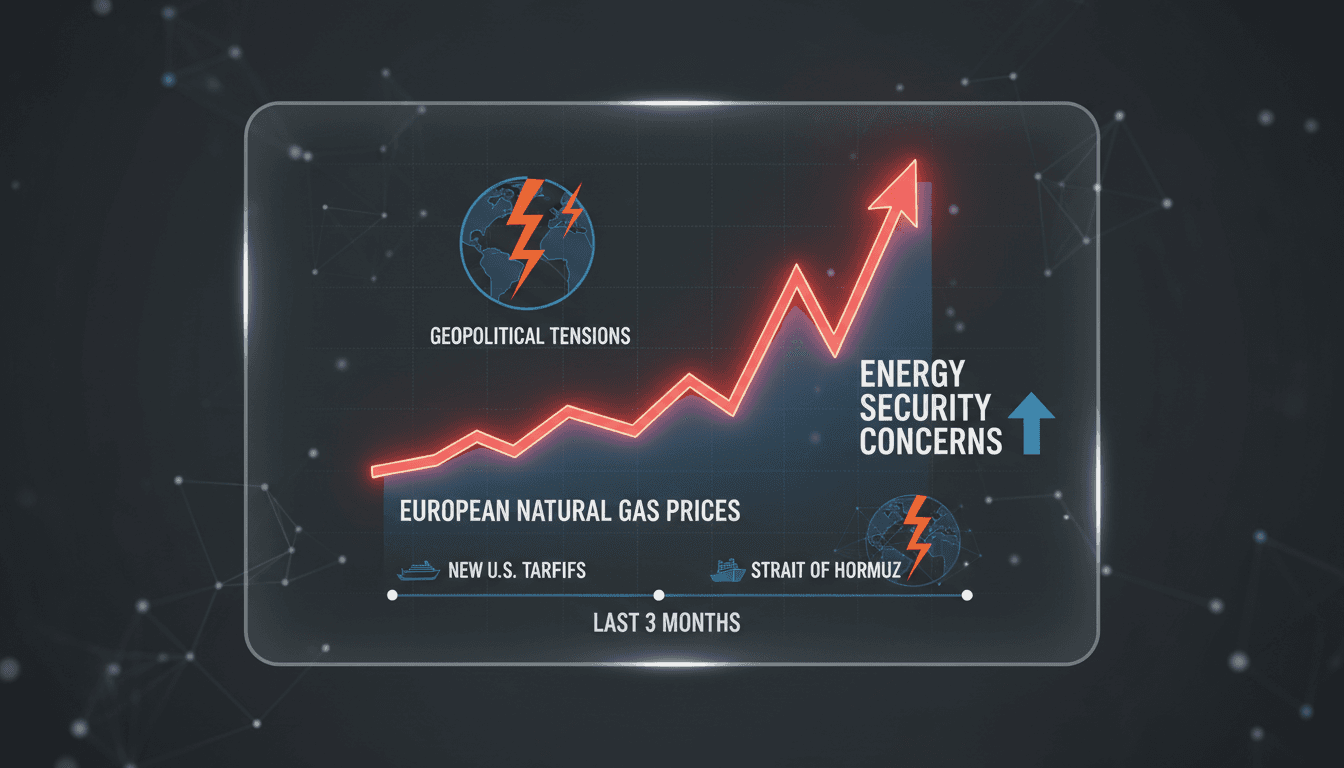
European natural gas prices hit three-month high amid geopolitical tensions
Here's what it means for you.
The recent surge in European natural gas prices signals a critical moment for energy markets as geopolitical tensions escalate. With the U.S. imposing new tariffs on shipments through the Strait of Hormuz, concerns about global energy supplies are mounting. This volatility may compel European nations to reassess their energy strategies, particularly as winter approaches. As prices rise, businesses and consumers alike may face increased energy costs, prompting a shift towards alternative energy sources. Policymakers will need to navigate these challenges to ensure energy security and stability in the market.
What happened
Natural gas prices in Europe have surged to their highest levels in three months, driven by escalating geopolitical tensions and supply concerns. The Dutch gas contract for the upcoming month reached approximately 50.65 euros per megawatt-hour, while the British gas contract saw an increase of about 5%. This price hike follows announcements from U.S. President Donald Trump regarding new tariffs on shipments passing through the Strait of Hormuz.
The ongoing conflict in the Middle East has disrupted a significant portion of global energy flows, contributing to the rising prices. Notably, gas prices have increased by 3.6% and 4.5% in recent days, with the price surpassing 650 dollars per thousand cubic meters for the first time since March.
The Context
The current situation is deeply intertwined with geopolitical dynamics, particularly the renewed conflict involving the U.S. and Iran. As Europe prepares for winter, securing adequate gas supplies becomes increasingly critical, especially with the looming tariffs and disrupted energy flows from the Middle East. The conflict has already cut off about 20% of global liquefied natural gas (LNG) supplies, exacerbating the supply concerns.
Stakeholders in the energy market, including governments and energy companies, are closely monitoring these developments. The timing of the price surge is particularly concerning as it coincides with the seasonal demand for heating. This context underscores the importance of energy security strategies for European nations.
Takeaway
As winter approaches, the combination of geopolitical instability and supply chain disruptions is likely to keep gas prices volatile. European nations may need to seek alternative energy sources and enhance their energy security strategies to mitigate the impact of rising prices. Monitoring developments in U.S.-Iran relations will be crucial, as these could further influence global energy markets.
Additionally, keeping an eye on European gas storage levels will be essential as the colder months draw near. The situation remains fluid, and stakeholders must remain vigilant to adapt to the evolving landscape.
Arabic-language coverage of international news and geopolitics.
"RT Arabic is a Russian state-funded outlet often criticized for promoting Kremlin-aligned narratives."
— A47 Editor
أسعار الغاز في أوروبا تواصل الصعود وتتخطى حاجز 650 دولارا
Gas prices in European exchanges rose by 4.5% on Wednesday, surpassing the $650 per thousand cubic meters mark for the first time since the end of March, according to data from the London Stock Exchange.
Sports reporting with a focus on Saudi and regional competitions.
"Okaz sports coverage is broad and audience-friendly, with strong attention to Saudi teams and leagues."
— A47 Editor
ارتفعت 3.6 %.. أسعار غاز أوروبا لأعلى مستوى في 90 يوماً
European natural gas prices have surged to their highest level in 90 days, with standard futures contracts rising by 3.6% for the second consecutive day, driven by growing concerns over global liquefied natural gas supplies. Europe faces significant ...
Pan-Arab news coverage spanning politics, business, sports, and regional affairs.
"Asharq Al-Awsat reflects a broad Arab editorial perspective with strong attention to regional geopolitics."
— A47 Editor
ارتفاع أسعار الغاز الأوروبي إلى أعلى مستوى في 3 أشهر
European natural gas prices have surged to their highest levels in three months following U.S. President Donald Trump's announcement of plans to impose tariffs on shipments transiting the Strait of Hormuz. This development has raised concerns about p...