
Treasury yields rise amid inflation and Middle East tensions
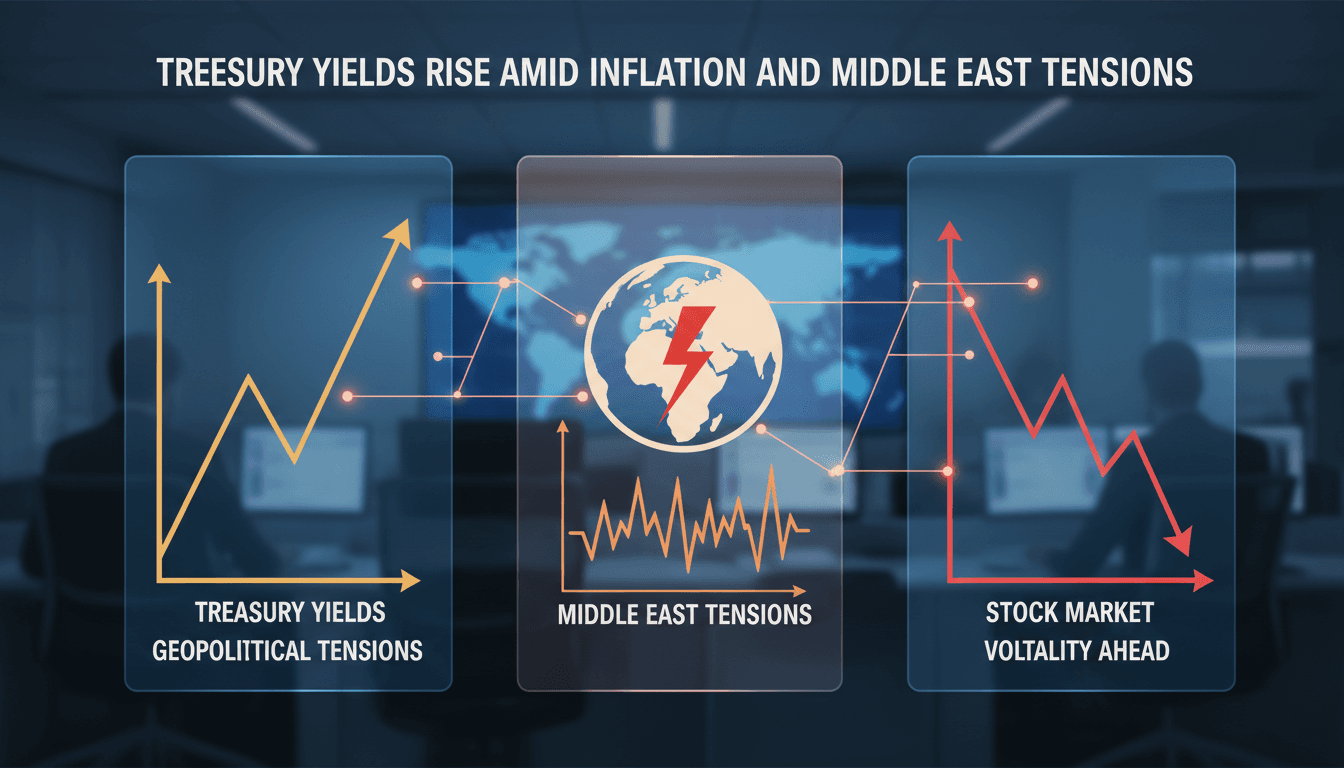
Here's what it means for you.
The recent rise in Treasury yields signals a shift in market sentiment, driven by inflation concerns and geopolitical tensions. Investors are recalibrating their expectations for Federal Reserve interest rate hikes, which could have significant implications for both bond and stock markets. As yields approach critical thresholds, market participants must remain vigilant about how these dynamics may influence their investment strategies. The interplay between inflation data and geopolitical events, particularly regarding Iran, is creating an environment of increased volatility. This situation underscores the importance of closely monitoring economic indicators and Federal Reserve communications in the coming weeks.
What happened
Treasury yields have seen a notable increase, primarily fueled by rising inflation concerns and escalating geopolitical tensions in the Middle East. Recent threats from President Trump against Iran have contributed to this market volatility, prompting investors to reassess their strategies. Strong jobs data has also led to heightened expectations for potential interest rate hikes by the Federal Reserve.
As a result, the relationship between bonds and stocks has become particularly sensitive, with rising yields impacting stock market performance. The current yield stands at 3.5%, a significant threshold that could further influence investor behavior.
The Context
The backdrop of this situation includes ongoing tensions in the Middle East, particularly involving Iran, which have added to inflationary pressures. Investors are reacting to these developments by increasing their bets on interest rate hikes, reflecting a broader concern about economic stability. The timing of these events is critical, as they coincide with the release of strong jobs data that typically influences Federal Reserve policy.
Market participants are now faced with a complex landscape where geopolitical events and economic indicators are intertwined. This volatility is likely to persist as stakeholders navigate the implications of these developments on their investment strategies.
Takeaway
Looking ahead, the Federal Reserve's upcoming interest rate decision will be a focal point for investors. Continued geopolitical tensions and inflation data will likely shape future market dynamics, influencing how the Fed approaches monetary policy. As the situation evolves, market participants should remain attentive to economic indicators and Federal Reserve communications to gauge potential interest rate movements.
The interplay between rising yields and stock market performance will be crucial to watch in the coming weeks, as investors adjust their strategies in response to these developments.
Markets desk coverage, trading insights, and investor updates.
"WSJ’s markets reporting provides in-depth analysis and context for investors."
— A47 Editor
Treasury Yields Rise as Inflation, Middle East Tensions Remain Hot
Treasury yields have risen as President Trump issued threats against Iran, coinciding with persistent inflation in the U.S. This increase in yields reflects investor concerns over geopolitical tensions and economic stability.
Global business headlines with AI angles.
"General business outlet that frequently covers AI."
— A47 Editor
Rising Treasury Yields Emerge as Threat to Stock Market Rally
Rising Treasury yields have emerged as a significant threat to the stock market rally, with investors reacting sharply to fluctuations in bond prices. The recent increase in the 30-year Treasury yield, surpassing 5.19%, reflects growing concerns over...
Global markets, investing, and macroeconomics from a premier financial newsroom.
"Bloomberg is respected for in-depth financial reporting and data-driven analysis."
— A47 Editor
Treasuries Drop as Jobs Data, Iran Tensions Fuel Rate Hike Bets
Treasuries experienced a decline as investors increased their expectations for interest rate hikes by the Federal Reserve, driven by strong U.S. jobs data and escalating tensions in the Middle East, particularly concerning Iran.