
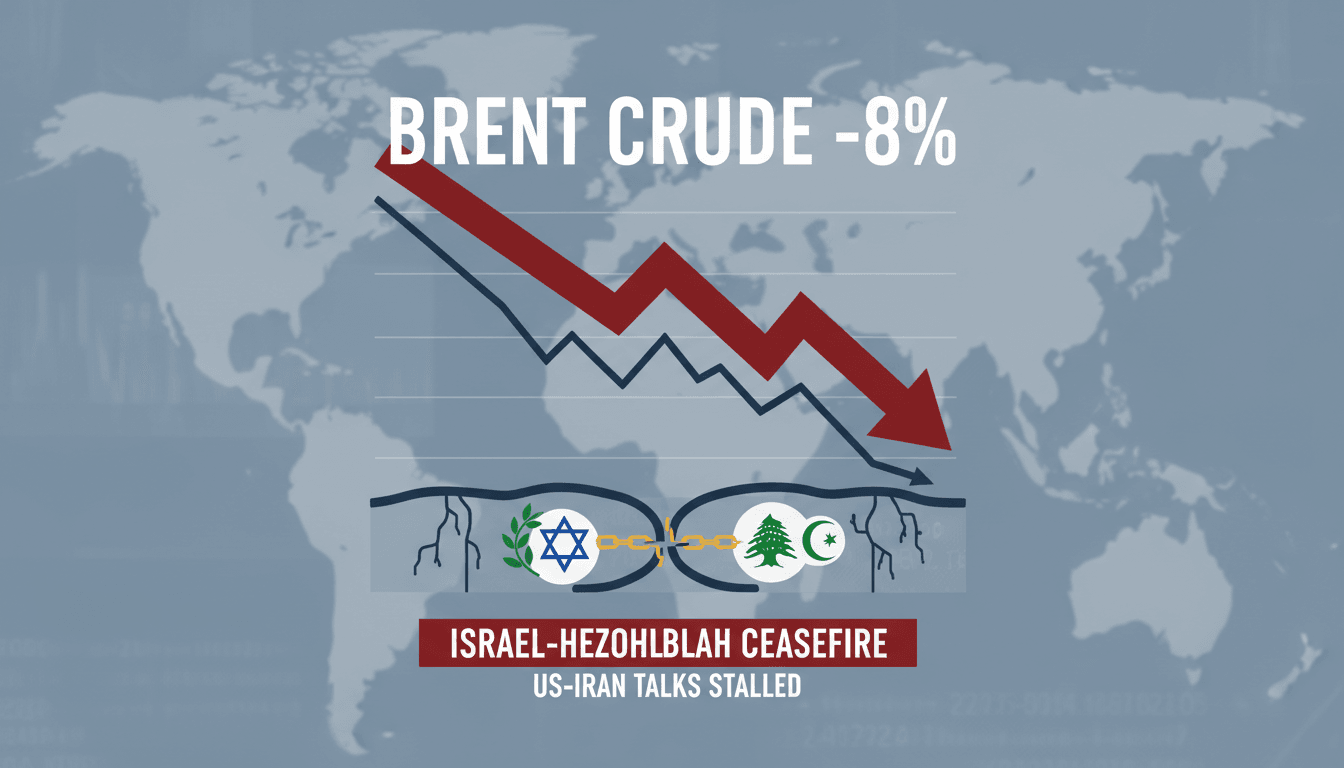
Ceasefire between Israel and Hezbollah triggers expected 8% decline in Brent crude oil prices
Here's what it means for you.
The recent ceasefire between Israel and Hezbollah is set to significantly impact Brent crude oil prices, with an anticipated decline of 8% this week. This shift reflects the oil market's sensitivity to geopolitical events, which can rapidly alter supply dynamics and pricing strategies. As negotiations between the US and Iran remain stalled, the oil market is likely to experience continued volatility, affecting both consumers and investors. Market participants should remain vigilant as these geopolitical tensions evolve, as they could lead to further fluctuations in oil prices. The interplay between regional stability and oil supply will be crucial in determining future market trends.
What happened
Brent crude oil prices are projected to fall by 8% this week following a ceasefire agreement between Israel and Hezbollah. This decline comes amid stalled negotiations between the US and Iran, which have contributed to fluctuations in the oil market. Additionally, slowed tanker movements from the Persian Gulf have impacted oil supply, further complicating the market landscape.
The ceasefire is expected to influence oil market dynamics, as traders react to the potential for increased stability in the region. However, the ongoing delays in US-Iran negotiations continue to create uncertainty, leading to mixed signals in oil pricing.
The Context
The ceasefire agreement between Israel and Hezbollah marks a significant development in the Middle East, impacting oil market dynamics. The region's geopolitical tensions have historically influenced oil prices, and this latest agreement is no exception. Stakeholders, including oil producers and consumers, are closely monitoring the situation as it unfolds.
Simultaneously, the stalled negotiations between the US and Iran regarding oil supply have contributed to recent price gains. The slowdown in tanker traffic from the Persian Gulf further complicates the supply chain, highlighting the interconnected nature of geopolitical events and oil pricing strategies.
Takeaway
As geopolitical tensions continue to evolve, the oil market is likely to remain volatile. Observers should monitor the outcomes of US-Iran negotiations, as any developments could significantly impact oil supply and pricing. Additionally, the effects of the ceasefire on regional stability will be crucial in determining future market trends.
The interplay between these factors suggests that the oil market will remain sensitive to geopolitical events, leading to potential price volatility in the coming weeks. Stakeholders should prepare for ongoing fluctuations as the situation develops.
Oil, metals, and agriculture: supply/demand headlines, OPEC chatter, inventories, and price action.
"Solid tape for energy and metals traders tracking macro and micro catalysts."
— A47 Editor
Brent set for 8% weekly fall as Israel, Hezbollah agree ceasefire
Brent crude oil prices are set to experience an 8% weekly decline as a ceasefire agreement has been reached between Israel and Hezbollah, signaling a potential reduction in regional hostilities. This development comes amid ongoing geopolitical tensio...
Global markets, investing, and macroeconomics from a premier financial newsroom.
"Bloomberg is respected for in-depth financial reporting and data-driven analysis."
— A47 Editor
Oil Gains as Iran War Negotiations Falter, Tanker Movements Slow
Oil prices increased on Friday as negotiations between the US and Iran faced delays, coinciding with a slowdown in tanker movements from the Persian Gulf. This development reflects ongoing geopolitical tensions and uncertainty surrounding the region'...
Regional and international reporting focused on Middle Eastern politics, diplomacy, and economics.
"Asharq Al-Awsat is a Saudi-owned international newspaper reflecting mainstream Gulf political perspectives."
— A47 Editor
Hormuz Reopening to Release Wave of Oil Supply, Depress Prices
The reopening of the Strait of Hormuz is expected to significantly increase oil supply, which could lead to a decrease in global oil prices. This development follows a memorandum of understanding (MoU) between the US and Iran, aimed at easing tension...