
BIS Warns of Financial Stability Risks from AI Investment Surge
Here's what it means for you.
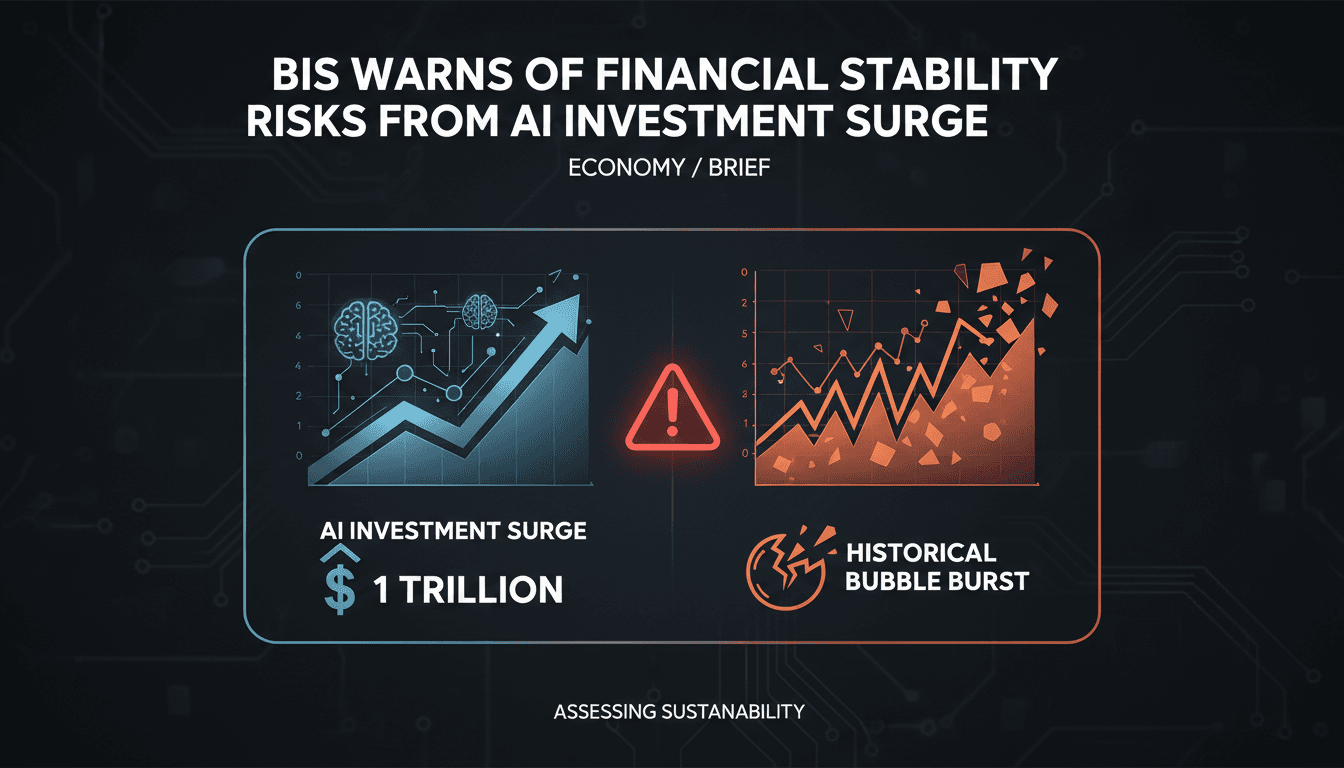
The Bank for International Settlements (BIS) has raised alarms about the financial stability risks stemming from the rapid growth of AI investments. With projections indicating a staggering $1 trillion influx into AI infrastructure, stakeholders must evaluate the sustainability of these investments. A potential market correction could mirror historical investment busts, prompting investors and policymakers to exercise caution. As the AI sector continues to expand, the implications for the economy could be significant. Vigilance is essential to prevent a financial downturn that could arise from excessive spending in this burgeoning field.
What happened
The BIS has issued a warning regarding the financial stability risks associated with the ongoing AI investment boom. Their Annual Economic Report highlights the potential for a significant correction in the AI sector, drawing parallels to past technological bubbles such as the dotcom crash and railway mania. The report emphasizes that the current surge in AI investments could lead to instability similar to previous market crashes.
With a projected $1 trillion investment in AI infrastructure, the BIS cautions that this excessive spending may ultimately result in a financial correction. The warning serves as a critical reminder for stakeholders to assess the sustainability of their investments in this rapidly evolving sector.
The Context
The BIS's concerns come at a time when the AI sector is experiencing unprecedented growth, attracting massive investments that could reshape the economic landscape. By comparing the current AI boom to historical investment busts, the BIS underscores the need for caution among investors and regulators alike. The report, published on June 28, 2026, has garnered attention from various media outlets, highlighting the urgency of the situation.
As stakeholders navigate this investment surge, the potential for a financial downturn looms large. The BIS's insights serve as a crucial guide for understanding the risks associated with the AI investment landscape.
Takeaway
Investors and policymakers should remain vigilant about the sustainability of AI investments to avoid a potential financial crisis. Monitoring regulatory responses to AI funding will be essential in assessing the landscape moving forward. Additionally, keeping an eye on signs of market corrections in tech investments will provide valuable insights into the health of the sector.
As the AI sector continues to attract significant funding, stakeholders must carefully evaluate the long-term viability of their investments. The BIS's warnings serve as a crucial reminder of the importance of prudent financial practices in an era of rapid technological advancement.
Global business headlines with AI angles.
"General business outlet that frequently covers AI."
— A47 Editor
BIS Warns that The Ongoing AI Boom Echoes Painful Historical Investment Busts
The Bank for International Settlements (BIS) has issued a warning regarding the current surge in artificial intelligence (AI) investments, drawing parallels to historical investment bubbles that led to financial downturns. The report emphasizes that ...
Stock market news, investing ideas, and trading analysis.
"TheStreet provides market news and retail-investor-focused analysis."
— A47 Editor
Central bankers grow nervous about AI funding
The Bank for International Settlements (BIS) has expressed concerns in its Annual Economic Report about the financial instability stemming from the rapid growth of artificial intelligence (AI) funding, highlighting the potential risks of an AI invest...
Corporate leadership, finance, technology, and market trends.
"Fortune covers financial trends, leadership, and innovation with a pragmatic editorial approach."
— A47 Editor
The central bank of central banks just released its flagship annual report — and it sees a $1 trillion AI investment boom headed for a reckoning
The Bank for International Settlements (BIS) has released its annual report, highlighting a projected $1 trillion investment boom in artificial intelligence (AI) while drawing parallels to historical financial bubbles such as the dotcom crash and rai...