
NASA's X-59 aircraft achieves critical supersonic flight milestone
Here's what it means for you.
The successful flight of NASA's X-59 aircraft marks a pivotal moment in the quest for quiet supersonic travel. This breakthrough could reshape the aviation landscape, allowing for faster air travel over land without the disruptive sonic booms that have historically limited supersonic flight. As regulatory frameworks evolve, the implications for commercial aviation could be profound, potentially leading to a new era of air travel. The advancements in quiet supersonic technology not only promise to enhance passenger experience but also aim to address environmental concerns related to noise pollution. This achievement signals a collaborative effort between NASA and Lockheed Martin, highlighting the importance of innovation in sustainable aviation.
What happened
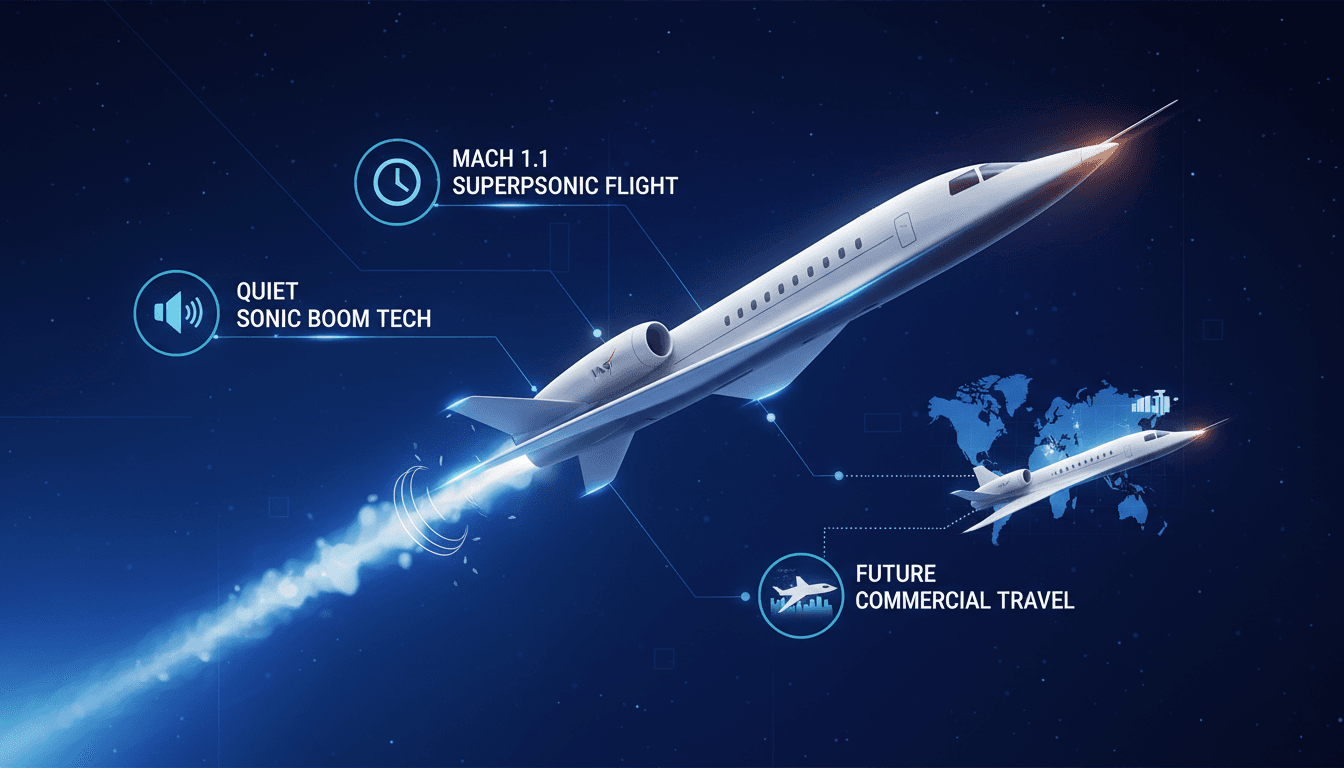
NASA's X-59 experimental aircraft has successfully broken the sound barrier, achieving a speed of Mach 1.1. This milestone was reached during a test flight, marking a significant step towards the development of quiet supersonic flight technology. The aircraft's ability to reach this speed is crucial for demonstrating that supersonic flights can occur over populated areas without the disruptive sonic booms typically associated with such speeds.
The successful test flight took place on June 13, 2026, following the X-59's initial target speed and altitude achievement the previous day. This accomplishment is part of NASA's broader initiative to develop sustainable aviation technologies that could revolutionize air travel.
The Context
The X-59 is designed specifically to minimize noise pollution from supersonic flights, addressing a long-standing barrier to commercial supersonic travel over land. This project is a collaboration between NASA and Lockheed Martin, showcasing the potential for public-private partnerships in advancing aviation technology. The successful testing of the X-59 is not only a technical achievement but also a critical step towards regulatory changes that could facilitate the introduction of commercial supersonic flights.
As testing continues, the implications of this technology extend beyond just speed; they encompass environmental considerations and the future of air travel. The ability to fly faster than sound without the accompanying noise could transform the aviation industry and reshape public perception of supersonic travel.
Takeaway
The successful testing of the X-59 paves the way for potential commercial supersonic flights that could revolutionize air travel. As further test flights are planned over U.S. communities, the focus will be on demonstrating the aircraft's capabilities while addressing noise concerns. The ongoing developments in quiet supersonic technology will be closely monitored by industry stakeholders and regulators alike.
Looking ahead, the X-59's achievements could lead to significant regulatory changes, opening the door for a new era in aviation. The collaboration between NASA and Lockheed Martin will be crucial in navigating the challenges and opportunities that lie ahead in the realm of supersonic flight.
Consumer technology news with AI coverage.
"Gadget and tech site reporting on AI in products."
— A47 Editor
NASA's X-59 reaches speed and altitude milestones ahead of first quiet supersonic flights
NASA's X-59 aircraft has successfully achieved significant speed and altitude milestones, positioning it for its first quiet supersonic flights over U.S. communities. This development marks a crucial step in the aircraft's preparation for operational...
Covers consumer technology, electronics, gadgets, and product reviews.
"Engadget is a trusted source for gadget reviews and consumer tech news, known for its hands-on analysis and industry coverage."
— A47 Editor
NASA's X-59 reaches speed and altitude milestones ahead of first quiet supersonic flights
NASA's X-59 aircraft has successfully achieved significant speed and altitude milestones, positioning it for its first quiet supersonic flights over U.S. communities. This development marks a crucial step in the aircraft's preparation for operational...
Scientific discoveries, health, technology, and natural phenomena.
"Live Science reports on scientific discoveries, health, technology, and natural phenomena with a popular science tone."
— A47 Editor
NASA's experimental X-59 jet breaks sound barrier for 1st time in step toward 'quiet supersonic' technology
NASA and Lockheed Martin's experimental X-59 aircraft has successfully broken the sound barrier for the first time, achieving a speed of Mach 1.1. This milestone is a significant step toward developing 'quiet supersonic' technology, which aims to min...
Science and technology stories including AI.
"Longstanding science magazine with thoughtful AI coverage."
— A47 Editor
NASA’s experimental quiet supersonic plane passes another critical milestone
NASA's X-59 research aircraft successfully reached its target speed and altitude for the first time, marking a significant milestone in its development as an experimental quiet supersonic plane. This achievement demonstrates the aircraft's capability...
Scientific research, technology, environment, and society.
"Scientific American is one of the oldest and most authoritative science magazines, known for deep dives into science, technology, and society."
— A47 Editor
NASA’s experimental quiet supersonic plane passes another critical milestone
NASA's X-59 research aircraft successfully reached its target speed and altitude for the first time, marking a significant milestone in its development as an experimental quiet supersonic plane. This achievement demonstrates the aircraft's capability...