
U.S. consumer confidence declines for the first time in months amid rising inflation
Here's what it means for you.
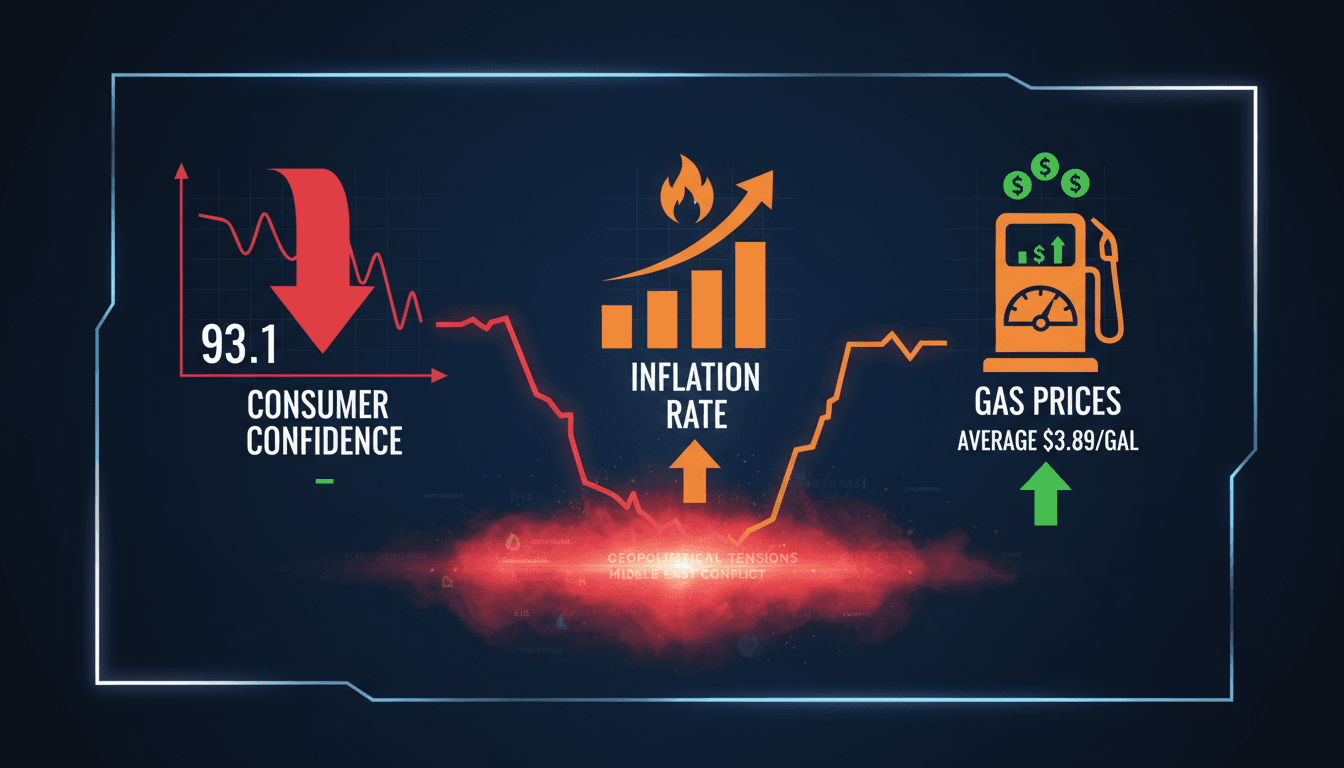
The recent decline in U.S. consumer confidence signals potential challenges for economic growth as rising inflation and high gas prices weigh on sentiment. With the consumer confidence index dropping to 93.1, businesses may need to adjust their strategies to accommodate shifting consumer behavior. Policymakers will also be closely monitoring these trends to gauge the need for economic interventions. As inflationary pressures persist, consumers may become more cautious in their spending, which could further impact economic activity. This situation underscores the importance of understanding consumer sentiment as a key indicator of future economic performance.
What happened
Consumer confidence in the U.S. fell to 93.1 in May, marking the first decline after three consecutive months of increases. This drop reflects growing economic concerns among Americans, primarily driven by rising prices and inflation linked to ongoing geopolitical tensions in the Middle East. The current level of consumer confidence is the lowest recorded since 2025.
The decline of 0.7 points in the consumer confidence index highlights a shift in sentiment, contrasting sharply with soaring stock prices. As consumers grapple with higher costs, particularly in gas prices, their outlook on the economy appears increasingly pessimistic.
The Context
The backdrop for this decline includes gas prices hovering around $4.50, which significantly contributes to inflation concerns. The ongoing U.S.-Israeli conflict in Iran exacerbates these inflationary effects, creating uncertainty in the market. Despite the stock market's performance, the disconnect between rising stock prices and consumer sentiment raises questions about the sustainability of economic growth.
Understanding the dynamics of consumer confidence is crucial, as it influences spending patterns and overall economic health. The timing of this decline is particularly notable, as it follows a period of optimism that had lasted for several months.
Takeaway
Looking ahead, continued inflation and high gas prices may further impact consumer confidence in the coming months. Stakeholders should monitor gas prices and inflation trends closely, as these factors will likely shape consumer behavior and spending. Additionally, potential economic policy responses may emerge as policymakers seek to address growing consumer concerns.
As the situation evolves, the volatility in consumer sentiment could have significant implications for economic growth. Keeping an eye on these developments will be essential for businesses and policymakers alike.
Capitol Hill news, legislation, and policy insight.
"The Hill specializes in U.S. politics and policy, with a focus on Capitol Hill developments and a reputation for insider reporting."
— A47 Editor
Consumer confidence slips for first time in months
U.S. consumer confidence experienced its first decline in May after three consecutive months of increases, dropping 0.7 points to 93.1, the lowest level since 2025. This downturn is attributed to rising prices and inflation, exacerbated by the ongoin...
Global business headlines with AI angles.
"General business outlet that frequently covers AI."
— A47 Editor
Consumer Confidence Declines In May After Three Months Of Gains As Gas Prices Remain Elevated
U.S. consumer confidence experienced a slight decline in May, following three months of gains, as elevated gas prices and rising inflation continue to impact household financial sentiments. This downturn reflects growing concerns among consumers abou...
Conservative-leaning political and national coverage.
"The Washington Times is a conservative-leaning newspaper known for its political coverage and advocacy of right-of-center viewpoints."
— A47 Editor
Consumer confidence dented with gas prices around $4.50 and inflation still elevated
U.S. consumer confidence has slightly declined this month as gas prices hover around $4.50 and inflation remains elevated, contrasting with rising stock prices nearing record levels. This situation reflects ongoing economic pressures faced by consume...
Social/economic commentary and analysis relevant to business and markets.
"WSJ blends data-driven economic insight with commentary on policy and society."
— A47 Editor
U.S. Consumer Sentiment Worsened in May
U.S. consumer sentiment declined in May, reflecting growing concerns over inflation exacerbated by the ongoing conflict in the Middle East, according to a survey by The Conference Board.
Key macro releases (CPI, jobs, PMIs), surprise indexes, and market implications.
"Great for data-print awareness and instant read-through to rates and risk assets."
— A47 Editor
US consumer confidence ebbs in May as inflation worries mount
US consumer confidence has declined in May 2026, reflecting growing concerns over inflation and rising living costs, which have been exacerbated by the ongoing conflict in Iran. This downturn indicates a significant shift in consumer sentiment as fin...
Global markets, investing, and macroeconomics from a premier financial newsroom.
"Bloomberg is respected for in-depth financial reporting and data-driven analysis."
— A47 Editor
US Consumer Confidence Slips Amid Widespread Price Worries
US consumer confidence has declined in May 2026, reflecting growing concerns over inflation and rising living costs, exacerbated by the ongoing conflict in Iran. This downturn indicates a shift in consumer sentiment as economic conditions worsen.