
Goldman Sachs lowers year-end gold price target to $4,900 amid Federal Reserve's interest rate policy
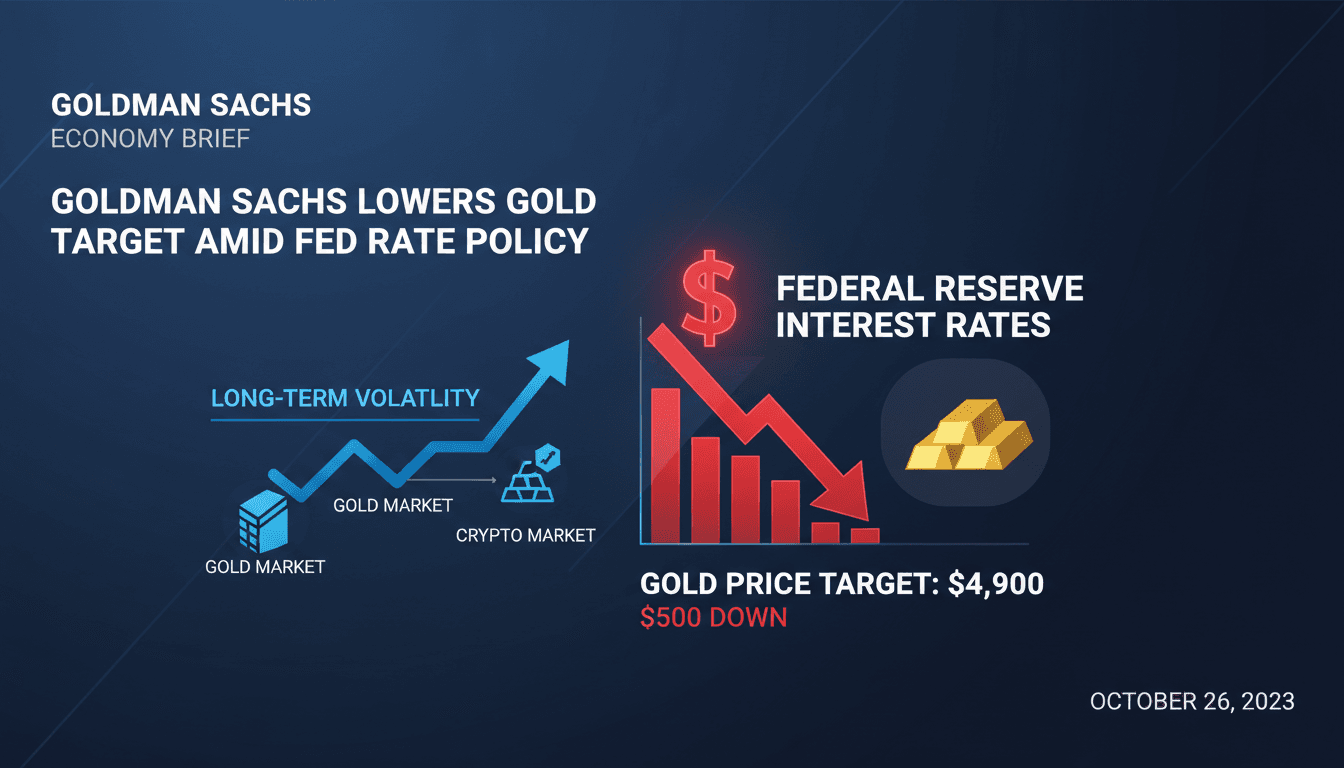
Here's what it means for you.
Goldman Sachs' decision to lower its year-end gold price target signals a significant shift in market expectations regarding commodity prices. The adjustment reflects the ongoing influence of the Federal Reserve's interest rate policies, which are expected to maintain pressure on gold and other risk assets. Investors should be prepared for increased volatility as they reassess their strategies in light of these developments. The revised target of $4,900 per ounce indicates a cautious outlook for gold, suggesting that market participants may need to adapt to a changing economic landscape. This could also have implications for the cryptocurrency market, as investor sentiment shifts in response to monetary policy.
What happened
Goldman Sachs has revised its year-end gold price target down by $500 to $4,900 per ounce. This decision comes in light of the Federal Reserve's announcement that it will not cut interest rates this year, a stance that has negatively impacted gold prices. The bank's adjustment reflects ongoing pressures on gold, which has been on a downward trend since reaching an all-time high earlier in the year.
In January 2026, gold peaked at nearly $5,600 an ounce, but the current economic conditions have prompted a reassessment of its value. The cut in the price target underscores the bank's response to changing market dynamics and the broader implications for investors.
The Context
Goldman Sachs' adjustment to its gold price forecast is rooted in the Federal Reserve's monetary policy decisions. The central bank's commitment to maintaining interest rates has created a challenging environment for gold, which typically thrives in lower interest rate scenarios. As a result, investors are likely to experience increased volatility in both gold and cryptocurrency markets.
The timing of this announcement is critical, as it follows a period of significant price fluctuations in gold. Stakeholders, including investors and market analysts, will need to closely monitor how these developments unfold and their potential impact on broader market risk appetite.
Takeaway
Looking ahead, investors should keep a close eye on any shifts in Federal Reserve policy regarding interest rates, as these could further influence gold prices. Market reactions to gold price movements will also be crucial, particularly in relation to cryptocurrencies, which may experience heightened volatility as a result.
As the economic landscape evolves, staying informed about key indicators will be essential for navigating potential price movements in both gold and other risk assets.
Stock market news, investing ideas, and trading analysis.
"TheStreet provides market news and retail-investor-focused analysis."
— A47 Editor
Goldman Sachs revisits its gold price target after Fed meeting
Goldman Sachs has revised its year-end gold price target down by $500 to $4,900 per ounce, following a significant decline in gold prices from an all-time high of nearly $5,600 in January. This adjustment reflects the bank's response to ongoing marke...
Real-time updates, analysis, and reports on the blockchain and cryptocurrency sectors.
"Crypto News delivers real-time updates, analysis, and reports on the blockchain and cryptocurrency sectors."
— A47 Editor
Goldman Sachs lowers gold target, and Bitcoin may feel the pressure
Goldman Sachs has reduced its year-end gold price target to $4,900, attributing this adjustment to delayed interest rate cuts by the Federal Reserve, which are exerting pressure on gold, Bitcoin, and overall risk appetite in the market.
Global markets, investing, and macroeconomics from a premier financial newsroom.
"Bloomberg is respected for in-depth financial reporting and data-driven analysis."
— A47 Editor
Goldman Sachs Lops $500 Off Gold Target on No Fed Cuts This Year
Goldman Sachs Group Inc. has reduced its year-end gold price forecast by $500 per ounce, citing the Federal Reserve's decision to maintain interest rates without cuts expected this year. This adjustment reflects a shift in market expectations followi...