
US-Russian space crew returns to Earth after eight-month ISS mission
What happened
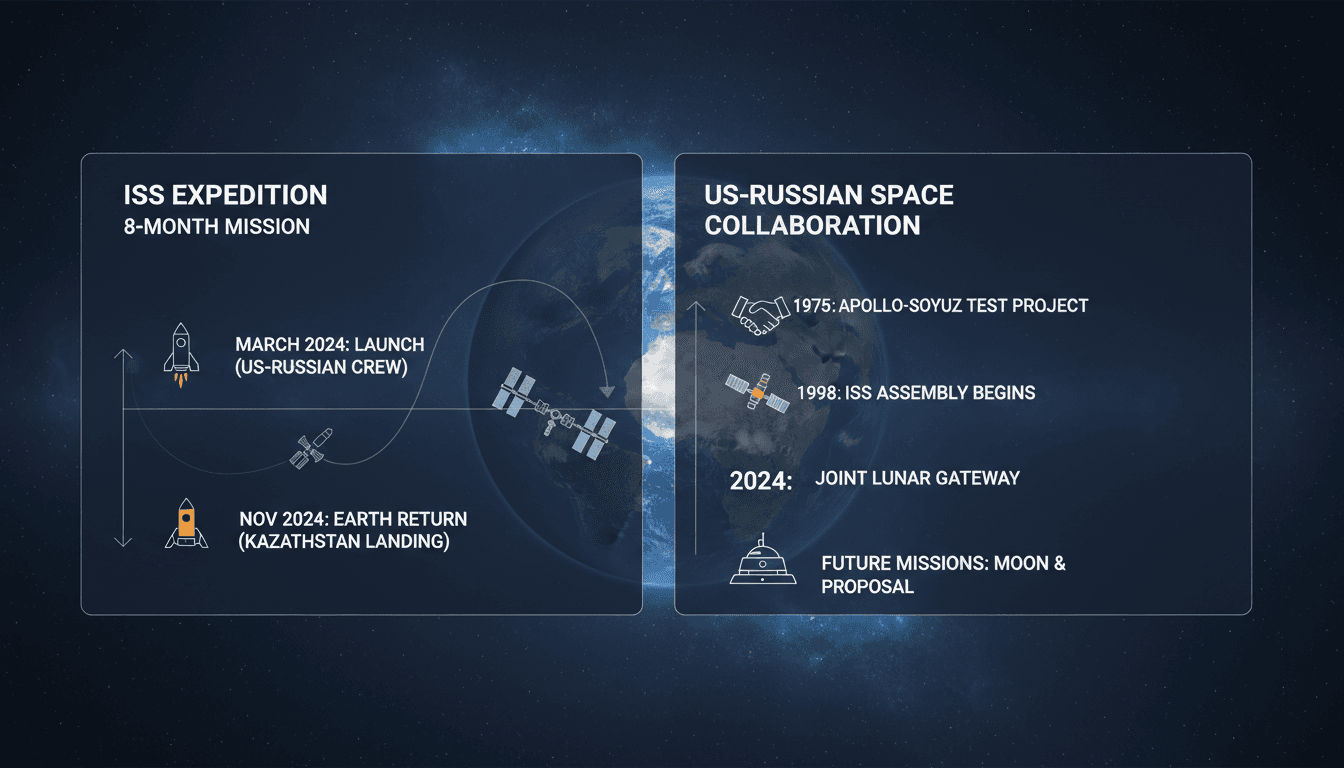
A US-Russian space crew has successfully returned to Earth after an eight-month mission aboard the International Space Station (ISS). The crew, which included NASA astronaut Chris Williams and two Russian cosmonauts, landed in Kazakhstan on July 26, 2026. Their mission lasted a total of 241 days, marking a significant duration for crewed spaceflight.
The landing took place in the steppes of Kazakhstan, a common return site for ISS crews. This successful return highlights the established protocols for crewed spaceflight and the importance of international partnerships in scientific endeavors.
The Context
The mission reflects ongoing collaboration between the US and Russia in space exploration, a relationship that has persisted despite geopolitical tensions. The duration of 241 days emphasizes the endurance required for long-term space missions and the commitment of both nations to maintain a human presence in low Earth orbit.
As space exploration continues to evolve, the cooperation between these two nations will be crucial for future missions. The successful return of the crew serves as a reminder of the shared goals that transcend national boundaries in the pursuit of knowledge and discovery.
Takeaway
Looking ahead, future missions to the ISS and beyond are planned, with potential new crew members set to join. The collaboration between the US and Russia may lead to advancements in space technology and further international partnerships.
As the landscape of space exploration changes, the importance of these alliances cannot be overstated. The successful return of this crew not only marks the end of one mission but also paves the way for future endeavors that could include journeys to the Moon and Mars.
RT is a Russian state-funded network covering global events from a Russian perspective.
"RT is widely criticized for promoting pro-Kremlin narratives and is considered by many to be a state propaganda outlet."
— A47 Editor
WATCH Russian-US space crew return to Earth
A Russian-US space crew, consisting of two Russian cosmonauts and a NASA astronaut, has successfully returned to Earth after completing an eight-month mission aboard the International Space Station (ISS), landing in Kazakhstan. This mission highlight...
Breaking news, politics, business, and entertainment from the U.S. and around the world.
"The New York Post is a tabloid-format newspaper known for its sensationalist headlines and conservative-leaning editorial tone."
— A47 Editor
US-Russian space crew lands in Kazakhstan after an 8-month stint on the ISS
A US-Russian space crew successfully landed in Kazakhstan after completing an eight-month mission aboard the International Space Station (ISS). The landing marks the conclusion of a collaborative effort in space exploration between the two nations.
Space science news, astronomy updates, and spaceflight developments.
"Space.com delivers space science news, astronomy updates, and spaceflight developments with engaging coverage."
— A47 Editor
NASA astronaut, 2 cosmonauts return to Earth after 241 days on space station (video)
NASA astronaut Chris Williams and two Russian cosmonauts returned to Earth after spending 241 days aboard the International Space Station (ISS), marking a significant milestone in their mission. Their return occurred early Sunday morning, July 26, an...