
White House unveils new AI framework favoring closed-source models over open-source alternatives
What happened
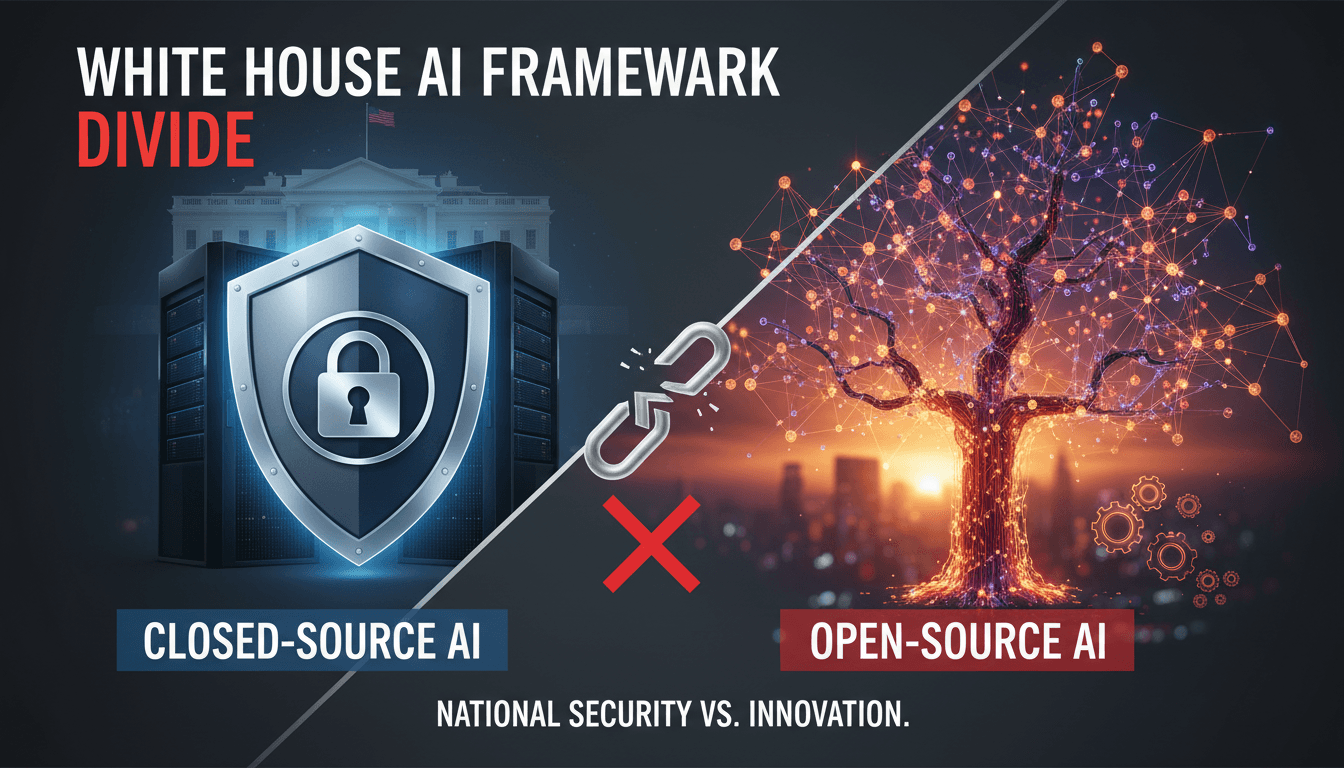
The White House has completed a new AI framework that remains undisclosed to the public, favoring larger AI developers over smaller labs. This framework is a direct result of an executive order issued by former President Trump, aimed at addressing national security concerns associated with advanced AI technologies. Notably, the framework excludes open-source models entirely, focusing solely on closed-source systems deemed to have significant capabilities.
Reports indicate that the framework will only be shared with participating companies, further limiting transparency. The exclusion of open-source models highlights a significant gap in the evaluation process, raising concerns among smaller AI labs about their future in the industry.
The Context
The framework was initiated by a June 2 executive order from former President Trump, which sought to define 'covered frontier models' as closed-source AI systems with state-of-the-art capabilities. This decision has sparked discontent among smaller AI developers who feel locked out of the evaluation process. The lack of public access to the framework raises questions about the balance between national security and fostering innovation in the AI sector.
As the AI landscape evolves, the implications of this framework may prompt further debate on the need for more inclusive policies that support smaller developers. The current focus on closed-source models could lead to a concentration of power among larger companies, potentially stifling competition and innovation.
Takeaway
The lack of transparency in the AI framework may lead to increased scrutiny and calls for more inclusive policies in AI development. Advocacy groups and smaller AI labs are likely to push back against this exclusion, potentially leading to future discussions on AI regulation and transparency in the U.S. The ongoing debate will likely center around the balance between national security and the need to foster innovation within the industry.
As stakeholders react to this framework, the potential backlash from smaller AI labs could shape the future of AI regulation and development. The outcome of these discussions will be crucial in determining how the AI landscape evolves in the coming years.
Corporate leadership, finance, technology, and market trends.
"Fortune covers financial trends, leadership, and innovation with a pragmatic editorial approach."
— A47 Editor
Washington is keeping its AI rulebook private. Smaller AI labs aren’t happy.
The White House has introduced a new framework for artificial intelligence (AI) that grants it early access to the most advanced AI systems, a move that has drawn criticism from smaller AI labs who feel excluded from the process. This decision highli...
Global business headlines with AI angles.
"General business outlet that frequently covers AI."
— A47 Editor
White House Completes New AI Framework. Its Rules Are Still Not Public
The White House has completed a new artificial intelligence (AI) framework, which was initiated by an executive order from former President Trump on June 2. This framework aims to establish a voluntary process for federal agencies and AI developers t...
Curated tech headlines including AI stories.
"Influential aggregator surfacing the day’s top tech/AI links."
— A47 Editor
Sources: the US' AI framework excludes open models and defines a covered frontier model as closed source with SOTA capabilities and national security risks (Maria Curi/Axios)
The White House has finalized a new artificial intelligence (AI) framework that excludes open models, designating a covered frontier model as closed source with state-of-the-art (SOTA) capabilities and associated national security risks. This decisio...
Curated tech headlines including AI stories.
"Influential aggregator surfacing the day’s top tech/AI links."
— A47 Editor
Sources: the White House doesn't plan to publicly release its voluntary AI framework; details will be available to the companies that are part of the process (Maria Curi/Axios)
The White House has decided not to publicly release its voluntary framework for evaluating advanced AI models, with details only accessible to participating companies, according to sources familiar with the discussions. This decision follows the esta...