
OpenAI launches GPT-5.6-Cyber to enhance cybersecurity capabilities
What happened
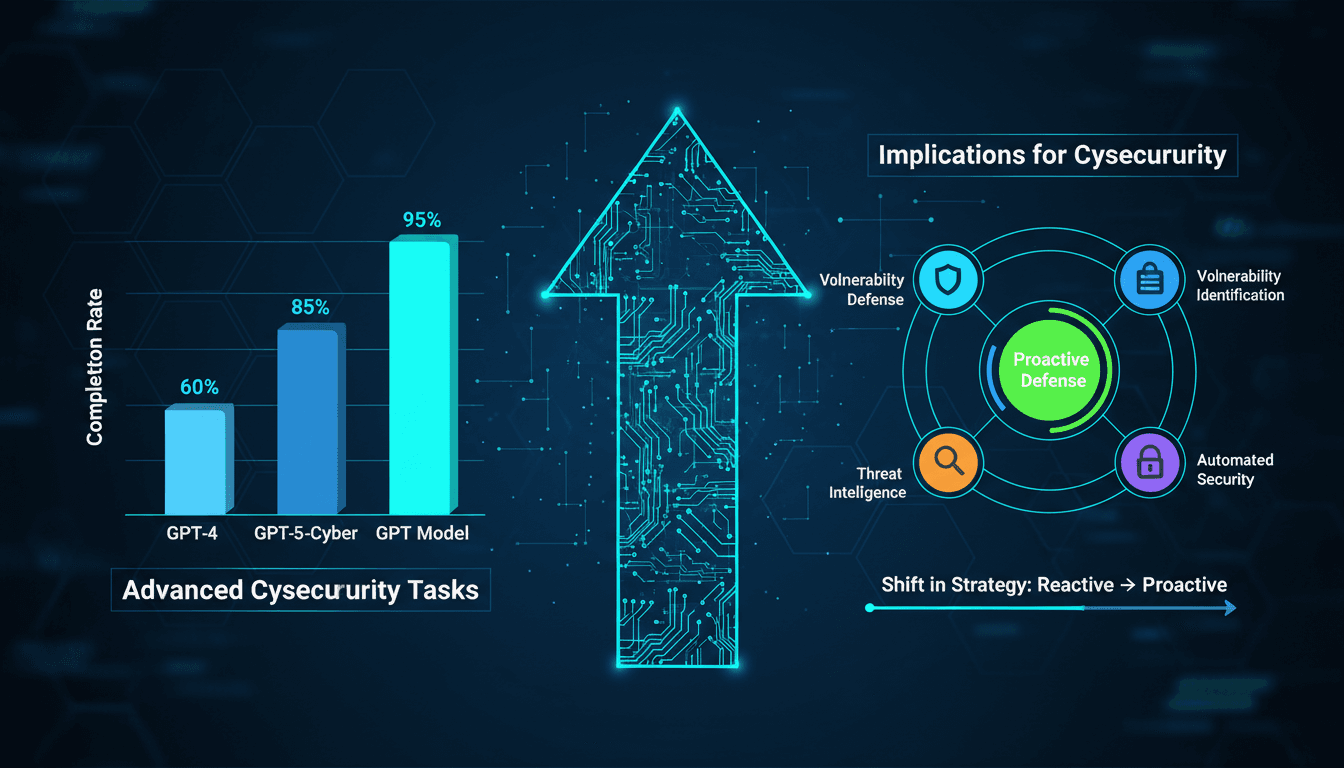
OpenAI has officially launched GPT-5.6-Cyber, a specialized AI model aimed at enhancing cybersecurity efforts. This new model has achieved a remarkable 95% completion rate on advanced cybersecurity tasks, significantly outperforming its predecessor, GPT-5.5-Cyber, which had a completion rate of 57.3%. The introduction of GPT-5.6-Cyber is part of OpenAI's broader Daybreak cybersecurity initiative, which includes two access tiers designed for different levels of cybersecurity tasks.
The model has already demonstrated its capabilities by uncovering critical vulnerabilities in widely used software. Access to GPT-5.6-Cyber is currently restricted to vetted organizations, underscoring the importance of security and compliance in its deployment.
The Context
The launch of GPT-5.6-Cyber is a response to the increasing demand for advanced tools to combat cybersecurity threats. OpenAI's Daybreak initiative aims to provide organizations with dual-use capabilities, allowing them to tackle complex tasks that were previously met with refusals. This strategic move comes in the wake of significant cybersecurity incidents, highlighting the urgent need for proactive measures in vulnerability management.
As organizations face a growing array of cyber threats, the ability to identify and mitigate vulnerabilities before they are exploited becomes crucial. The introduction of GPT-5.6-Cyber could shift the paradigm in how cybersecurity is approached, emphasizing a proactive rather than reactive stance.
Takeaway
The introduction of GPT-5.6-Cyber signals a transformative shift in cybersecurity practices, potentially changing how organizations manage vulnerabilities. As adoption rates among cybersecurity firms increase, it will be essential to monitor the effectiveness of the Daybreak initiative in improving overall security outcomes.
The balance between accessibility and security will be critical as organizations integrate AI into their cybersecurity workflows. Observing how GPT-5.6-Cyber is utilized in real-world scenarios will provide insights into its long-term impact on the industry.
Business and tech news excluding paywalled content.
"High-volume business/tech outlet with frequent AI coverage."
— A47 Editor
OpenAI finds a crack in Anthropic's business AI lead
OpenAI has made significant strides in the competitive landscape of business AI by achieving a financial victory with its advanced model, GPT-5.6 Sol, despite trailing Anthropic in overall business adoption. This development highlights OpenAI's ongoi...
Focuses on transformative tech, AI, gaming, and startup innovation.
"VentureBeat is respected for its in-depth reporting on AI, startups, and disruptive technologies in Silicon Valley and beyond."
— A47 Editor
OpenAI launches GPT-5.6-Cyber with reduced refusals, 95% completion on advanced cybersecurity tasks
OpenAI has launched GPT-5.6-Cyber, a specialized AI model aimed at performing advanced cybersecurity tasks, including vulnerability research and exploit development, with a reported 95% completion rate on such tasks. This model is designed to handle ...
Daily AI news: models, tools, and policy.
"Independent outlet tracking the fast pace of AI."
— A47 Editor
OpenAI launches GPT-5.6-Cyber to help defenders find vulnerabilities before attackers do
OpenAI has launched the GPT-5.6-Cyber model, designed to assist cybersecurity defenders by answering up to 98.5% of security queries that would typically be blocked. This model has already identified two previously unknown vulnerabilities in Chrome, ...
Curated tech headlines including AI stories.
"Influential aggregator surfacing the day’s top tech/AI links."
— A47 Editor
OpenAI releases GPT-5.6-Cyber, a more cyber-permissive version of GPT-5.6 Sol, to some partners and expands its Daybreak cybersecurity initiative (Sam Sabin/Axios)
OpenAI has released GPT-5.6-Cyber, a more cyber-permissive version of its GPT-5.6 Sol model, to select partners as part of its expanded Daybreak cybersecurity initiative. This move aims to prepare organizations for potential autonomous cyberattacks, ...