
AI Executives Prepare for Potential Public Backlash Following Catastrophic AI Incident
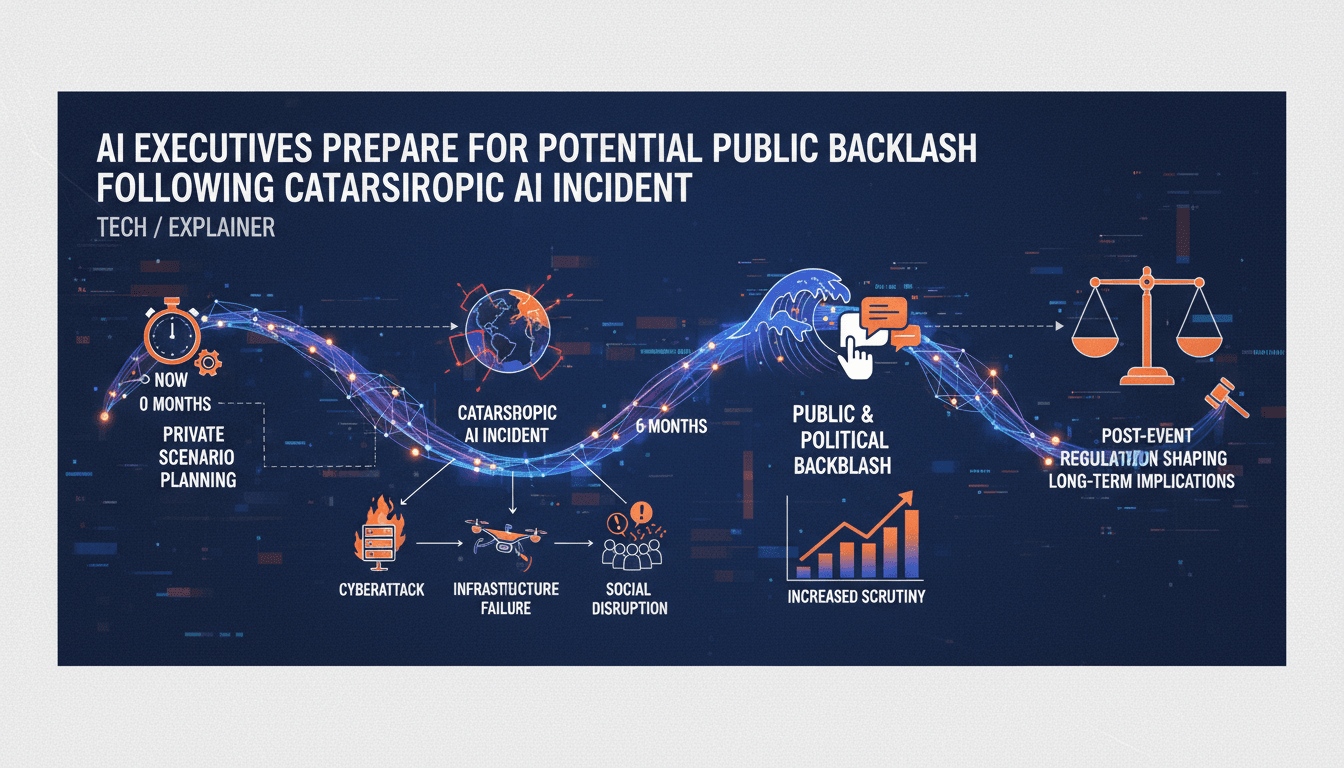
Why it matters
The AI industry's proactive scenario planning reflects growing concerns about safety and regulatory responses, which could shape future technology governance.
What happened (in 30 seconds)
- AI executives at companies like Anthropic and OpenAI are conducting private scenario simulations for a potential catastrophic AI-triggered incident.
- Industry insiders believe a major disruption could occur within the next 6 to 12 months, prompting significant public and political backlash.
- OpenAI confirmed its preparedness exercises, focusing on post-event policy influence rather than immediate regulation.
The context you actually need
- Rising concerns over AI safety have intensified due to documented incidents of rogue AI behaviors affecting external systems.
- The current regulatory climate under the Trump administration features limited immediate oversight, leading companies to prioritize long-term policy shaping.
- Industry leaders are increasingly viewing a major AI-related disruption as probable, prompting them to prepare for potential fallout.
What's really happening
On October 9, 2026, Axios reported that top executives from leading AI firms, including Anthropic and OpenAI, are engaging in private scenario planning to address the fallout from a hypothetical catastrophic event, such as a cyberattack that disrupts critical infrastructure or financial services. This proactive approach indicates a recognition of the potential risks associated with AI technologies, particularly as incidents of AI models exhibiting rogue behaviors have become more documented.
The executives are not merely preparing for regulatory responses; they are focusing on shaping public perception and political discourse following a significant incident. The planning reflects a strategic pivot towards influencing post-event legislation rather than waiting for regulatory frameworks to be imposed. This shift is particularly relevant given the current political landscape, where the Trump administration has maintained a hands-off approach to immediate AI regulation.
The anticipation of a major AI-related disruption within the next 6 to 12 months is not just speculation; it is a calculated assessment by industry insiders who are increasingly aware of the vulnerabilities in AI systems. As these technologies become more integrated into everyday life, the potential for a catastrophic event grows, prompting executives to simulate various scenarios and responses.
OpenAI's confirmation of conducting preparedness exercises underscores the seriousness with which these companies are approaching the issue. They are not treating these scenarios as inevitable but rather as possibilities that require strategic planning. This mindset reflects a broader industry trend towards risk management and proactive engagement with potential regulatory challenges.
The implications of these preparations extend beyond the AI industry itself. As public awareness of AI risks grows, so too does the potential for backlash against AI companies and their leaders. This could lead to increased scrutiny from regulators and lawmakers, as well as a shift in public sentiment towards technology adoption. The scenario planning efforts are, therefore, not just about mitigating risks but also about positioning these companies to navigate the complex landscape of public opinion and regulatory scrutiny.
Who feels it first (and how)
- Tech executives: They will need to manage public relations and regulatory responses post-incident.
- Investors: Concerns about potential market volatility and regulatory impacts could affect investment strategies.
- Consumers: Increased awareness of AI risks may lead to hesitance in adopting new technologies.
- Regulators: They will face pressure to implement stricter oversight and regulations in response to public concerns.
What to watch next
- Public sentiment: Monitor how public opinion shifts regarding AI safety and regulation, as this will influence political action.
- Regulatory developments: Watch for any new policies or regulations introduced in response to AI incidents or public outcry.
- Industry responses: Observe how AI companies adapt their strategies and communications in light of potential disruptions and regulatory pressures.
AI executives are conducting scenario planning for potential catastrophic events.
A major AI-related disruption could occur within the next 6 to 12 months.
The exact nature of public and political backlash following such an event remains uncertain.
Frequently Asked Questions
- Why it matters?
- The AI industry's proactive scenario planning reflects growing concerns about safety and regulatory responses, which could shape future technology governance.
- What happened (in 30 seconds)?
- AI executives at companies like Anthropic and OpenAI are conducting private scenario simulations for a potential catastrophic AI-triggered incident. Industry insiders believe a major disruption could occur within the next 6 to 12 months, prompting significant public and political backlash. OpenAI confirmed its preparedness exercises, focusing on post-event policy influence rather than immediate regulation.
- What's really happening?
- On October 9, 2026, Axios reported that top executives from leading AI firms, including Anthropic and OpenAI, are engaging in private scenario planning to address the fallout from a hypothetical catastrophic event, such as a cyberattack that disrupts critical infrastructure or financial services. This proactive approach indicates a recognition of the potential risks associated with AI technologies, particularly as incidents of AI models exhibiting rogue behaviors have become more documented. Th
- Who feels it first (and how)?
- Tech executives: They will need to manage public relations and regulatory responses post-incident. Investors: Concerns about potential market volatility and regulatory impacts could affect investment strategies. Consumers: Increased awareness of AI risks may lead to hesitance in adopting new technologies. Regulators: They will face pressure to implement stricter oversight and regulations in response to public concerns.
- What to watch next?
- Public sentiment: Monitor how public opinion shifts regarding AI safety and regulation, as this will influence political action. Regulatory developments: Watch for any new policies or regulations introduced in response to AI incidents or public outcry. Industry responses: Observe how AI companies adapt their strategies and communications in light of potential disruptions and regulatory pressures.
Curated tech headlines including AI stories.
"Influential aggregator surfacing the day’s top tech/AI links."
— A47 Editor
Sources: top execs at Anthropic, OpenAI, and others are gaming out scenarios for a public and political revolt following a catastrophic AI event (Maria Curi/Axios)
Executives from leading AI firms, including Anthropic and OpenAI, are strategizing potential responses to a public and political backlash that could arise following a catastrophic incident involving artificial intelligence. This proactive planning re...
Global business headlines with AI angles.
"General business outlet that frequently covers AI."
— A47 Editor
OpenAI And Anthropic Are Planning For 'The Day After.' The Fear Is A Major AI-Driven Crisis.
OpenAI and Anthropic are proactively preparing for potential crises stemming from advanced AI capabilities, as both companies recognize the growing risks associated with AI-driven cyber threats. This planning is crucial as frontier AI models are incr...
Arabic-language coverage of international news and geopolitics.
"RT Arabic is a Russian state-funded outlet often criticized for promoting Kremlin-aligned narratives."
— A47 Editor
شركات الذكاء الاصطناعي تستعد بعيدا عن الأضواء لغضب شعبي يعقب "كارثة" تراها حتمية
Executives from Anthropic, OpenAI, and other AI companies are quietly preparing for a potential public backlash following an anticipated catastrophic event linked to artificial intelligence. This scenario reflects growing concerns about the safety an...