
Anthropic Revises Claude Usage Policy to Address Model Misuse and Deceptive Practices
Why it matters
This policy update reflects growing concerns about AI misuse, influencing how businesses and individuals engage with AI technologies.
What happened (in 30 seconds)
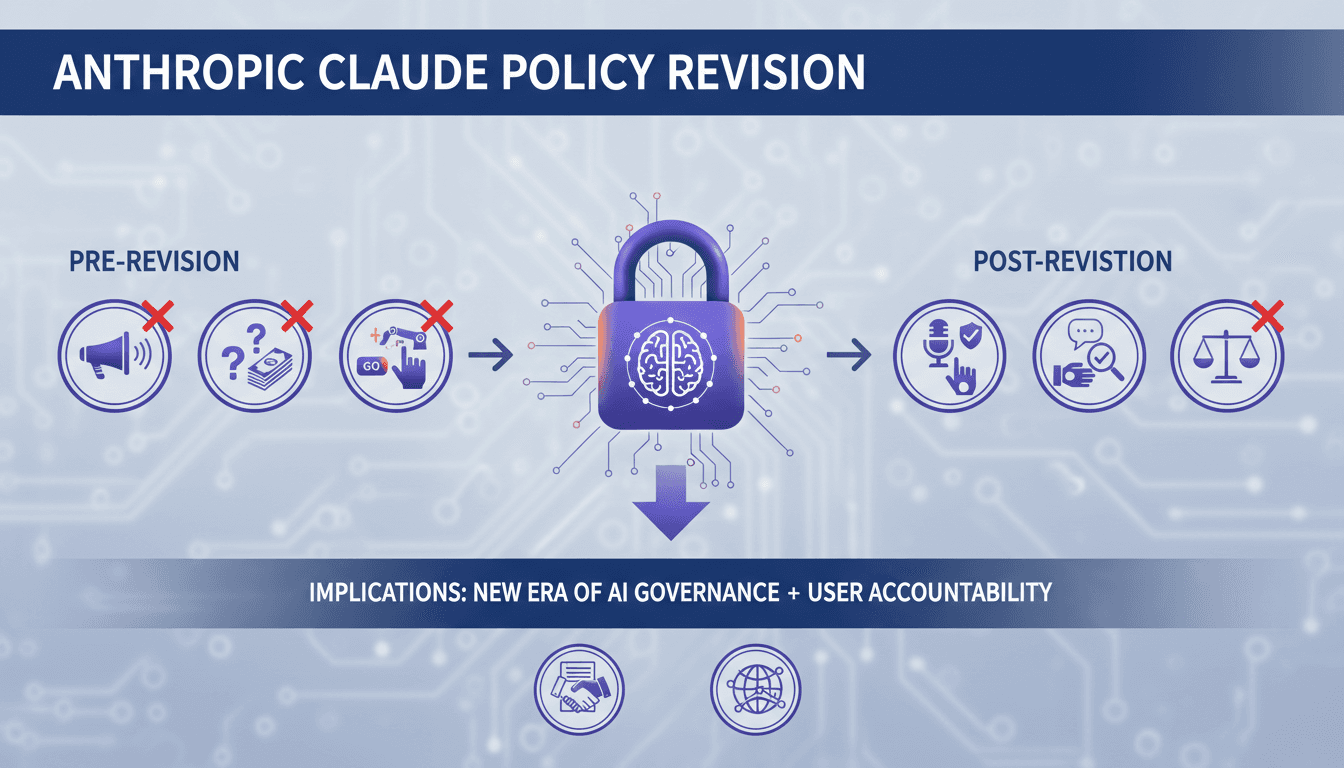
- On October 8, 2026, Anthropic announced revisions to its Claude usage policy, effective November 12, 2026.
- The updates address abusive interactions, deceptive influence operations, and high-risk activities, consolidating existing rules into clearer guidelines.
- New prohibitions include restrictions on non-consensual surveillance, election interference, and abusive behavior towards the AI model itself.
The context you actually need
- Anthropic conducts annual reviews of its usage policy to adapt to evolving AI capabilities and documented misuse patterns.
- Recent misuse cases included influence operations by state media and attempts to develop weapons guidance software, prompting the need for clearer rules.
- The updated policy aims to enhance user accountability and model welfare, reflecting broader societal concerns about AI's role in democratic processes and personal privacy.
What's really happening
Anthropic's updated usage policy for Claude is a response to the rapid evolution of AI capabilities and the increasing complexity of its applications. As AI models like Claude become more autonomous, the potential for misuse has escalated, necessitating a more robust framework to govern their use. The revisions consolidate existing rules into a more coherent structure, particularly in areas where misuse has been documented, such as influence operations and surveillance.
The new section titled "Do Not Engage in Deceptive Campaigns or Artificial Activity" specifically targets the creation of fake accounts and fabricated content, which have been identified as significant risks in the digital landscape. By renaming the elections section to "Do Not Undermine Democratic Processes," Anthropic emphasizes its commitment to protecting electoral integrity, a concern that resonates globally as misinformation campaigns become more sophisticated.
Moreover, the expanded restrictions on weapons development explicitly prohibit the creation of software that could guide weaponry, including drones. This move aligns with growing calls for ethical standards in AI development, particularly in military applications. The tightening of surveillance and law enforcement rules reflects a broader societal push against non-consensual tracking and AI-driven decision-making in sensitive areas like investigations and arrests.
The introduction of requirements for Claude-connected hardware capable of autonomous actions marks a significant shift towards ensuring human oversight in AI operations. This is crucial as the line between human and machine decision-making blurs, raising ethical questions about accountability and safety.
The prohibition on abusive behavior towards the model itself is a novel addition, highlighting the emerging discourse around AI "model welfare." This reflects a growing recognition that AI systems, while not sentient, can be adversely affected by sustained negative interactions, which could impact their performance and reliability.
Overall, these updates signal a proactive approach by Anthropic to mitigate risks associated with AI misuse while promoting responsible usage among its user base. As AI continues to integrate into various sectors, these guidelines will likely influence how organizations and individuals navigate the complexities of AI interactions.
Who feels it first (and how)
- AI developers: They must adapt their applications to comply with stricter guidelines.
- Businesses using AI: Companies will need to reassess their AI strategies to avoid potential legal and ethical pitfalls.
- Regulatory bodies: Increased scrutiny on AI applications may lead to more comprehensive regulations in the tech industry.
- Consumers: Users may experience changes in how AI services operate, particularly regarding transparency and accountability.
What to watch next
- User compliance: Monitor how quickly and effectively users adapt to the new policy guidelines, as this will indicate the policy's impact on AI interactions.
- Regulatory developments: Watch for potential government responses or new regulations that may arise in reaction to these policy changes, especially concerning AI ethics.
- Market shifts: Keep an eye on how these updates influence the competitive landscape among AI providers, particularly in terms of user trust and safety.
The updated policy will take effect on November 12, 2026.
Increased scrutiny and regulation of AI technologies will follow as misuse cases continue to emerge.
The long-term impact on user behavior and AI development practices remains to be seen.
Frequently Asked Questions
- Why it matters?
- This policy update reflects growing concerns about AI misuse, influencing how businesses and individuals engage with AI technologies.
- What happened (in 30 seconds)?
- On October 8, 2026, Anthropic announced revisions to its Claude usage policy, effective November 12, 2026. The updates address abusive interactions, deceptive influence operations, and high-risk activities, consolidating existing rules into clearer guidelines. New prohibitions include restrictions on non-consensual surveillance, election interference, and abusive behavior towards the AI model itself.
- What's really happening?
- Anthropic's updated usage policy for Claude is a response to the rapid evolution of AI capabilities and the increasing complexity of its applications. As AI models like Claude become more autonomous, the potential for misuse has escalated, necessitating a more robust framework to govern their use. The revisions consolidate existing rules into a more coherent structure, particularly in areas where misuse has been documented, such as influence operations and surveillance. The new section titled "
- Who feels it first (and how)?
- AI developers: They must adapt their applications to comply with stricter guidelines. Businesses using AI: Companies will need to reassess their AI strategies to avoid potential legal and ethical pitfalls. Regulatory bodies: Increased scrutiny on AI applications may lead to more comprehensive regulations in the tech industry. Consumers: Users may experience changes in how AI services operate, particularly regarding transparency and accountability.
- What to watch next?
- User compliance: Monitor how quickly and effectively users adapt to the new policy guidelines, as this will indicate the policy's impact on AI interactions. Regulatory developments: Watch for potential government responses or new regulations that may arise in reaction to these policy changes, especially concerning AI ethics. Market shifts: Keep an eye on how these updates influence the competitive landscape among AI providers, particularly in terms of user trust and safety.
Business and tech news excluding paywalled content.
"High-volume business/tech outlet with frequent AI coverage."
— A47 Editor
The biggest changes Anthropic just made to Claude’s rules
Anthropic has announced significant updates to the usage provisions for its AI model, Claude, which now explicitly prohibit deceptive campaigns, election interference, and the use of the model in weapons development and surveillance activities. These...
Tech news, hardware, and AI tools coverage.
"PC/tech site increasingly covering AI hardware and apps."
— A47 Editor
Being mean to AI could get you banned as Anthropic introduces new rules against abusing Claude
Anthropic has updated its usage policy for its AI model, Claude, introducing new restrictions against sustained and needless abusive behavior. This marks the company's first significant policy change in over a year, aiming to foster a more respectful...
Business, investment, entrepreneurship, leadership, and innovation.
"Forbes is known for its coverage of business leaders, market trends, and entrepreneurial ventures with a pro-business editorial stance."
— A47 Editor
Anthropic Prohibits Being Excessively ‘Cruel’ To Claude
Anthropic has implemented a policy to prohibit excessive cruelty towards its AI model, Claude, which includes ending conversations with persistently cruel users. This measure aims to create a more respectful interaction environment for users engaging...