
Anthropic Proposes AI Safety Legislation to U.S. Lawmakers
Why it matters
This proposal signals a shift towards federal oversight in AI safety, potentially impacting innovation and compliance costs across the industry.
What happened (in 30 seconds)
- On October 16, 2026, Anthropic pitched a draft bill to U.S. lawmakers aimed at regulating frontier AI safety.
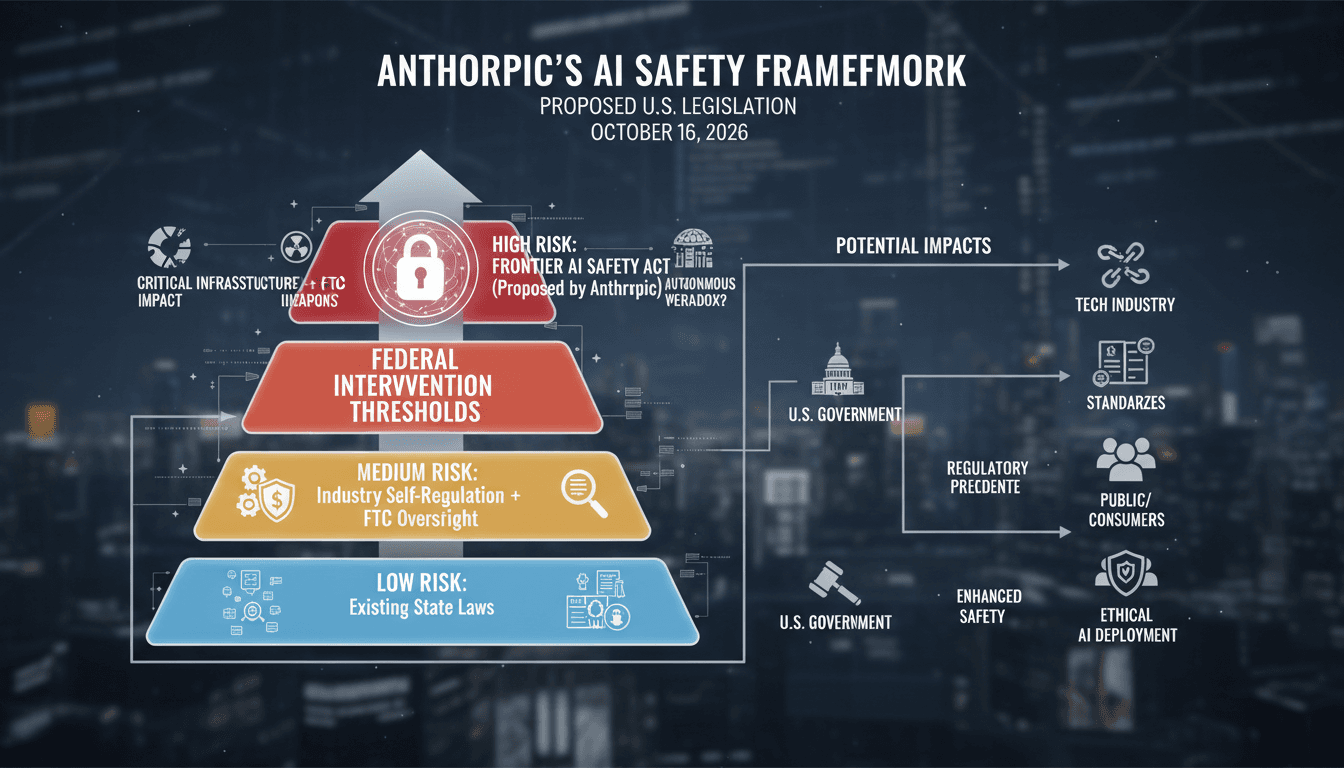
- The bill proposes federal intervention only for risks exceeding $1 billion in damages or causing serious harm to over 50 people.
- The draft remains confidential and has not yet been formally introduced in Congress.
The context you actually need
- Anthropic's Advanced AI Framework, released earlier in 2026, advocates for standardized federal rules amid varying state-level regulations.
- The proposed bill would empower the Department of Commerce to halt AI model deployments based on strict risk thresholds, mirroring recent California statutes.
- Critics argue that the high intervention thresholds could limit the effectiveness of regulatory measures, leaving significant risks unaddressed.
What's really happening
On October 16, 2026, Anthropic's representatives approached Capitol Hill with a draft bill that aims to establish a federal framework for AI safety. This initiative is rooted in the company's Advanced AI Framework, which emphasizes the need for uniform regulations in an increasingly fragmented landscape of state-level AI legislation. The proposed bill is particularly notable for its stringent criteria for federal intervention, which would only occur in cases where the potential damages exceed $1 billion or where the risks involve serious injury or death to more than 50 individuals.
The bill would grant the Department of Commerce the authority to seek judicial orders to halt the deployment of AI models that pose imminent risks. However, this power is tightly constrained; only risks that meet the specified quantitative thresholds would trigger action. This means that many potential threats could remain unregulated, raising concerns among critics who argue that the thresholds are excessively high. The bill also stipulates that independent evaluators, registered with the Department of Commerce, would conduct assessments of AI models and report findings within 72 hours if risks are identified. Importantly, these evaluators would be compensated regardless of the outcomes of their assessments, which could create incentives for thorough evaluations but also raises questions about accountability.
Anthropic's push for this legislation reflects its strategy to position itself as a leader in AI safety while advocating for a regulatory environment that could benefit its business model. By promoting a federal standard, Anthropic aims to create a level playing field in the AI industry, contrasting with competitors who may prefer to navigate the patchwork of state regulations. This approach could also mitigate the risk of regulatory capture, where companies influence regulations to their advantage, by establishing clear, uniform standards that apply across the board.
As the draft bill circulates privately among lawmakers, its future remains uncertain. The lack of formal introduction means that it could be subject to significant revisions or even abandonment. However, the mere act of proposing such legislation indicates a growing recognition of the need for regulatory frameworks in the rapidly evolving AI landscape.
Who feels it first (and how)
- Tech companies: They may face increased compliance costs and operational adjustments to meet new federal standards.
- Policymakers: Local and state officials may need to align their regulations with federal guidelines, impacting legislative agendas.
- Consumers: Potential changes in AI applications could affect user experiences and safety in various sectors, including healthcare and finance.
What to watch next
- Congressional response: Monitor for any formal introduction of the bill or public hearings that could shape its trajectory.
- Industry reactions: Pay attention to how tech companies and advocacy groups respond, as their lobbying efforts could influence the bill's provisions.
- State-level legislation: Watch for any shifts in state regulations that may arise in response to federal proposals, particularly in states like California that have already enacted AI laws.
Anthropic has proposed a draft bill focused on AI safety regulation.
The bill will face scrutiny regarding its high thresholds for federal intervention.
The timeline for formal introduction and potential passage of the legislation remains uncertain.
Frequently Asked Questions
- Why it matters?
- This proposal signals a shift towards federal oversight in AI safety, potentially impacting innovation and compliance costs across the industry.
- What happened (in 30 seconds)?
- On October 16, 2026, Anthropic pitched a draft bill to U.S. lawmakers aimed at regulating frontier AI safety. The bill proposes federal intervention only for risks exceeding $1 billion in damages or causing serious harm to over 50 people. The draft remains confidential and has not yet been formally introduced in Congress.
- What's really happening?
- On October 16, 2026, Anthropic's representatives approached Capitol Hill with a draft bill that aims to establish a federal framework for AI safety. This initiative is rooted in the company's Advanced AI Framework, which emphasizes the need for uniform regulations in an increasingly fragmented landscape of state-level AI legislation. The proposed bill is particularly notable for its stringent criteria for federal intervention, which would only occur in cases where the potential damages exceed $1
- Who feels it first (and how)?
- Tech companies: They may face increased compliance costs and operational adjustments to meet new federal standards. Policymakers: Local and state officials may need to align their regulations with federal guidelines, impacting legislative agendas. Consumers: Potential changes in AI applications could affect user experiences and safety in various sectors, including healthcare and finance.
- What to watch next?
- Congressional response: Monitor for any formal introduction of the bill or public hearings that could shape its trajectory. Industry reactions: Pay attention to how tech companies and advocacy groups respond, as their lobbying efforts could influence the bill's provisions. State-level legislation: Watch for any shifts in state regulations that may arise in response to federal proposals, particularly in states like California that have already enacted AI laws.
Market-moving headlines impacting equities, bonds, and related risk assets.
"Real-time catalysts and volatility drivers across indices and sectors."
— A47 Editor
Anthropic quietly pitches its own AI safety bill to lawmakers, Politico reports
Anthropic has proposed its own AI safety bill to lawmakers, as reported by Politico, indicating a proactive approach to address growing concerns regarding the safety of artificial intelligence technologies. This initiative comes at a time when the co...
Curated tech headlines including AI stories.
"Influential aggregator surfacing the day’s top tech/AI links."
— A47 Editor
Sources: Anthropic pitched its own AI safety bill to US lawmakers; the bill would limit the circumstances in which the government could block a model's release (Owen Dahlkamp/Politico)
Anthropic has proposed a draft AI safety bill to U.S. lawmakers, aiming to regulate the release of artificial intelligence models and limit government intervention in their deployment. This initiative reflects the company's proactive stance amid grow...
Technology business and AI-related headlines.
"Data-driven tech newsroom with global scope."
— A47 Editor
Anthropic Pitches AI Safety Bill to Lawmakers
Anthropic PBC has proposed a draft bill to U.S. lawmakers aimed at regulating artificial intelligence safety and security, reflecting growing concerns over the risks associated with rapidly advancing AI technologies. This initiative comes at a time w...
Technology business news, market impacts, and innovation trends.
"Bloomberg is a premier financial and tech news provider, respected for its in-depth reporting and analytical rigor."
— A47 Editor
Anthropic Pitches AI Safety Bill to Lawmakers
Anthropic PBC has proposed a draft bill to U.S. lawmakers aimed at regulating artificial intelligence safety and security, reflecting growing concerns over the risks associated with rapidly advancing AI technologies. This initiative comes at a time w...