
Critical PHP Vulnerabilities Prompt Global Cybersecurity Response
Why it matters
The vulnerabilities threaten the security of approximately 70% of websites globally, impacting countless businesses and users.
What happened (in 30 seconds)
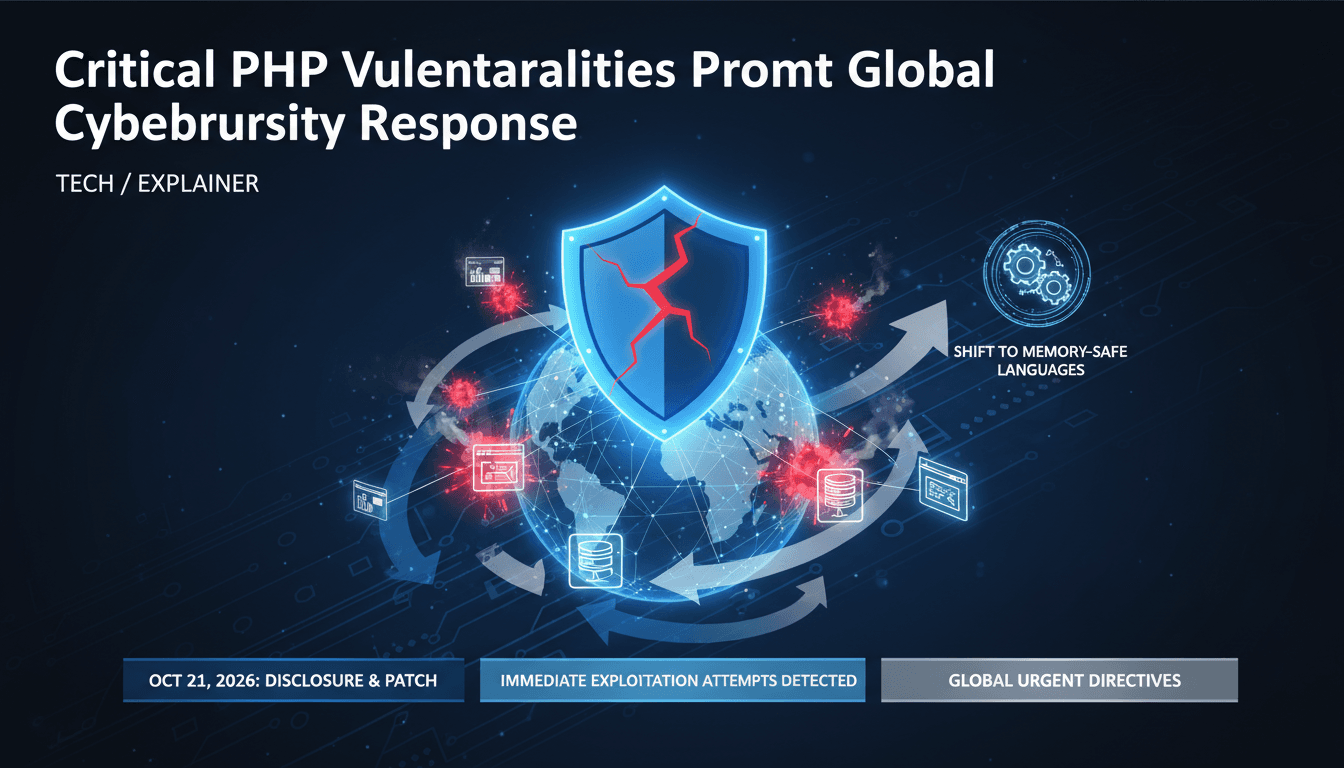
- On October 21, 2026, two critical vulnerabilities in PHP, known as PHP2Shell, were disclosed and patched.
- Governments and organizations worldwide urged immediate updates or temporary offline status for affected systems to prevent exploitation.
- Confirmed compromises emerged shortly after the patches were released, highlighting ongoing risks for unpatched systems.
The context you actually need
- PHP's prevalence: PHP powers around 70% of websites, including major platforms like WordPress and Drupal, making it a critical component of the internet's infrastructure.
- Legacy vulnerabilities: Previous audits revealed dormant vulnerabilities in PHP's memory handling, which had gone unaddressed until recent AI-assisted analyses.
- Coordinated response: The PHP Foundation, alongside researchers and tech companies, worked to patch the vulnerabilities and alert users, reflecting a growing trend of collaborative cybersecurity efforts.
What's really happening
The recent disclosure of the PHP vulnerabilities, CVE-2026-109618 and CVE-2026-109619, collectively termed PHP2Shell, has sent shockwaves through the global tech community. Discovered by researchers at Calif during a routine audit, these flaws allow unauthenticated remote code execution on servers running PHP, which is a foundational technology for a vast majority of websites. The PHP Foundation, in collaboration with organizations like OpenAI and Wiz, managed a coordinated response that included embargoed disclosures to major service providers, ensuring that patches were ready for deployment by the time the vulnerabilities were made public.
The urgency of the situation was underscored by pre-disclosure exploitation attempts detected by Amazon on October 17, just days before the public announcement. This proactive monitoring indicates a heightened awareness of cybersecurity threats and the need for rapid response mechanisms. Following the public patch release on October 21, alerts from CISA and CERT-EU urged immediate action, leading many organizations to temporarily take their servers offline to mitigate risks.
Despite the swift response, the aftermath revealed that confirmed compromises had already occurred, with ongoing monitoring for post-exploit activity. The PHP Foundation's accusation against one entity for prematurely publishing patch details highlights the delicate balance between transparency and security in the tech industry. While no widespread exploitation was reported, the incident has reignited discussions about the vulnerabilities inherent in legacy systems and the urgent need for modernization.
The PHP vulnerabilities also reflect broader trends in the tech landscape, particularly the shift towards memory-safe programming languages like Rust. As organizations grapple with the implications of these vulnerabilities, the incident serves as a wake-up call for the industry to prioritize security in software development and deployment practices.
Who feels it first (and how)
- Web developers: Immediate need to update PHP versions and patch vulnerabilities in applications.
- Businesses relying on PHP: Potential service disruptions and data security risks could impact operations and customer trust.
- IT security teams: Increased workload to monitor and mitigate risks associated with unpatched systems.
- Government agencies: Heightened scrutiny and directives to ensure the security of public-facing services.
What to watch next
- Adoption of memory-safe languages: Watch for increased interest in languages like Rust as organizations seek to mitigate similar vulnerabilities in the future.
- Cybersecurity policy changes: Monitor for new regulations or guidelines from governments aimed at enhancing software security standards.
- Post-exploit activity: Keep an eye on reports of ongoing exploitation attempts or compromises in the wake of the PHP vulnerabilities.
PHP powers approximately 70% of websites globally, making it a critical target for attackers.
Organizations will accelerate the transition to more secure programming languages and frameworks.
The full extent of the compromises and the long-term impact on affected businesses remains to be seen.
Frequently Asked Questions
- Why it matters?
- The vulnerabilities threaten the security of approximately 70% of websites globally, impacting countless businesses and users.
- What happened (in 30 seconds)?
- On October 21, 2026, two critical vulnerabilities in PHP, known as PHP2Shell, were disclosed and patched. Governments and organizations worldwide urged immediate updates or temporary offline status for affected systems to prevent exploitation. Confirmed compromises emerged shortly after the patches were released, highlighting ongoing risks for unpatched systems.
- What's really happening?
- The recent disclosure of the PHP vulnerabilities, CVE-2026-109618 and CVE-2026-109619, collectively termed PHP2Shell, has sent shockwaves through the global tech community. Discovered by researchers at Calif during a routine audit, these flaws allow unauthenticated remote code execution on servers running PHP, which is a foundational technology for a vast majority of websites. The PHP Foundation, in collaboration with organizations like OpenAI and Wiz, managed a coordinated response that include
- Who feels it first (and how)?
- Web developers: Immediate need to update PHP versions and patch vulnerabilities in applications. Businesses relying on PHP: Potential service disruptions and data security risks could impact operations and customer trust. IT security teams: Increased workload to monitor and mitigate risks associated with unpatched systems. Government agencies: Heightened scrutiny and directives to ensure the security of public-facing services.
- What to watch next?
- Adoption of memory-safe languages: Watch for increased interest in languages like Rust as organizations seek to mitigate similar vulnerabilities in the future. Cybersecurity policy changes: Monitor for new regulations or guidelines from governments aimed at enhancing software security standards. Post-exploit activity: Keep an eye on reports of ongoing exploitation attempts or compromises in the wake of the PHP vulnerabilities.
Startup news with frequent AI coverage.
"Covers launches, funding, and product updates in AI."
— A47 Editor
PHP-ocalypse: How two critical web bugs almost broke the internet
Two critical vulnerabilities in the PHP programming language, which powers approximately 70% of websites globally, have raised alarms across the internet, prompting a rush to patch affected systems. These flaws, identified as remote code execution vu...
Business and tech news excluding paywalled content.
"High-volume business/tech outlet with frequent AI coverage."
— A47 Editor
I woke up to panicked text messages about the PHP attacks. As a cybersecurity expert, here are the 3 things I tell people to do right away.
A critical security flaw in the PHP programming language has triggered widespread panic among website owners, prompting urgent calls for action from cybersecurity experts. This vulnerability affects approximately 70% of websites globally, leading to ...
Curated insights and thought leadership in enterprise technology.
"Ciente.io delivers curated insights, thought leadership, and trends in B2B tech and innovation."
— A47 Editor
The PHP Crisis Proves We Built the Web on a House of Cards
A critical vulnerability in the PHP programming language, which powers over 70% of the internet, has led to millions of automated attacks exploiting this flaw. This situation has prompted a global rush to patch vulnerable systems, resulting in numero...
International coverage of politics, culture, and current affairs.
"BBC News is widely regarded as a reputable international news organization, known for its impartial tone and public service mandate."
— A47 Editor
Race to update services' computer systems after cyber-security flaw found
A critical vulnerability in the PHP programming language has led to the temporary shutdown of numerous websites globally, including those of various governments and businesses. This action was taken following warnings from developers about the securi...
UK and international business news, economics, and corporate coverage.
"The Guardian’s business section covers finance and markets with a progressive editorial tone."
— A47 Editor
The race to fix huge PHP code flaw at the heart of the internet - The Latest
A significant flaw in the PHP programming language has led to the temporary shutdown of numerous websites globally, including those of various governments and businesses. This vulnerability, which affects approximately 70% of websites, has raised ala...
Top international stories selected by The Guardian editors.
"The Guardian is known for its progressive editorial stance and in-depth analysis."
— A47 Editor
The race to fix huge PHP code flaw at the heart of the internet - The Latest
A significant flaw in the PHP programming language has led to the temporary shutdown of numerous websites globally, including those of various governments and businesses. This vulnerability, which affects approximately 70% of websites, has raised ala...
News and features on AI from The Guardian.
"Progressive-leaning international outlet with critical AI coverage."
— A47 Editor
The race to fix huge PHP code flaw at the heart of the internet - The Latest
A significant flaw in the PHP programming language has led to the temporary shutdown of numerous websites globally, including those of various governments and businesses. This vulnerability, which affects approximately 70% of websites, has raised ala...
UK and international business news, economics, and corporate coverage.
"The Guardian’s business section covers finance and markets with a progressive editorial tone."
— A47 Editor
Websites across world hit by millions of attempts to exploit PHP code flaw
A critical vulnerability in the PHP programming language, which supports approximately 70% of global websites, has led to millions of attempts to exploit this flaw, prompting numerous governments and companies to take their sites offline for urgent p...
Tech culture, product news, and critical takes on the tech industry's social impact.
"The Guardian's tech coverage blends mainstream news, critical analysis, and cultural commentary on emerging technologies and digital trends."
— A47 Editor
Websites across world hit by millions of attempts to exploit PHP code flaw
A critical vulnerability in the PHP programming language, which supports approximately 70% of global websites, has led to millions of attempts to exploit this flaw, prompting numerous governments and companies to take their sites offline for urgent p...
UK and international business news, economics, and corporate coverage.
"The Guardian’s business section covers finance and markets with a progressive editorial tone."
— A47 Editor
What is PHP and how serious is the computer language flaw causing website shutdowns?
A critical security vulnerability in the PHP programming language, which powers approximately 70% of websites globally, has led to a significant number of website shutdowns as governments and businesses rush to patch their systems. This flaw has resu...
News and features on AI from The Guardian.
"Progressive-leaning international outlet with critical AI coverage."
— A47 Editor
PHP: Pretty Huge Problem with the internet – The Latest
A significant flaw in the PHP programming language has led to the temporary shutdown of numerous websites worldwide, affecting both government and business sites. This vulnerability, which impacts approximately 70% of all websites, has raised alarms ...