
FBI Considers Economic Espionage Charges Against Former OpenAI Engineer Abdulrahman Alfozan
Why it matters
This case highlights the growing concerns over national security and the protection of proprietary technology in the competitive landscape of artificial intelligence.
What happened (in 30 seconds)
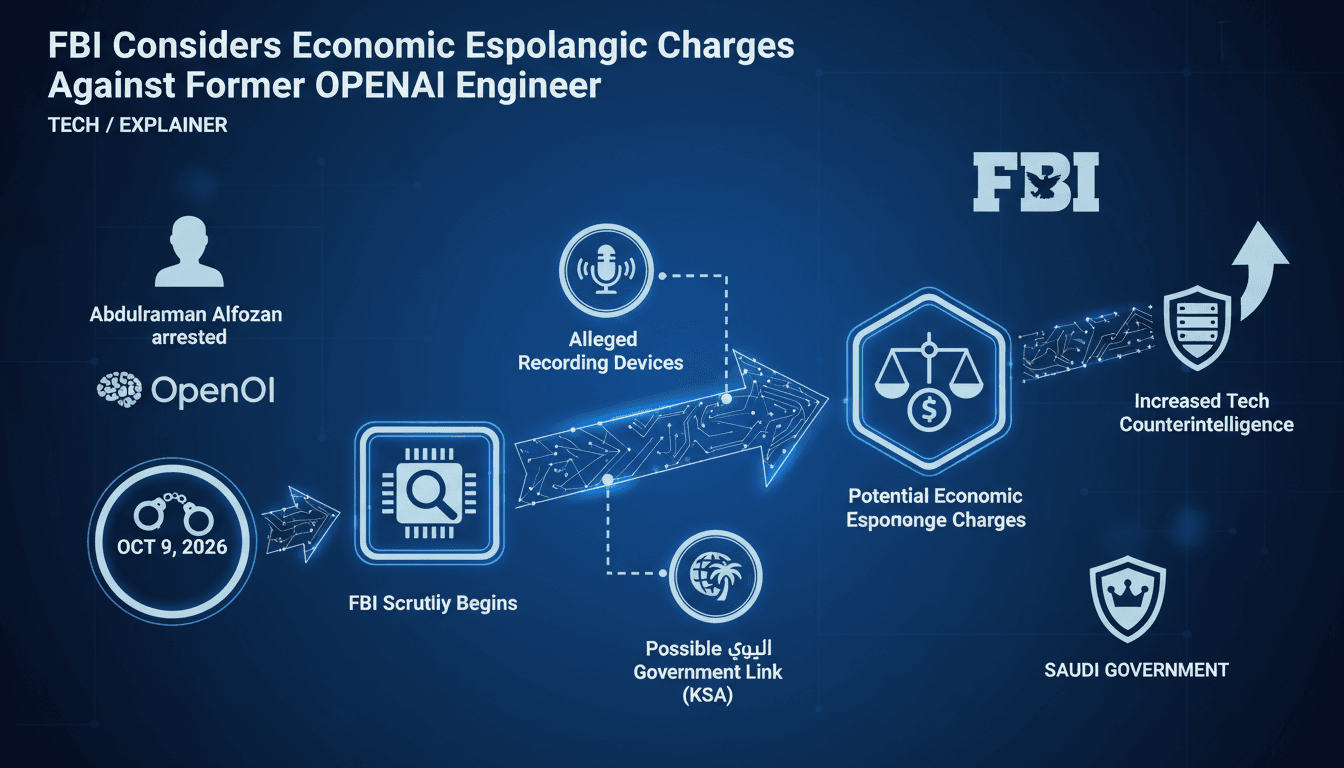
- Abdulrahman Alfozan, a former OpenAI engineer, was arrested on October 9, 2026, for wiretapping.
- The FBI is considering adding economic espionage charges related to potential information transfer to the Saudi government.
- OpenAI reported no evidence of unauthorized access to sensitive data, but the investigation continues amid heightened scrutiny.
The context you actually need
- U.S.-Saudi competition in AI development is escalating, with both nations vying for technological supremacy.
- Alfozan's background includes ties to Saudi entities, raising alarms about foreign influence in Silicon Valley.
- Previous incidents, such as the conviction of a former Twitter employee for espionage, underscore ongoing counterintelligence risks in the tech industry.
What's really happening
The case against Abdulrahman Alfozan is emblematic of a broader trend in the U.S. tech sector, where national security concerns are increasingly intersecting with corporate interests. Alfozan, who joined OpenAI in 2025 after stints at Meta and other tech firms, was arrested following the discovery of sophisticated recording devices in a restricted area of OpenAI's San Francisco headquarters. This incident raises significant questions about the integrity of proprietary information in a field where innovation is paramount.
The FBI's investigation is not just about Alfozan's actions but reflects a systemic issue regarding foreign influence in American technology firms. The potential addition of economic espionage charges indicates a serious concern that sensitive information could be transferred to foreign governments, particularly given Alfozan's documented communications with a member of the Saudi royal family. This scrutiny is compounded by the backdrop of U.S. efforts to safeguard its technological advancements from foreign acquisition, especially in critical sectors like artificial intelligence.
The implications of this case extend beyond Alfozan himself. It signals to tech professionals, particularly those from countries with strained relations with the U.S., that their actions are under heightened surveillance. The FBI's focus on economic espionage suggests that even indirect connections to foreign entities can lead to severe legal repercussions. This environment may deter talent from seeking opportunities in the U.S. tech sector, particularly among those with ties to nations perceived as adversaries.
Moreover, the ongoing investigation could lead to stricter hiring practices and increased vetting processes for foreign nationals in tech roles. Companies may feel pressured to implement more rigorous security measures to protect their intellectual property, which could slow down innovation and collaboration across borders. The case serves as a reminder of the delicate balance between fostering a diverse workforce and ensuring national security.
Who feels it first (and how)
- Tech professionals: Increased scrutiny may lead to job insecurity and stricter hiring practices.
- AI companies: Firms may face pressure to enhance security protocols and vetting processes.
- Foreign nationals: Those with ties to countries like Saudi Arabia may find it harder to secure positions in U.S. tech firms.
What to watch next
- Court proceedings: The outcome of Alfozan's next court appearance on November 6, 2026, could set precedents for similar cases.
- FBI investigations: Ongoing reviews of economic espionage cases may reveal broader patterns of foreign influence in tech.
- Industry responses: Watch for changes in hiring practices and security measures among tech firms in response to this case.
Alfozan has been charged with wiretapping and is in federal custody.
The FBI will continue to investigate potential economic espionage and trade secrets theft.
The long-term impact on U.S.-Saudi relations and the tech industry remains uncertain.
Frequently Asked Questions
- Why it matters?
- This case highlights the growing concerns over national security and the protection of proprietary technology in the competitive landscape of artificial intelligence.
- What happened (in 30 seconds)?
- Abdulrahman Alfozan, a former OpenAI engineer, was arrested on October 9, 2026, for wiretapping. The FBI is considering adding economic espionage charges related to potential information transfer to the Saudi government. OpenAI reported no evidence of unauthorized access to sensitive data, but the investigation continues amid heightened scrutiny.
- What's really happening?
- The case against Abdulrahman Alfozan is emblematic of a broader trend in the U.S. tech sector, where national security concerns are increasingly intersecting with corporate interests. Alfozan, who joined OpenAI in 2025 after stints at Meta and other tech firms, was arrested following the discovery of sophisticated recording devices in a restricted area of OpenAI's San Francisco headquarters. This incident raises significant questions about the integrity of proprietary information in a field wher
- Who feels it first (and how)?
- Tech professionals: Increased scrutiny may lead to job insecurity and stricter hiring practices. AI companies: Firms may face pressure to enhance security protocols and vetting processes. Foreign nationals: Those with ties to countries like Saudi Arabia may find it harder to secure positions in U.S. tech firms.
- What to watch next?
- Court proceedings: The outcome of Alfozan's next court appearance on November 6, 2026, could set precedents for similar cases. FBI investigations: Ongoing reviews of economic espionage cases may reveal broader patterns of foreign influence in tech. Industry responses: Watch for changes in hiring practices and security measures among tech firms in response to this case.
Arabic-language coverage of international news and geopolitics.
"RT Arabic is a Russian state-funded outlet often criticized for promoting Kremlin-aligned narratives."
— A47 Editor
مكتب التحقيقات الفيدرالي الأمريكي يدرس توجيه تهمة التجسس الاقتصادي لمهندس سعودي
The FBI is reportedly considering espionage charges against a former Saudi engineer at OpenAI, suspected of attempting to transfer confidential information. This investigation follows allegations of unauthorized access to sensitive company data, rais...
Tech business coverage, major deals, product launches, and Silicon Valley trends.
"WSJ’s tech section offers authoritative reporting on the intersection of technology and business, including exclusive industry analysis."
— A47 Editor
FBI Explores Espionage Case Against Saudi OpenAI Suspect
Abdulrahman Alfozan, a former engineer at OpenAI, has been arrested by the FBI for allegedly installing a hidden recording device in a conference room at the company's San Francisco office. The device, which was concealed in toilet paper, was discove...
Coverage of national news and issues shaping the United States, including politics, economy, and society.
"The Wall Street Journal is one of the most respected financial and news publications in the U.S., known for its rigorous reporting and center-right editorial perspective."
— A47 Editor
FBI Explores Espionage Case Against Saudi OpenAI Suspect
Abdulrahman Alfozan, a 35-year-old engineer formerly employed by OpenAI, has been arrested by the FBI for allegedly installing a hidden recording device in a conference room at the company's San Francisco office. The device, wrapped in toilet paper, ...