
AI-Driven Data Center Expansion Accelerates in the US with Multi-Gigawatt Projects Underway
Why it matters
The rapid expansion of AI data centers signals a significant transformation in energy consumption and infrastructure investment.
What happened (in 30 seconds)
- AI demand surged: Major tech companies are investing heavily in data centers to support advanced AI models.
- Multi-gigawatt projects launched: New data center campuses exceeding 1 gigawatt in power capacity are under construction across several U.S. states.
- Regulatory challenges arise: Local communities are voicing concerns over environmental impacts, leading to protests and regulatory scrutiny.
The context you actually need
- Shift in infrastructure needs: The rise of generative AI has shifted data center development from general cloud services to specialized AI training facilities.
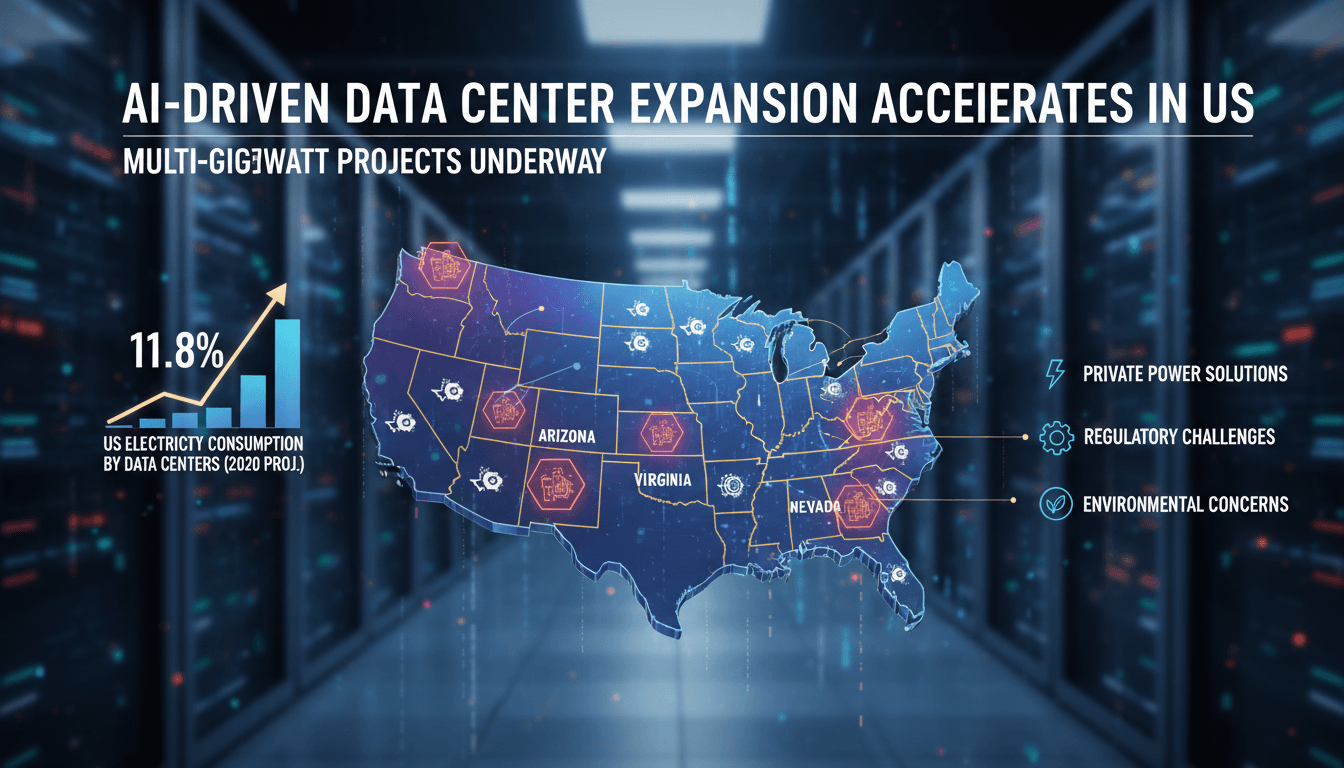
- Energy consumption growth: U.S. data centers are projected to consume 11.8% of the national electricity supply by 2030, reflecting the increasing demand for computational power.
- Geographic redistribution: Regulatory and grid constraints in established tech hubs are pushing new projects to rural areas and repurposed industrial sites.
What's really happening
The landscape of data center construction in the U.S. is undergoing a seismic shift driven by the explosive growth of artificial intelligence. Since 2023, advancements in generative AI have created an insatiable demand for specialized computing infrastructure. This has led to a pivot from traditional cloud workloads to high-density AI training clusters, which require significantly more power and resources.
As of October 2026, a comprehensive ranking of the largest planned AI data center projects revealed that multiple campuses, each exceeding 1 gigawatt in planned power capacity, are breaking ground in states like Texas, Ohio, Louisiana, and Indiana. Key players in this expansion include Meta, OpenAI, and xAI, among others. The construction of these facilities began in earnest in late 2024, with flagship projects like Meta Hyperion in Louisiana and xAI Colossus 2 in Tennessee leading the charge.
The implications of this rapid expansion are profound. By 2030, total U.S. data center electricity consumption is expected to reach 11.8% of the national supply, a staggering figure that underscores the urgency of addressing energy needs. Local communities are already feeling the impact, with concerns over noise, water consumption, and air quality prompting lawsuits and regulatory hearings. For instance, Louisiana has approved $3.3 billion in tax incentives for Meta Hyperion, while Indiana is debating cost-sharing for new power generation to support these facilities.
Moreover, the shift towards on-site power generation is becoming a common strategy among developers to bypass grid limitations. This trend not only reflects the immediate need for reliable energy sources but also indicates a longer-term strategy to mitigate regulatory hurdles and community pushback.
As these developments unfold, the market is witnessing increased private power solutions and incentives for on-site generation, which could reshape the energy landscape in the coming years. The construction of these AI-optimized hyperscale data centers is not just about meeting current demands; it is also about preparing for a future where AI's computational needs will only continue to grow.
Who feels it first (and how)
- Local communities: Residents near new data centers face environmental concerns and potential disruptions.
- Energy sector: Utility companies may need to adapt to increased demand and infrastructure changes.
- Tech industry: Companies involved in AI development will benefit from enhanced computational capabilities but may face regulatory challenges.
- Investors: Stakeholders in energy and technology sectors will see shifts in investment opportunities and risks.
What to watch next
- Regulatory developments: Keep an eye on local and state regulations regarding data center construction and energy consumption, as these will shape future projects.
- Energy market shifts: Monitor changes in energy pricing and availability as demand from data centers increases, potentially impacting consumer costs.
- Community responses: Watch for ongoing protests and legal actions from local communities, which could influence project timelines and operational strategies.
Major tech companies are investing in multi-gigawatt data center projects across the U.S.
Increased regulatory scrutiny and community pushback will shape the future of data center construction.
The long-term impact on energy markets and local economies remains to be fully understood.
Frequently Asked Questions
- Why it matters?
- The rapid expansion of AI data centers signals a significant transformation in energy consumption and infrastructure investment.
- What happened (in 30 seconds)?
- AI demand surged: Major tech companies are investing heavily in data centers to support advanced AI models. Multi-gigawatt projects launched: New data center campuses exceeding 1 gigawatt in power capacity are under construction across several U.S. states. Regulatory challenges arise: Local communities are voicing concerns over environmental impacts, leading to protests and regulatory scrutiny.
- What's really happening?
- The landscape of data center construction in the U.S. is undergoing a seismic shift driven by the explosive growth of artificial intelligence. Since 2023, advancements in generative AI have created an insatiable demand for specialized computing infrastructure. This has led to a pivot from traditional cloud workloads to high-density AI training clusters, which require significantly more power and resources. As of October 2026, a comprehensive ranking of the largest planned AI data center project
- Who feels it first (and how)?
- Local communities: Residents near new data centers face environmental concerns and potential disruptions. Energy sector: Utility companies may need to adapt to increased demand and infrastructure changes. Tech industry: Companies involved in AI development will benefit from enhanced computational capabilities but may face regulatory challenges. Investors: Stakeholders in energy and technology sectors will see shifts in investment opportunities and risks.
- What to watch next?
- Regulatory developments: Keep an eye on local and state regulations regarding data center construction and energy consumption, as these will shape future projects. Energy market shifts: Monitor changes in energy pricing and availability as demand from data centers increases, potentially impacting consumer costs. Community responses: Watch for ongoing protests and legal actions from local communities, which could influence project timelines and operational strategies.
Business and tech news excluding paywalled content.
"High-volume business/tech outlet with frequent AI coverage."
— A47 Editor
AI is driving a data-center power boom. These are some of the biggest US projects being built.
The demand for data centers is surging, prompting SpaceX to incentivize its employees with pay increases to assist in construction efforts. This reflects the growing importance of data infrastructure in the age of artificial intelligence.
U.S. business news, corporate developments, and economy.
"The Wall Street Journal is respected for deep financial and economic reporting with a center-right editorial perspective."
— A47 Editor
Carrier Plans $600 Million Texas Plant to Make Cooling Gear for AI Data Centers
Carrier has announced plans to invest $600 million in a new plant in Texas, which will produce cooling equipment specifically designed for AI data centers. This investment marks Carrier's largest commitment to date and comes in response to a signific...
Tech business coverage, major deals, product launches, and Silicon Valley trends.
"WSJ’s tech section offers authoritative reporting on the intersection of technology and business, including exclusive industry analysis."
— A47 Editor
Carrier Plans $600 Million Texas Plant to Make Cooling Gear for AI Data Centers
Carrier has announced plans to invest $600 million in a new plant in Texas dedicated to manufacturing cooling equipment for AI data centers, marking its largest investment to date amid rising demand from data center clients.