
Global PC Shipments Drop 21% Year-over-Year in Q3 2026
Why it matters
The decline in PC shipments signals a broader trend of reduced consumer spending and increased production costs, impacting the tech industry and its supply chains.
What happened (in 30 seconds)
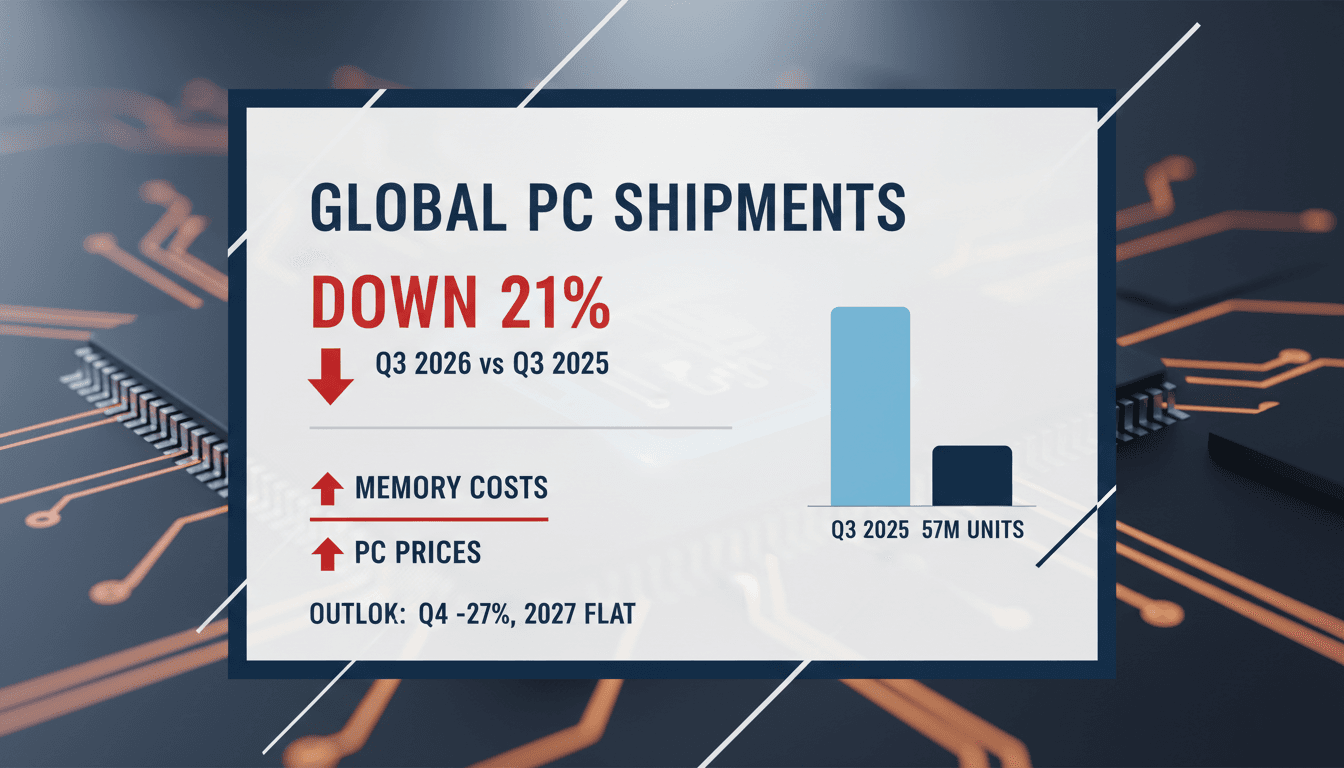
- Global PC shipments fell 21% year-over-year in Q3 2026, totaling 57 million units.
- Lenovo maintained its market leadership despite a 23% decline, while Apple and ASUS gained market share.
- Counterpoint Research forecasts a further 27% decline in Q4 2026, indicating ongoing challenges.
The context you actually need
- Rising component costs: Elevated DRAM and NAND memory prices have pushed up PC prices, leading consumers to delay purchases.
- Comparative base: The decline follows a strong Q3 2025, influenced by preemptive purchases ahead of Windows 10's end-of-support.
- Market dynamics: While consumer demand is waning, commercial fleet refreshes are providing limited offset to the overall decline.
What's really happening
The global PC market is experiencing a significant contraction, with shipments dropping 21% year-over-year in Q3 2026, according to preliminary data from Counterpoint Research. This decline is primarily attributed to rising costs of critical components, particularly DRAM and NAND memory chips, which have inflated the overall price of PCs. As a result, many consumers are opting to postpone their purchases, leading to a notable decrease in demand.
Lenovo continues to lead the market, shipping 15 million units and holding a 26.3% share, despite a 23% decline in shipments. In contrast, HP faced the steepest drop among the top vendors, with a 31% year-over-year decline, shipping only 10.3 million units. Dell, Apple, and ASUS also reported declines, but their losses were comparatively smaller, allowing them to gain market share. Apple's performance was notably supported by demand for its MacBook Neo, which helped mitigate the overall downturn.
The backdrop to this decline is a strong comparative base from Q3 2025, when many consumers made preemptive purchases in anticipation of the end-of-support for Windows 10. This surge in demand created an artificial high that is now being corrected. The current economic climate, characterized by rising inflation and increased production costs, has further constrained consumer spending, particularly in the consumer segment. While commercial fleet refreshes are providing some support, they are insufficient to offset the overall decline in consumer demand.
Looking ahead, Counterpoint Research forecasts a continued contraction, predicting a 27% year-over-year decline in Q4 2026. This trend suggests that the market may stabilize at flat volumes in 2027, but this does not indicate a recovery. Instead, it reflects a new normal where growth is stagnant, and companies must adapt to a challenging environment.
Who feels it first (and how)
- Consumers: Higher prices and limited availability may lead to delayed purchases and dissatisfaction.
- Retailers: Reduced inventory turnover could impact sales and profitability.
- Manufacturers: Companies like HP and Dell may face increased pressure to innovate and reduce costs.
- Tech sectors: Industries reliant on PC sales, such as gaming and software development, may experience slower growth.
What to watch next
- Component pricing trends: Monitoring DRAM and NAND prices will be crucial, as further increases could exacerbate the decline.
- Consumer sentiment: Changes in consumer confidence and spending habits will indicate potential recovery or further contraction.
- Vendor strategies: Watch how leading companies adapt their product offerings and pricing strategies in response to market pressures.
Global PC shipments declined 21% year-over-year in Q3 2026.
Continued contraction in Q4 2026 with a forecasted 27% decline.
The long-term recovery trajectory for the PC market and consumer demand.
Frequently Asked Questions
- Why it matters?
- The decline in PC shipments signals a broader trend of reduced consumer spending and increased production costs, impacting the tech industry and its supply chains.
- What happened (in 30 seconds)?
- Global PC shipments fell 21% year-over-year in Q3 2026, totaling 57 million units. Lenovo maintained its market leadership despite a 23% decline, while Apple and ASUS gained market share. Counterpoint Research forecasts a further 27% decline in Q4 2026, indicating ongoing challenges.
- What's really happening?
- The global PC market is experiencing a significant contraction, with shipments dropping 21% year-over-year in Q3 2026, according to preliminary data from Counterpoint Research. This decline is primarily attributed to rising costs of critical components, particularly DRAM and NAND memory chips, which have inflated the overall price of PCs. As a result, many consumers are opting to postpone their purchases, leading to a notable decrease in demand. Lenovo continues to lead the market, shipping 15
- Who feels it first (and how)?
- Consumers: Higher prices and limited availability may lead to delayed purchases and dissatisfaction. Retailers: Reduced inventory turnover could impact sales and profitability. Manufacturers: Companies like HP and Dell may face increased pressure to innovate and reduce costs. Tech sectors: Industries reliant on PC sales, such as gaming and software development, may experience slower growth.
- What to watch next?
- Component pricing trends: Monitoring DRAM and NAND prices will be crucial, as further increases could exacerbate the decline. Consumer sentiment: Changes in consumer confidence and spending habits will indicate potential recovery or further contraction. Vendor strategies: Watch how leading companies adapt their product offerings and pricing strategies in response to market pressures.
Curated tech headlines including AI stories.
"Influential aggregator surfacing the day’s top tech/AI links."
— A47 Editor
Global PC shipments fell 21% YoY in Q3 to 57M units, as memory and other costs pushed prices up; Lenovo retained its market leadership despite a 23% decline (Minsoo Kang/Counterpoint Research)
Global PC shipments experienced a significant decline of 21% year-over-year in Q3 2026, totaling 57 million units, primarily due to rising memory and component costs that have increased prices and limited consumer demand. Lenovo maintained its market...
Consumer tech and culture with frequent AI coverage.
"Influential tech outlet covering AI products and policy."
— A47 Editor
PC shipments dropped over 20 percent in Q3 due to RAM price hikes
Global PC shipments fell by 21 percent year-over-year in Q3 2026, primarily due to rising RAM prices, as reported by Counterpoint Research. This decline aligns with similar findings from IDC and Omdia, indicating a significant downturn in consumer de...
Tech news, reviews, and analysis of consumer electronics, science, art, and culture.
"The Verge is a technology-focused media outlet known for in-depth reporting, product reviews, and coverage of the intersection between technology and culture."
— A47 Editor
PC shipments dropped over 20 percent in Q3 due to RAM price hikes
Global PC shipments fell by 21 percent year-over-year in Q3 2026, primarily due to rising RAM prices, as reported by Counterpoint Research. This decline aligns with similar findings from IDC and Omdia, indicating a significant downturn in consumer de...
Consumer technology news with AI coverage.
"Gadget and tech site reporting on AI in products."
— A47 Editor
PC shipments are in the toilet, plunging over 20 percent from last year
PC shipments have seen a drastic decline of over 20 percent compared to last year, with projections suggesting a potential drop of up to 27 percent by the end of 2026 as prices continue to rise. This marks one of the sharpest declines in the market s...
Covers consumer technology, electronics, gadgets, and product reviews.
"Engadget is a trusted source for gadget reviews and consumer tech news, known for its hands-on analysis and industry coverage."
— A47 Editor
PC shipments are in the toilet, plunging over 20 percent from last year
PC shipments have seen a drastic decline of over 20 percent compared to last year, with projections suggesting a potential drop of up to 27 percent by the end of 2026 as prices continue to rise. This marks one of the sharpest declines in the market s...