
US and Eight Allies Sign San Francisco Declaration to Safeguard AI Supply Chains from China
Why it matters
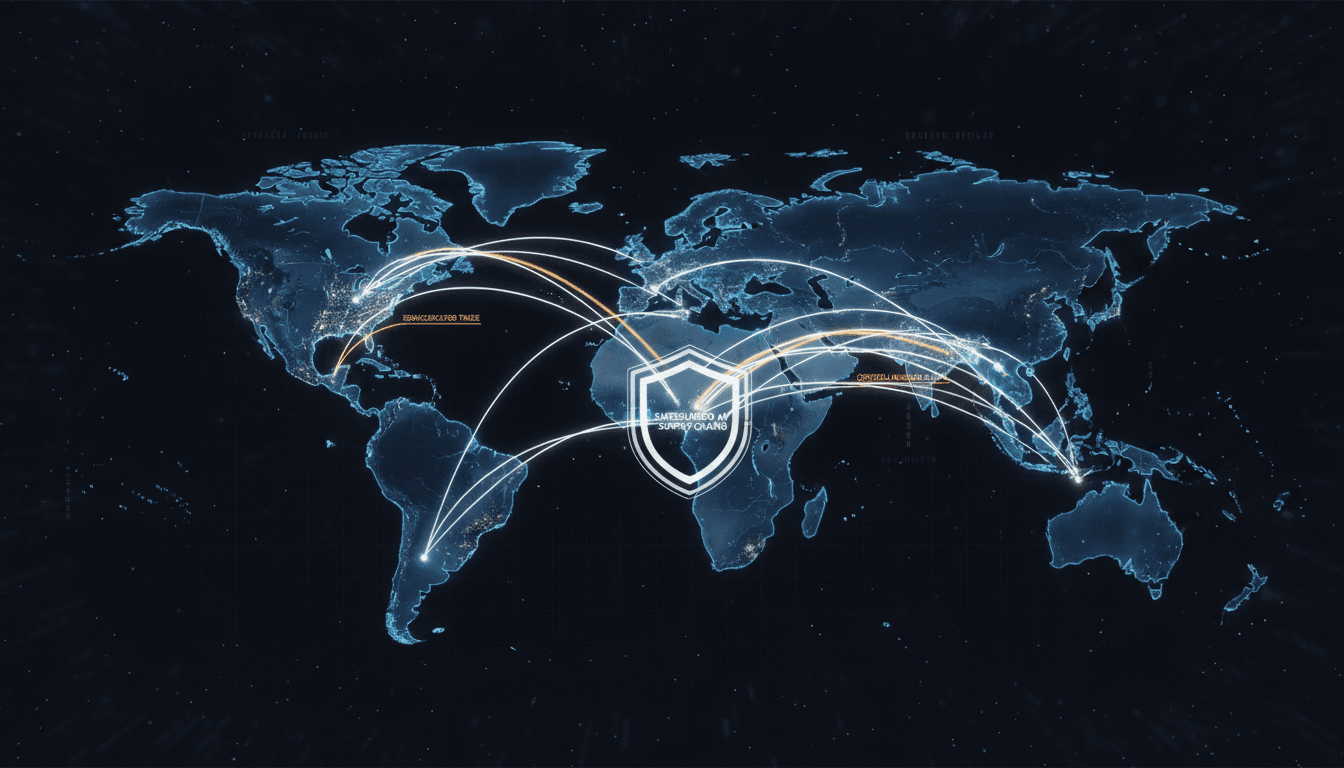
The formalization of the San Francisco Declaration establishes a coordinated multilateral framework to isolate critical artificial intelligence supply chains, shifting global manufacturing, compute infrastructure, and capital deployment into verified allied jurisdictions.
What happened (in 30 seconds)
* Nine nations formalized a strategic tech accord: On November 15, 2026, the United States, Japan, Australia, Israel, the United Kingdom, South Korea, India, Qatar, and the United Arab Emirates signed the San Francisco Declaration on the Secure Foundations of Enduring Prosperity. * The initiative targets foundational AI architecture: Under the Pax Silica framework, participating governments agreed to compile a joint catalog of sensitive artificial intelligence technologies, monitor supply chain choke points, and formalize shared intelligence on critical minerals and semiconductors. * European expansion is scheduled immediately: Germany, Sweden, the Netherlands, and the European Commission are slated to join the initial nine signatories within one week of the initial signing.
The context you actually need
* Escalating technological competition: The agreement emerges directly from sustained US-China economic tension, institutionalizing diversification efforts across chip design, manufacturing tools, and raw materials following the initial 2025 trade truce. * Diplomatic positioning ahead of bilateral summits: Announcement of the accord by US Under Secretary of State for Economic Affairs Jacob Helberg establishes a consolidated allied baseline ahead of scheduled engagements between President Donald Trump and Chinese President Xi Jinping at the APEC summit in Shenzhen. * Gulf integration into core technology corridors: The inclusion of both the United Arab Emirates and Qatar among the initial nine signatories marks a structural shift, embedding Gulf capital and regional infrastructure directly into Western and Asian semiconductor supply networks.
What's really happening
The San Francisco Declaration is not merely a diplomatic statement; it is a structural mechanism designed to redirect the global supply chains supporting artificial intelligence. By bringing nine nations together under the Pax Silica umbrella—with four European entities scheduled to follow—the coalition is institutionalizing an allied perimeter around three interdependent inputs: advanced semiconductors, critical processing minerals, and the specialized energy infrastructure required to run high-density computing clusters.
The operational architecture of the accord rests on four concrete actions: cataloging sensitive AI assets, exchanging trade intelligence, forming dedicated vulnerability working groups, and establishing designated economic hubs. For enterprise leaders, this framework replaces informal corporate diversification with explicit government-backed corridors. When governments coordinate to shield chip fabrication machinery, design software, and logistics channels from strategic competitors, they introduce regulatory incentives that reward hardware traceability while penalizing dual-exposure exposure.
For the United Arab Emirates, inclusion as a founding signatory provides clear strategic positioning. As regional hubs like Dubai and Abu Dhabi deploy significant capital into data center capacity, energy infrastructure, and applied AI ecosystems, maintaining frictionless access to Tier-1 semiconductor design and advanced compute hardware requires definitive alignment on supply chain security standards. Participation inside the Pax Silica perimeter ensures UAE-based platforms avoid secondary supply chain friction from Western export controls, while simultaneously positioning the country as an approved destination for high-value tech infrastructure investment.
Simultaneously, the coalition addresses the foundational constraints of advanced computation: critical minerals and energy grid scaling. Advanced AI ecosystems do not exist solely in algorithmic layers; they depend on physical supply lines spanning rare earth refinement, silicon wafer production, specialized chemicals, and multi-gigawatt power deployment. By coordinating vulnerability mitigation across nine economies, the coalition attempts to insulate these industrial pipelines from single-point bottlenecks and unilateral export leverage.
Ultimately, this accord establishes a two-track operational reality for global business. Rather than dealing with fragmented national rules, multinational operators now face a coalescing economic bloc that ties technological interoperability directly to supply chain jurisdiction.
Who feels it first (and how)
* Enterprise CTOs and Procurement Heads: Teams sourcing enterprise-grade compute, advanced accelerators, and specialized fabrication inputs must audit vendor footprints to satisfy allied jurisdiction verifications. * UAE Technology Infrastructure Developers: Regional infrastructure sponsors and data center operators in Dubai gain accelerated access to allied hardware pipelines, positioning the UAE as a secure transit and hosting corridor. * Critical Minerals Processors and Traders: Commodity firms dealing in silicon, lithium, and rare earth processing face shifting customer portfolios as signatory nations establish designated economic hubs that bypass non-allied channels. * Semiconductor Component Manufacturers: Hardware producers in South Korea, Japan, and the US gain clearer legal frameworks for cross-border co-investment, offset by tighter compliance standards on downstream distribution.
What to watch next
* European accession timelines: Confirmation of the accession of Germany, the Netherlands, Sweden, and the European Commission will test whether unified export and supply chain rules extend across the broader European tech landscape. * Publication of the joint sensitive AI technologies list: The release of the initial catalog from the Pax Silica working groups will define the precise operational boundary between commercial commodity hardware and restricted high-performance compute. * APEC bilateral engagements in Shenzhen: Outcomes and official responses emerging from the scheduled meeting between Donald Trump and Xi Jinping will clarify counter-measures or reciprocal commercial adjustments.
Nine nations signed the San Francisco Declaration on November 15, 2026, establishing working groups to map vulnerabilities across AI supply chains, critical minerals, and semiconductors.
Corporate tech investments and regional data center projects inside signatory borders like the UAE and UK will see accelerated allied regulatory clearance for advanced compute imports.
The exact regulatory timeline for creating the proposed economic hubs and whether European Union participation will involve specific regulatory carve-outs or broad implementation across all member states.
Frequently Asked Questions
- Why it matters?
- The formalization of the San Francisco Declaration establishes a coordinated multilateral framework to isolate critical artificial intelligence supply chains, shifting global manufacturing, compute infrastructure, and capital deployment into verified allied jurisdictions.
- What happened (in 30 seconds)?
- Nine nations formalized a strategic tech accord: On November 15, 2026, the United States, Japan, Australia, Israel, the United Kingdom, South Korea, India, Qatar, and the United Arab Emirates signed the San Francisco Declaration on the Secure Foundations of Enduring Prosperity. The initiative targets foundational AI architecture: Under the Pax Silica framework, participating governments agreed to compile a joint catalog of sensitive artificial intelligence technologies, monitor supply chain chok
- What's really happening?
- The San Francisco Declaration is not merely a diplomatic statement; it is a structural mechanism designed to redirect the global supply chains supporting artificial intelligence. By bringing nine nations together under the Pax Silica umbrella—with four European entities scheduled to follow—the coalition is institutionalizing an allied perimeter around three interdependent inputs: advanced semiconductors, critical processing minerals, and the specialized energy infrastructure required to run high
- Who feels it first (and how)?
- Enterprise CTOs and Procurement Heads: Teams sourcing enterprise-grade compute, advanced accelerators, and specialized fabrication inputs must audit vendor footprints to satisfy allied jurisdiction verifications. UAE Technology Infrastructure Developers: Regional infrastructure sponsors and data center operators in Dubai gain accelerated access to allied hardware pipelines, positioning the UAE as a secure transit and hosting corridor. Critical Minerals Processors and Traders: Commodity firms dea
- What to watch next?
- European accession timelines: Confirmation of the accession of Germany, the Netherlands, Sweden, and the European Commission will test whether unified export and supply chain rules extend across the broader European tech landscape. Publication of the joint sensitive AI technologies list: The release of the initial catalog from the Pax Silica working groups will define the precise operational boundary between commercial commodity hardware and restricted high-performance compute. APEC bilateral en
Technology business and AI-related headlines.
"Data-driven tech newsroom with global scope."
— A47 Editor
US, Allies Agree to Guard AI Supply Chains From China, FT Says
The United States and its allies have agreed to jointly identify and protect artificial intelligence technologies and supply chains considered vulnerable to China, according to a Financial Times report published Sunday and carried by Bloomberg Techno...
Technology business news, market impacts, and innovation trends.
"Bloomberg is a premier financial and tech news provider, respected for its in-depth reporting and analytical rigor."
— A47 Editor
US, Allies Agree to Guard AI Supply Chains From China, FT Says
The United States and its allies have agreed to jointly identify and protect artificial intelligence technologies and supply chains considered vulnerable to China, according to a Financial Times report published Sunday and carried by Bloomberg Techno...
Curated tech headlines including AI stories.
"Influential aggregator surfacing the day’s top tech/AI links."
— A47 Editor
The US and Pax Silica allies, including Japan, the UK, and India, agree to create a joint list of AI technologies and supply chains to protect from China (Financial Times)
The United States and its Pax Silica partners, including Japan, the UK and India, have agreed to create a joint list of artificial intelligence technologies and supply chains to be protected from China, according to the Financial Times. The pact come...
Editor-curated FT homepage stories spanning markets, business, world, and opinion.
"The Financial Times is a globally respected business publication with a centrist/center-left tone and strong markets focus."
— A47 Editor
US and allies sign accord to protect AI supply chains from China
The United States and several allied governments have signed an accord aimed at protecting artificial intelligence supply chains from China, according to the Financial Times. The pact arrives days before President Donald Trump is set to meet Chinese ...