
2026 Leonids Meteor Shower Peaks November 16-17 With Modest Rates Under Dark-Sky Conditions
What happened
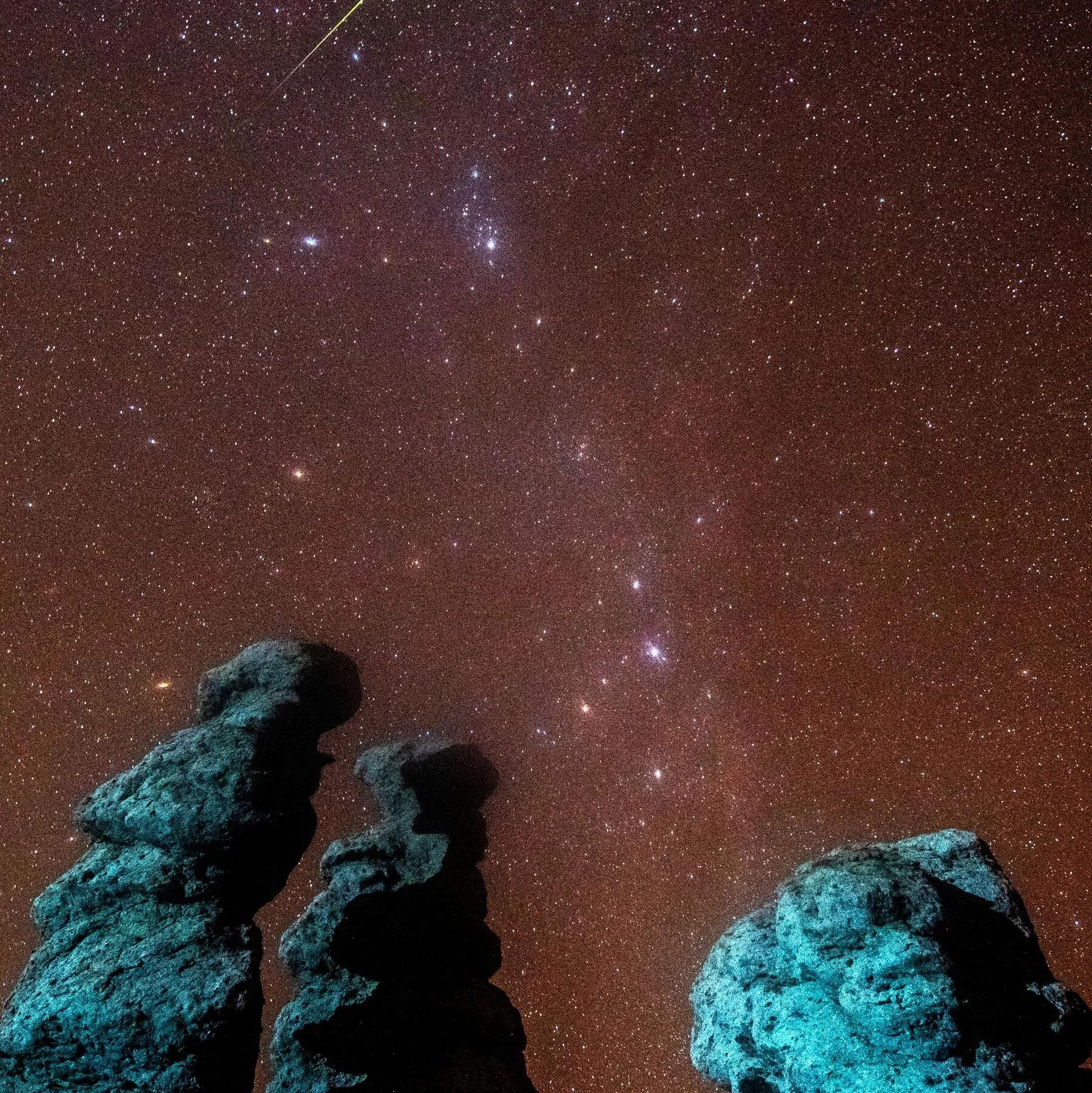
The annual Leonids meteor shower reached its peak viewing window on the night of November 16–17, 2026, delivering fast-moving atmospheric streaks originating from comet 55P/Tempel-Tuttle across the Northern Hemisphere.
The Context
* Debris dynamics dictate the display: Earth is crossing the orbital trail of comet 55P/Tempel-Tuttle, causing fine particles to incinerate at 44 miles per second and produce persistent, bright vapor trails radiating from the constellation Leo. * Lighting conditions favor pre-dawn watchers: A 40% to 50% illuminated Moon sets around midnight on the peak night, clearing the sky of competing light pollution for early-morning observers. * Regional hubs see variable rates: Viewers in major metropolitan areas will see minimal activity, though dark-sky perimeters like the desert outside Dubai can log up to 15 meteors per hour around 4:55 GST on November 17–18.
The Number
— the expected visible meteors per hour under typical conditions for most urban observers during the 2026 peak, underscoring that without a dedicated drive to low-light coordinates and 20 minutes for eye dark-adaptation, your return on invested time will remain negligible.
Takeaway
Watchers logging the skies through November 30 will find secondary viewing opportunities on November 17–18, with real-time tracking data available via the Global Meteor Network.
Scientific discoveries, health, technology, and natural phenomena.
"Live Science reports on scientific discoveries, health, technology, and natural phenomena with a popular science tone."
— A47 Editor
The Leonid meteor shower peaks tonight: How to see more than a dozen 'shooting stars' per hour
The Leonid meteor shower peaks on the night of November 16-17, with up to 15 shooting stars per hour possibly visible under dark skies, and the Moon setting before the best viewing hours, according to Live Science.
Science and technology stories including AI.
"Longstanding science magazine with thoughtful AI coverage."
— A47 Editor
Look up! The Leonid meteor shower peaks tonight
The Leonid meteor shower, a display of bright, colorful and quick shooting stars, reaches its peak tonight, according to Scientific American. The base report frames the event as a sky-watching opportunity for stargazers looking up on the night of its...
Scientific research, technology, environment, and society.
"Scientific American is one of the oldest and most authoritative science magazines, known for deep dives into science, technology, and society."
— A47 Editor
Look up! The Leonid meteor shower peaks tonight
The Leonid meteor shower, a display of bright, colorful and quick shooting stars, reaches its peak tonight, according to Scientific American. The base report frames the event as a sky-watching opportunity for stargazers looking up on the night of its...
Space science news, astronomy updates, and spaceflight developments.
"Space.com delivers space science news, astronomy updates, and spaceflight developments with engaging coverage."
— A47 Editor
The Leonid meteor shower peaks Nov. 17-18! Here's what you need to know
The Leonid meteor shower reaches its peak overnight on November 17-18, with shooting stars expected to radiate from the constellation Leo, according to Space.com.
Reports on science policy, discoveries, and public debate in the scientific realm.
"The Guardian’s science section is known for thoughtful and critical reporting on global research, ethics, and public understanding of science."
— A47 Editor
Starwatch: Fleeting brilliance of Leonid meteor shower to hit peak
The annual Leonid meteor shower reaches its peak this week, with activity expected to be strongest during the night of 17–18 November, when observers may see up to 10–15 meteors an hour under ideal conditions. The display appears to radiate from the ...
Scientific research, space, environment, and health coverage.
"The New York Times is a globally recognized newspaper offering authoritative reporting with a center-left editorial stance."
— A47 Editor
How to Watch the 2026 Leonids Meteor Shower
The New York Times reports on how to watch the 2026 Leonids meteor shower, a yearly event that appears every November and is known for bright, fast meteors with long tails. The article notes that the number of streaks visible per hour can be low, and...