
Ukrainian Sargan 3000 Uncrewed Surface Vessels Destroy Russian Naval Drones in Black Sea Gun Battles
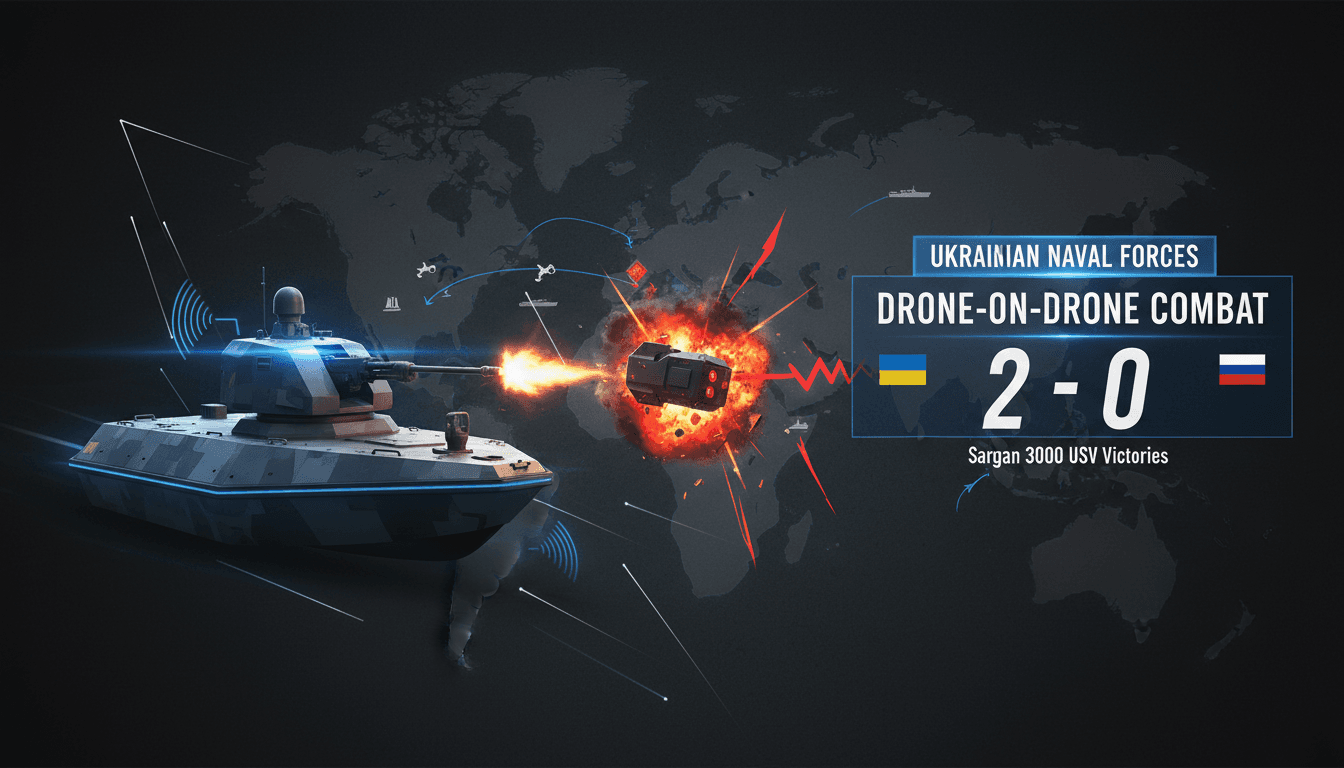
Why it matters
Direct engagements between uncrewed surface vessels establish a precedent where naval deterrence relies on automated interceptors rather than conventional crewed warships.
What happened (in 30 seconds)
- First-of-its-kind combat: Ukraine's Naval Forces and the Main Intelligence Directorate (GUR) confirmed their Sargan 3000 uncrewed surface vessels destroyed Russian naval drones in direct gun battles in the Black Sea.
- Automated turrets deployed: Ukrainian vessels utilized remotely operated weapons stations fitted with 12.7mm machine guns to neutralize Russian one-way attack drone boats at short range.
- A 2-0 record: This development marks the second confirmed direct engagement between uncrewed surface vessels, setting an early tactical record of two victories and zero losses for Ukrainian interceptors.
The context you actually need
- Evolution from asymmetric strikes: Since 2022, Ukraine deployed explosive naval drones to strike high-value Russian Black Sea Fleet assets, eventually forcing the relocation of conventional Russian warships away from Crimean ports.
- The opponent's adaptation: In response to initial Ukrainian strikes, Russian forces developed and deployed their own uncrewed surface vessels, such as Orcan-type craft, configured as one-way explosive attack platforms targeting maritime communication lines.
- Weaponized remote stations: To counter incoming drone threats, Ukrainian operators integrated remote weapon stations—including systems like the Norwegian Kongsberg Protector—turning standard uncrewed hulls into defensive and offensive patrol gunboats.
What's really happening
The mechanics of littoral denial have inverted. Historically, protecting maritime shipping lanes and coastal approaches required corvettes, frigates, or maritime patrol aircraft carrying expensive guided munitions. When an adversary deploys low-cost, one-way explosive uncrewed surface vessels (USVs), deploying million-dollar missile systems to intercept them creates a negative cost-exchange ratio that depletes defensive stockpiles.
The Ukrainian deployment of the Sargan 3000 platform demonstrates an operational solution to this imbalance: counter-drone interception using direct kinetic gunfire delivered by uncrewed platforms. By mounting a 12.7mm stabilized machine gun turret onto an autonomous hull, the operating force replaces high-cost air defense or coastal missiles with low-cost ballistic rounds. The engagement recorded between the Sargan 3000 and the Russian Orcan-type vessel proves that uncrewed systems are no longer merely one-way loitering munitions; they have matured into multi-role surface combatants capable of patrol, target acquisition, and active defense.
This shift changes defensive architecture. In a standard naval engagement, human crew safety dictates platform armor, life-support redundancy, and stand-off distance. Uncrewed interceptors eliminate these constraints. A remote operator, linked through satellite data feeds and machine-vision targeting, can commit an interceptor to high-risk, point-blank surface duels. The operational objective is not vessel preservation, but the destruction of inbound threats before they reach critical commercial maritime corridors or infrastructure.
Furthermore, this operational model creates strong incentives for technological iteration. When both sides deploy uncrewed assets, the competitive advantage moves away from hull displacement and raw engine power toward sensor processing speed, turret stabilization in rough seas, and electronic warfare resistance. Russian forces introduced one-way attack USVs to contest Ukrainian maritime logistics; Ukraine responded by upgrading interceptor USVs from simple explosive rams to gunboats. The resulting 2-0 engagement record confirms that an uncrewed platform with real-time targeting and reusable kinetic weapons holds a decisive tactical advantage over a dedicated kamikaze hull.
Who feels it first (and how)
- Naval procurement directors: Defense planners must immediately evaluate funding allocations between multi-billion-dollar crewed combatants and scalable fleets of modular, gun-equipped patrol drones.
- Maritime defense contractors: Systems manufacturers specializing in remote weapon stations and automated turrets face accelerated demand to marine-harden ground-based targeting packages for small vessel integration.
- Commercial maritime operators: Insurers and shipping operators navigating contested littoral zones gain a tactical precedent for how sovereign or private security forces might escort merchant traffic without deploying high-end naval hulls.
What to watch next
- Algorithmic fire control integration: Watch whether subsequent USV models transition from remote human-in-the-loop triggers to onboard optical target classification, which would mitigate electronic jamming risks.
- Expansion of weapon calibers: Observe whether operators scale beyond 12.7mm machine guns to 20mm or 30mm auto-cannons and guided anti-materiel rockets, indicating an ambition to engage larger targets.
- Adoption in other choke points: Track whether armed defensive USV tactics replicate across other vulnerable waterways where asymmetric surface threats threaten commercial lanes.
Ukrainian Sargan 3000 USVs equipped with automated gun turrets engaged and sank Russian attack drones in two separate Black Sea battles, establishing a 2-0 scoreline.
Both combatants will scale production of armed surface drones, transitioning the Black Sea into a sustained theater of autonomous vessel skirmishing.
The durability of remote command-and-control links under intense electronic countermeasures during sustained, high-seas maritime warfare remains untested over long operational ranges.
Frequently Asked Questions
- Why it matters?
- Direct engagements between uncrewed surface vessels establish a precedent where naval deterrence relies on automated interceptors rather than conventional crewed warships.
- What happened (in 30 seconds)?
- First-of-its-kind combat: Ukraine's Naval Forces and the Main Intelligence Directorate (GUR) confirmed their Sargan 3000 uncrewed surface vessels destroyed Russian naval drones in direct gun battles in the Black Sea. Automated turrets deployed: Ukrainian vessels utilized remotely operated weapons stations fitted with 12.7mm machine guns to neutralize Russian one-way attack drone boats at short range. A 2-0 record: This development marks the second confirmed direct engagement between uncrewed sur
- What's really happening?
- The mechanics of littoral denial have inverted. Historically, protecting maritime shipping lanes and coastal approaches required corvettes, frigates, or maritime patrol aircraft carrying expensive guided munitions. When an adversary deploys low-cost, one-way explosive uncrewed surface vessels (USVs), deploying million-dollar missile systems to intercept them creates a negative cost-exchange ratio that depletes defensive stockpiles. The Ukrainian deployment of the Sargan 3000 platform demonstrat
- Who feels it first (and how)?
- Naval procurement directors: Defense planners must immediately evaluate funding allocations between multi-billion-dollar crewed combatants and scalable fleets of modular, gun-equipped patrol drones. Maritime defense contractors: Systems manufacturers specializing in remote weapon stations and automated turrets face accelerated demand to marine-harden ground-based targeting packages for small vessel integration. Commercial maritime operators: Insurers and shipping operators navigating contested l
- What to watch next?
- Algorithmic fire control integration: Watch whether subsequent USV models transition from remote human-in-the-loop triggers to onboard optical target classification, which would mitigate electronic jamming risks. Expansion of weapon calibers: Observe whether operators scale beyond 12.7mm machine guns to 20mm or 30mm auto-cannons and guided anti-materiel rockets, indicating an ambition to engage larger targets. Adoption in other choke points: Track whether armed defensive USV tactics replicate ac
Business and tech news excluding paywalled content.
"High-volume business/tech outlet with frequent AI coverage."
— A47 Editor
Ukraine's naval drones are now fighting Russian ones in gun battles
Ukraine's navy says Ukrainian and Russian naval drones have clashed twice in gun battles, with Russia losing both encounters, according to a report by Business Insider. The base article centers on the Ukrainian Navy's account of these engagements, wh...
24/7 international news from a French perspective in multiple languages.
"France 24 is viewed as a globally focused outlet with balanced coverage and a European perspective."
— A47 Editor
Russia says intercepted over 1,300 Ukrainian drones in a major attack
Russia's Defense Ministry said it intercepted 1,336 Ukrainian drones in a major overnight attack, the largest number of drone downings Moscow has claimed since its full-scale invasion of Ukraine nearly five years ago, while Russia has continued relen...
Conservative-leaning political and national coverage.
"The Washington Times is a conservative-leaning newspaper known for its political coverage and advocacy of right-of-center viewpoints."
— A47 Editor
Ukraine launches largest drone assault of the war against Russia
Ukraine's military on Monday launched what appeared to be its largest drone offensive of the war at select targets across Russia, aiming to damage Moscow's oil infrastructure and hurt morale, according to reporting by The Washington Times.
Business and tech news excluding paywalled content.
"High-volume business/tech outlet with frequent AI coverage."
— A47 Editor
Ukraine's naval drones made their name attacking Russian warships. Now they're taking the fight onto land.
Ukraine's Magura naval drones, made by UFORCE, first gained attention by hammering Russia's Black Sea fleet. The company's systems are now reported to be taking part in attacks on ground targets, a shift that marks a new phase in how the technology i...