
IEA, IMF, and World Bank Warn of Economic Shock from Middle East War
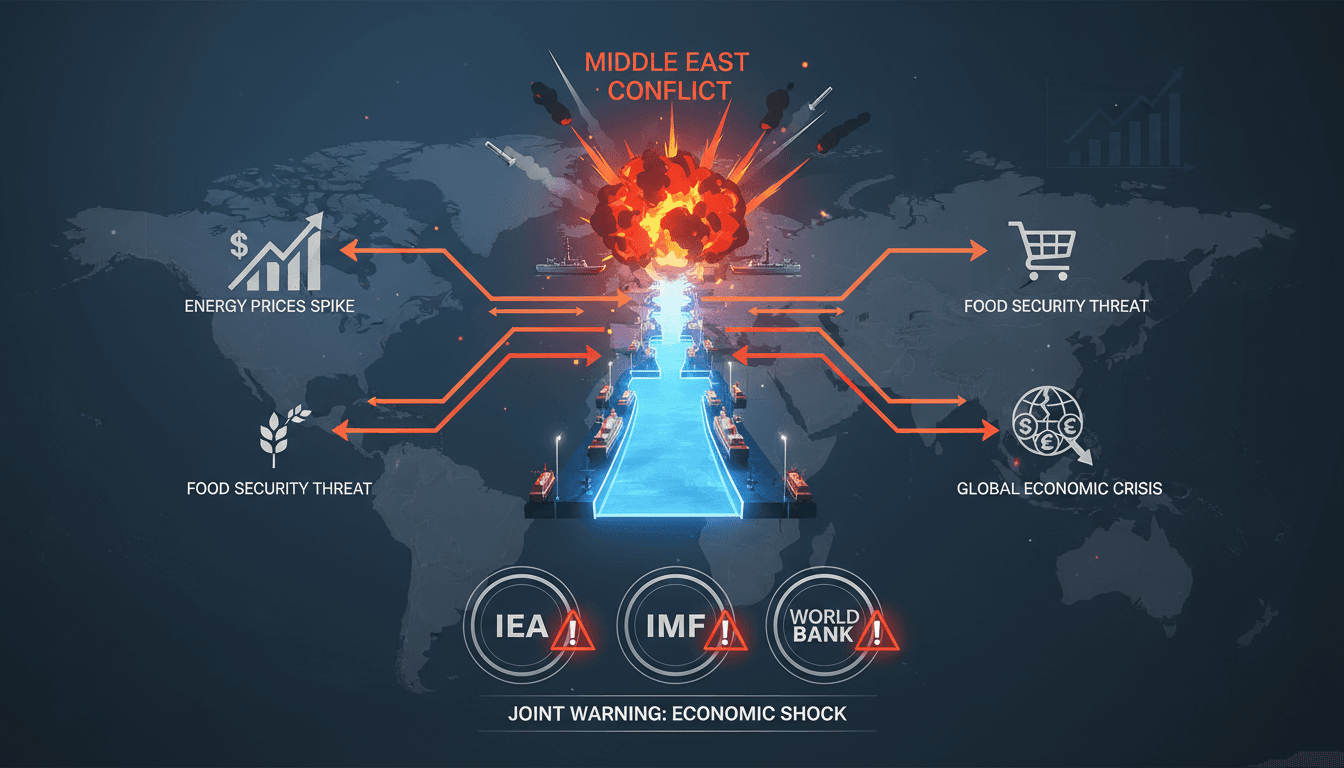
Here's what it means for you.
The ongoing conflict in the Middle East is driving up energy prices and threatening global food security, impacting your cost of living.
Why it matters
The economic repercussions of the Middle East war are reshaping global markets, particularly in energy and food sectors, which directly affect consumers worldwide.
What happened (in 30 seconds)
- April 13, 2026: IEA, IMF, and World Bank issue a joint statement warning of an 'essential, global, and unequal shock' due to the ongoing Middle East war.
- Strait of Hormuz: Disruptions in this critical shipping lane, which handles 20% of global oil and LNG flows, have led to surging energy prices and food security threats.
- US Naval Blockade: A blockade on Iranian ports commenced, exacerbating supply shortages and causing oil prices to spike significantly.
The context you actually need
- February 28, 2026: The war began with US-Israeli strikes on Iran, leading to retaliatory actions and escalating tensions in the region.
- Energy Supply Crisis: The IEA coordinated a record release of 400 million barrels from strategic reserves in March to mitigate the crisis, but the situation remains dire.
- Economic Disparities: Low-income energy-importing nations are disproportionately affected, facing job losses and rising costs, while energy-exporting nations may see revenue gains.
What's really happening
The ongoing conflict in the Middle East, ignited by US-Israeli military actions against Iran, has triggered a complex chain of economic disruptions. The Strait of Hormuz, a vital artery for global oil and liquefied natural gas (LNG) transport, is now under severe threat, with traffic plummeting from over 100 vessels daily to just 34. This disruption is not merely a logistical issue; it has profound implications for global energy prices and economic stability.
The International Energy Agency (IEA), International Monetary Fund (IMF), and World Bank have characterized the situation as an 'essential, global, and unequal shock.' This framing highlights the uneven impact of the crisis, where low-income nations, heavily reliant on energy imports, face the brunt of rising costs and potential job losses. The IEA's release of 400 million barrels from strategic reserves in March was an attempt to stabilize the market, but it has proven insufficient in the face of escalating tensions and supply chain disruptions.
As the US imposed a naval blockade on Iranian ports on April 13, oil prices surged by 4%, with Brent crude reaching $99.36 per barrel. This spike reflects not only the immediate impact of the blockade but also the broader market's reaction to the uncertainty surrounding energy supplies. The IMF's Kristalina Georgieva has warned that prolonged closure of the Strait of Hormuz could lead to severe growth and inflation challenges globally, urging against hoarding behaviors that could exacerbate the crisis.
In Dubai, the repercussions are particularly acute. Residents are experiencing elevated prices for fuel, fertilizers, and food, as the local oil benchmark comes under stress. While UAE's status as an oil exporter may yield revenue gains for producers, sectors like aviation and tourism are facing disruptions due to flight cancellations and supply shortages. The interconnectedness of global markets means that the fallout from this conflict will not be contained to the Middle East; it will ripple through economies worldwide, affecting everything from energy costs to food security.
Who feels it first (and how)
- Consumers: Higher energy and food prices directly impact household budgets, especially for low-income families.
- Energy Importers: Countries reliant on oil and LNG imports face increased costs and potential shortages.
- Tourism and Aviation Sectors: Disruptions in travel and logistics due to the conflict and rising fuel prices threaten recovery in these industries.
- Investors: Volatility in oil markets can lead to significant financial losses and shifts in investment strategies.
What to watch next
- Energy Prices: Monitor fluctuations in oil and LNG prices, as sustained increases could lead to broader economic instability.
- Supply Chain Developments: Keep an eye on shipping traffic through the Strait of Hormuz and any changes in US military strategy that could affect access.
- Global Economic Indicators: Watch for signs of inflation and growth rates in low-income nations, as these will indicate the broader economic impact of the crisis.
The Strait of Hormuz is critical for global oil and LNG flows, with 20% of these supplies transiting through it.
Continued disruptions in energy supplies will lead to rising costs and economic strain, particularly for low-income nations.
The long-term geopolitical implications of the conflict and how they will reshape energy markets and international relations remain uncertain.
Frequently Asked Questions
- Why it matters?
- The economic repercussions of the Middle East war are reshaping global markets, particularly in energy and food sectors, which directly affect consumers worldwide.
- What happened (in 30 seconds)?
- April 13, 2026: IEA, IMF, and World Bank issue a joint statement warning of an 'essential, global, and unequal shock' due to the ongoing Middle East war. Strait of Hormuz: Disruptions in this critical shipping lane, which handles 20% of global oil and LNG flows, have led to surging energy prices and food security threats. US Naval Blockade: A blockade on Iranian ports commenced, exacerbating supply shortages and causing oil prices to spike significantly.
- What's really happening?
- The ongoing conflict in the Middle East, ignited by US-Israeli military actions against Iran, has triggered a complex chain of economic disruptions. The Strait of Hormuz, a vital artery for global oil and liquefied natural gas (LNG) transport, is now under severe threat, with traffic plummeting from over 100 vessels daily to just 34. This disruption is not merely a logistical issue; it has profound implications for global energy prices and economic stability. The International Energy Agency (IE
- Who feels it first (and how)?
- Consumers: Higher energy and food prices directly impact household budgets, especially for low-income families. Energy Importers: Countries reliant on oil and LNG imports face increased costs and potential shortages. Tourism and Aviation Sectors: Disruptions in travel and logistics due to the conflict and rising fuel prices threaten recovery in these industries. Investors: Volatility in oil markets can lead to significant financial losses and shifts in investment strategies.
- What to watch next?
- Energy Prices: Monitor fluctuations in oil and LNG prices, as sustained increases could lead to broader economic instability. Supply Chain Developments: Keep an eye on shipping traffic through the Strait of Hormuz and any changes in US military strategy that could affect access. Global Economic Indicators: Watch for signs of inflation and growth rates in low-income nations, as these will indicate the broader economic impact of the crisis.
Pan-Arab news coverage spanning politics, business, sports, and regional affairs.
"Asharq Al-Awsat reflects a broad Arab editorial perspective with strong attention to regional geopolitics."
— A47 Editor
«وكالة الطاقة» وصندوق النقد والبنك الدوليان: صدمة الحرب «جوهرية»
The International Energy Agency, along with the International Monetary Fund and the World Bank, has issued a strong warning regarding the economic repercussions of the ongoing war, highlighting the severity of the situation.
Arabic-language digital news outlet covering UAE, regional, and international developments with broad general-news coverage.
"Al Ain News coverage typically blends UAE-focused reporting with wider Arab regional and international news."
— A47 Editor
بيان مشترك لصندوق النقد والبنك الدولي ووكالة الطاقة: تأثير الحرب كبير وعالمي وغير متكافئ للغاية
Officials from the International Monetary Fund (IMF), World Bank, and International Energy Agency (IEA) have announced their commitment to collaborate in addressing the unprecedented global energy shock caused by the ongoing war. This joint statement...