
IEA Warns Current Oil Prices Underestimate Impact of Iran War Supply Disruptions
Here's what it means for you.
If you rely on oil for your business or daily commute, prepare for potential price increases and supply chain disruptions.
Why it matters
The IEA's forecast signals a significant shift in global oil dynamics, impacting everything from fuel prices to economic stability.
What happened (in 30 seconds)
- On April 14, 2026, the IEA reported that current oil prices do not reflect the severity of supply disruptions caused by the ongoing Iran war.
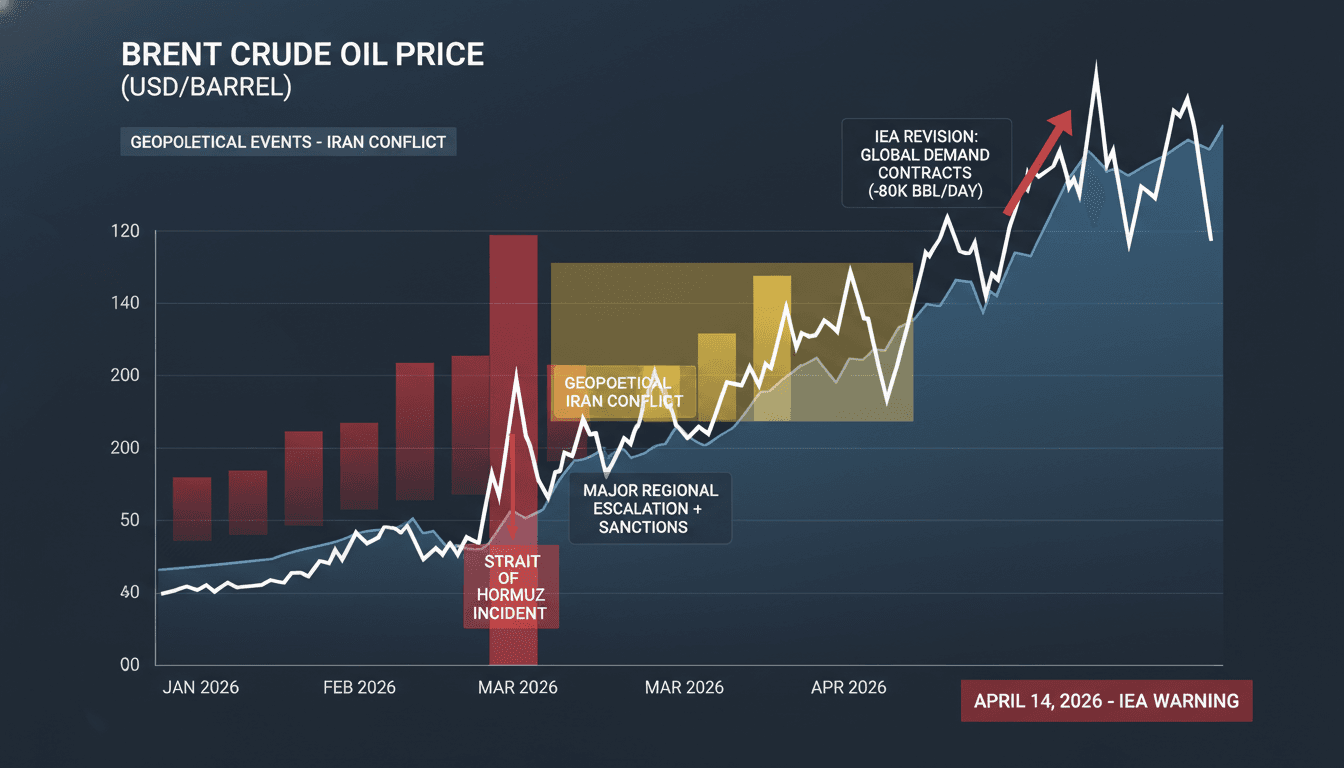
- Global oil demand is now forecasted to contract by 80,000 barrels per day, a stark reversal from previous growth expectations of 730,000 barrels per day.
- Brent crude prices remain volatile, hovering near $100 per barrel, as geopolitical tensions continue to disrupt supply chains.
The context you actually need
- The Iran war, which escalated in March 2026, has led to unprecedented oil supply losses, exceeding 10 million barrels per day at its peak.
- Prior IEA forecasts had anticipated growth despite initial disruptions, but the ongoing conflict has inverted these expectations amid a global economic slowdown.
- UAE petrol prices surged by up to 33% in April 2026, raising household fuel costs and stressing the local economy despite elevated crude revenues.
What's really happening
The IEA's April 2026 Oil Market Report reveals a critical reassessment of the global oil landscape, driven by the ongoing Iran war. This conflict has created the largest historical disruption in oil supply, with losses peaking at over 10 million barrels per day. The war's escalation in early March, marked by U.S.-Israeli operations and Iranian retaliation, has led to significant geopolitical tensions, particularly concerning the Strait of Hormuz, a vital oil transit route.
Initially, the IEA's March report projected a growth in oil demand, despite the early shocks from the conflict. However, the situation has rapidly deteriorated, prompting a downward revision of both supply and demand forecasts. The IEA now predicts a contraction in global oil demand of 80,000 barrels per day for 2026, a stark contrast to the previously anticipated growth of 730,000 barrels per day. This shift indicates a near-balanced market compared to earlier expectations of a surplus.
The implications of these changes are profound. As oil prices remain volatile, hovering around $100 per barrel, the economic landscape is shifting. The International Monetary Fund (IMF) has warned of potential energy price spikes of 100-200% in prolonged scenarios, raising fears of a global recession. The UAE, heavily reliant on oil revenues, has already hiked fuel prices, reflecting the immediate impact of these supply disruptions on local economies.
Moreover, the IEA is closely monitoring strategic reserves for potential releases to stabilize the market. OPEC+ has also adjusted production upward by 206,000 barrels per day in response to the crisis, indicating a coordinated effort to manage supply amid rising prices. The overall economic outlook is now clouded by uncertainty, with businesses and consumers alike bracing for the potential fallout from these developments.
Who feels it first (and how)
- Consumers: Higher fuel prices directly impact household budgets, especially in oil-dependent regions.
- Businesses: Industries reliant on oil for transportation and production face increased operational costs.
- Investors: Volatility in oil prices can affect stock markets and investment strategies, particularly in energy sectors.
- Governments: Countries dependent on oil exports may experience economic strain, while importers face rising costs.
What to watch next
- Oil price trends: Monitor Brent crude prices for signs of stabilization or further volatility, as this will directly affect global markets.
- Geopolitical developments: Keep an eye on the Iran war and any potential ceasefire agreements, which could influence supply dynamics.
- Economic indicators: Watch for updates from the IMF regarding global economic forecasts, particularly concerning energy price projections and recession risks.
Oil prices are currently volatile and influenced by geopolitical tensions.
Further adjustments in oil supply and demand forecasts as the Iran war continues.
The long-term economic impact of sustained high oil prices on global markets.
Frequently Asked Questions
- Why it matters?
- The IEA's forecast signals a significant shift in global oil dynamics, impacting everything from fuel prices to economic stability.
- What happened (in 30 seconds)?
- On April 14, 2026, the IEA reported that current oil prices do not reflect the severity of supply disruptions caused by the ongoing Iran war. Global oil demand is now forecasted to contract by 80,000 barrels per day, a stark reversal from previous growth expectations of 730,000 barrels per day. Brent crude prices remain volatile, hovering near $100 per barrel, as geopolitical tensions continue to disrupt supply chains.
- What's really happening?
- The IEA's April 2026 Oil Market Report reveals a critical reassessment of the global oil landscape, driven by the ongoing Iran war. This conflict has created the largest historical disruption in oil supply, with losses peaking at over 10 million barrels per day. The war's escalation in early March, marked by U.S.-Israeli operations and Iranian retaliation, has led to significant geopolitical tensions, particularly concerning the Strait of Hormuz, a vital oil transit route. Initially, the IEA's
- Who feels it first (and how)?
- Consumers: Higher fuel prices directly impact household budgets, especially in oil-dependent regions. Businesses: Industries reliant on oil for transportation and production face increased operational costs. Investors: Volatility in oil prices can affect stock markets and investment strategies, particularly in energy sectors. Governments: Countries dependent on oil exports may experience economic strain, while importers face rising costs.
- What to watch next?
- Oil price trends: Monitor Brent crude prices for signs of stabilization or further volatility, as this will directly affect global markets. Geopolitical developments: Keep an eye on the Iran war and any potential ceasefire agreements, which could influence supply dynamics. Economic indicators: Watch for updates from the IMF regarding global economic forecasts, particularly concerning energy price projections and recession risks.
Sports reporting with a focus on Saudi and regional competitions.
"Okaz sports coverage is broad and audience-friendly, with strong attention to Saudi teams and leagues."
— A47 Editor
«الطاقة الدولية»: أسعار النفط لا تعكس الوضع الحالي
The International Energy Agency announced that current oil prices do not reflect the actual situation and may rise further. In its monthly report, the agency sharply reduced its forecasts for oil supply and demand growth, citing the impact of the Ira...
Global business headlines with AI angles.
"General business outlet that frequently covers AI."
— A47 Editor
IEA Head Says Current Oil Prices Don't Show Gravity Of Threat To Energy Markets Posed By Iran War
Fatih Birol, head of the International Energy Agency, stated that current oil prices do not accurately reflect the severe risks posed to energy markets by the ongoing war in Iran and broader Middle Eastern conflicts. He emphasized that the situation ...
Pan-Arab news coverage spanning politics, business, sports, and regional affairs.
"Asharq Al-Awsat reflects a broad Arab editorial perspective with strong attention to regional geopolitics."
— A47 Editor
«وكالة الطاقة الدولية»: أسعار النفط الحالية لا تعكس الوضع الراهن
Fatih Birol, the head of the International Energy Agency, stated on Tuesday that current oil prices do not reflect the severity of the threat posed by Iran's actions on global energy markets. This statement highlights concerns regarding the geopoliti...
Sports reporting with a focus on Saudi and regional competitions.
"Okaz sports coverage is broad and audience-friendly, with strong attention to Saudi teams and leagues."
— A47 Editor
«الطاقة الدولية»: أكثر من 80 منشأة نفط وغاز تضررت بسبب حرب إيران
The International Energy Agency's Executive Director, Fatih Birol, announced that over 80 oil and gas facilities have been damaged due to the ongoing war with Iran, marking the worst global energy disruption ever. The conflict has severely impacted t...