
Oil Prices Exceed $100 Following US-Iran Peace Talks Breakdown and Strait of Hormuz Blockade
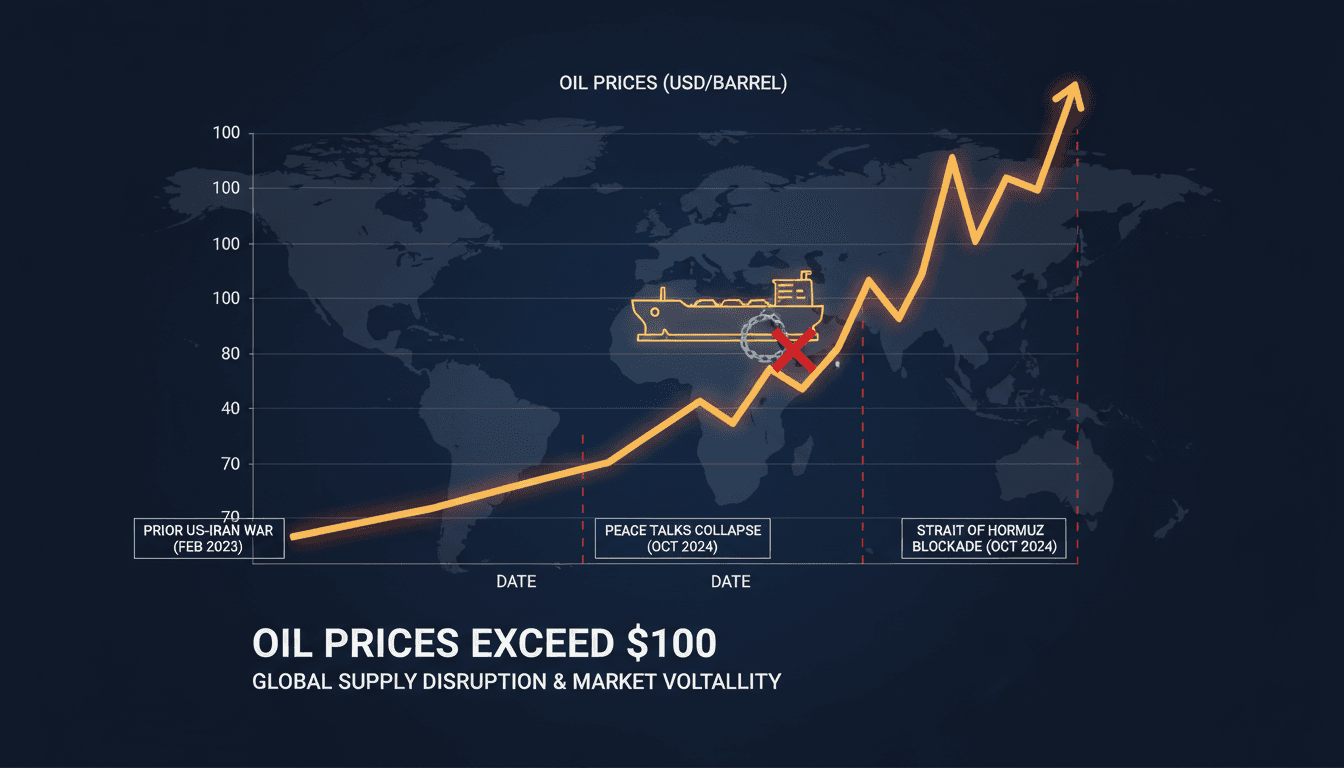
Here's what it means for you.
Rising oil prices could lead to increased costs for consumers and businesses globally, impacting everything from fuel to food prices.
Why it matters
The escalation in oil prices signals potential inflationary pressures that could affect economic stability worldwide.
What happened (in 30 seconds)
- US-Iran peace talks collapsed over the weekend of April 11-12, 2026, leading to heightened geopolitical tensions.
- The US imposed a blockade on Iranian shipping in the Strait of Hormuz, disrupting oil exports and blocking up to 2 million barrels daily.
- Oil prices surged over 7%, with Brent crude exceeding $100 per barrel, as markets reacted to fears of prolonged supply disruptions.
The context you actually need
- The Strait of Hormuz is a critical chokepoint for global oil shipments, with approximately 20% of the world's oil passing through it.
- Previous conflicts between the US and Iran have already strained energy markets, with prior strikes and failed negotiations contributing to instability.
- President Trump’s administration is under pressure to manage both geopolitical tensions and domestic economic implications as midterm elections approach.
What's really happening
The collapse of US-Iran peace talks over the April 11-12 weekend has triggered a significant geopolitical crisis, with immediate repercussions for global energy markets. The United States, responding to the breakdown, enforced a blockade on Iranian shipping in the strategically vital Strait of Hormuz. This blockade is particularly impactful as it restricts the flow of oil from Iran, a major player in the global energy market, and blocks up to 2 million barrels of oil per day.
As a result, oil prices surged sharply, with Brent crude rising 7.3% to $102 per barrel and West Texas Intermediate (WTI) climbing 7.84% to $104.14. This spike reflects not only the immediate supply concerns but also the broader implications of sustained high prices, which could lead to inflationary pressures across various sectors. The Dollar Index also advanced as investors sought safe-haven assets amid the uncertainty, while equities declined, indicating a risk-off sentiment among investors.
The ongoing US-Iran conflict has already disrupted energy exports from the region, and the fragile ceasefire that had been in place is now at risk. The geopolitical climate is further complicated by President Trump’s acknowledgment of the potential for sustained high oil prices, which could influence the upcoming midterm elections. Analysts from MST Marquee and VanEck have warned of risks to regional energy infrastructure and anticipate prolonged high prices due to slow recovery in the Strait of Hormuz.
This situation is not just a regional issue; it has global ramifications. Countries dependent on oil imports will face rising costs, which could lead to increased inflation rates. Businesses that rely on oil for transportation and production will likely pass these costs onto consumers, affecting everything from fuel prices to the cost of goods. The interconnectedness of global markets means that disruptions in one area can lead to ripple effects worldwide, making this situation one to watch closely.
Who feels it first (and how)
- Consumers: Higher fuel and transportation costs will directly impact household budgets.
- Businesses: Companies reliant on oil for logistics and production will face increased operational costs.
- Investors: Market volatility may lead to losses in equities and shifts in investment strategies.
- Governments: Rising inflation could prompt central banks to adjust interest rates, affecting borrowing costs.
- Middle Eastern economies: Countries reliant on oil exports may see fluctuations in revenue and economic stability.
What to watch next
- Oil price trends: Continued fluctuations in oil prices will indicate the severity of supply disruptions and inflationary pressures.
- Geopolitical developments: Any new negotiations or escalations between the US and Iran could further impact market stability.
- Central bank responses: Watch for potential interest rate adjustments from the ECB and other central banks as they respond to inflationary pressures.
Oil prices have surged above $100 per barrel due to the blockade.
Continued volatility in global markets as investors react to geopolitical tensions.
The duration of the blockade and its long-term impact on oil supply and prices.
Frequently Asked Questions
- Why it matters?
- The escalation in oil prices signals potential inflationary pressures that could affect economic stability worldwide.
- What happened (in 30 seconds)?
- US-Iran peace talks collapsed over the weekend of April 11-12, 2026, leading to heightened geopolitical tensions. The US imposed a blockade on Iranian shipping in the Strait of Hormuz, disrupting oil exports and blocking up to 2 million barrels daily. Oil prices surged over 7%, with Brent crude exceeding $100 per barrel, as markets reacted to fears of prolonged supply disruptions.
- What's really happening?
- The collapse of US-Iran peace talks over the April 11-12 weekend has triggered a significant geopolitical crisis, with immediate repercussions for global energy markets. The United States, responding to the breakdown, enforced a blockade on Iranian shipping in the strategically vital Strait of Hormuz. This blockade is particularly impactful as it restricts the flow of oil from Iran, a major player in the global energy market, and blocks up to 2 million barrels of oil per day. As a result, oil
- Who feels it first (and how)?
- Consumers: Higher fuel and transportation costs will directly impact household budgets. Businesses: Companies reliant on oil for logistics and production will face increased operational costs. Investors: Market volatility may lead to losses in equities and shifts in investment strategies. Governments: Rising inflation could prompt central banks to adjust interest rates, affecting borrowing costs. Middle Eastern economies: Countries reliant on oil exports may see fluctuations in revenue a
- What to watch next?
- Oil price trends: Continued fluctuations in oil prices will indicate the severity of supply disruptions and inflationary pressures. Geopolitical developments: Any new negotiations or escalations between the US and Iran could further impact market stability. Central bank responses: Watch for potential interest rate adjustments from the ECB and other central banks as they respond to inflationary pressures.
Market-moving headlines impacting equities, bonds, and related risk assets.
"Real-time catalysts and volatility drivers across indices and sectors."
— A47 Editor
Wall Street rallies, oil stays higher as investors hope for US-Iran resolution
Wall Street experienced a rally as investors expressed optimism over a potential resolution to ongoing tensions between the United States and Iran, despite recent setbacks in peace talks. The market's positive sentiment was reflected in rising stock ...
Markets desk coverage, trading insights, and investor updates.
"WSJ’s markets reporting provides in-depth analysis and context for investors."
— A47 Editor
Oil Futures Pull Back From Highs on Hopes for Talks
Oil futures experienced a pullback from earlier highs as negotiations between the U.S. and Iran continue, despite a breakdown in talks over the weekend. The market reacted to the uncertainty surrounding potential agreements, leading to fluctuations i...