
OPEC crude oil production experiences historic drop amid Iran conflict
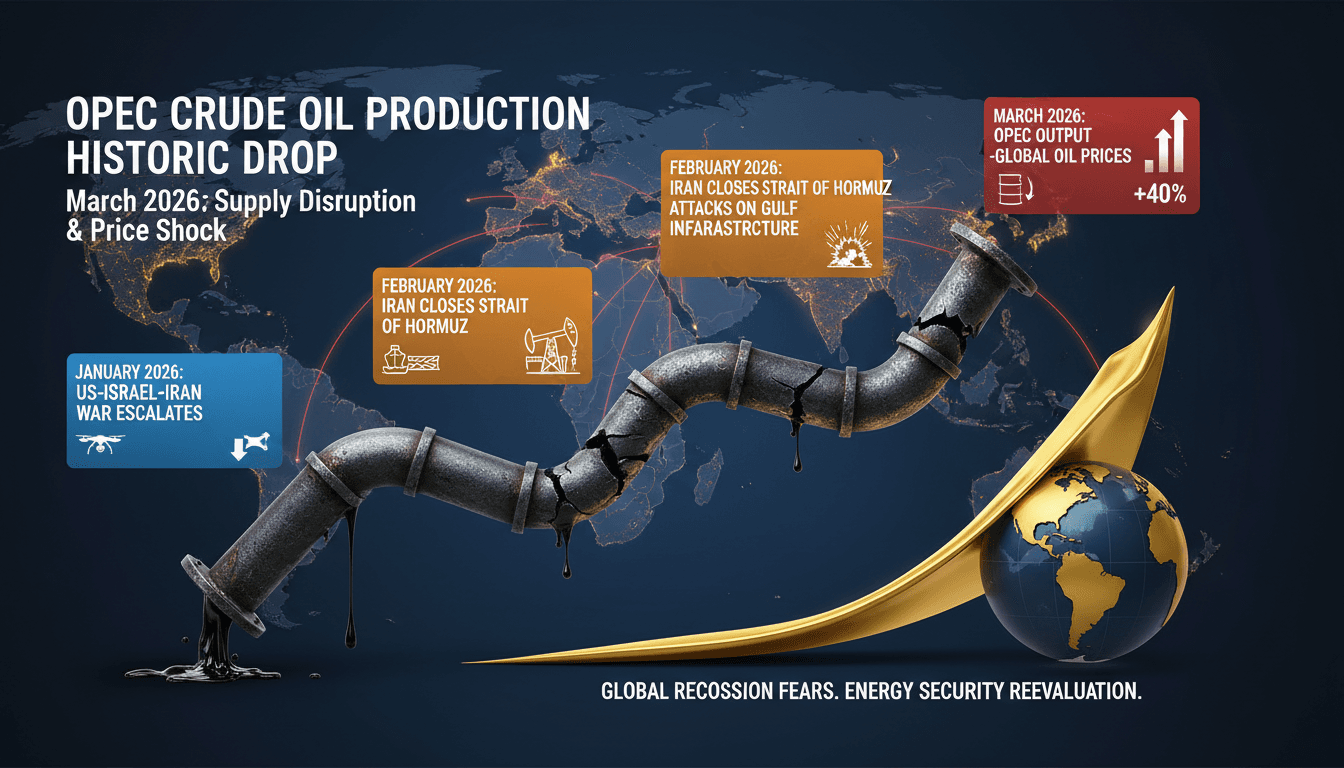
Here's what it means for you.
If you rely on oil for transportation or energy, expect significant price increases in the coming months.
Why it matters
This unprecedented supply shock could lead to sustained high energy prices, impacting global economies and consumer spending.
What happened (in 30 seconds)
- OPEC's crude oil output fell by 7.88 million barrels per day in March 2026, the largest decline in decades, due to geopolitical tensions.
- Iran's closure of the Strait of Hormuz and attacks on Gulf energy infrastructure severely disrupted oil exports from key OPEC nations.
- Oil prices surged to near $150 per barrel, marking the largest monthly gain on record, with immediate effects on fuel prices worldwide.
The context you actually need
- OPEC+ had been gradually restoring production cuts since late 2022 to stabilize the market, but the US-Israel-Iran war disrupted these efforts.
- Iran's actions on March 2, 2026, effectively halted tanker transit through the Strait of Hormuz, a critical chokepoint for global oil supply.
- The aftermath of the conflict includes a partial recovery of production initiated after a ceasefire on April 8, but full export resumption is projected to take months.
What's really happening
The recent collapse in OPEC's crude oil production is rooted in a complex interplay of geopolitical tensions and market dynamics. The US-Israel-Iran war, which began on February 28, 2026, triggered a series of aggressive actions by Iran, including the closure of the Strait of Hormuz on March 2. This strategic waterway is responsible for approximately 20% of the world's oil trade, making its closure a critical event for global energy markets.
As Iran launched aerial attacks on energy infrastructure in Saudi Arabia, Iraq, Kuwait, and the UAE, OPEC's production plummeted to 20.79 million barrels per day, a level not seen since the COVID-19 pandemic and the Gulf War. The immediate impact was a surge in oil prices, which reached nearly $150 per barrel, reflecting the market's reaction to the sudden and severe supply disruption.
The implications of this supply shock extend beyond immediate price increases. Countries heavily reliant on oil imports, particularly in Europe and Asia, are likely to face inflationary pressures as energy costs rise. Consumers will feel the pinch at the pump, with fuel prices already surging in places like Dubai, where Super 98 petrol prices jumped to AED 2.59 per litre in March and continued to rise in April.
In response to the crisis, OPEC+ has signaled a phased approach to increasing output, with a symbolic quota increase of 206,000 barrels per day approved for May. However, the International Energy Agency (IEA) warns of a two-month lag for full export resumption, even after the reopening of the Strait of Hormuz. This delay, coupled with the extensive damage to infrastructure, means that the market may not stabilize quickly.
As Gulf nations prioritize infrastructure repairs and reroute exports, the long-term structural implications of this crisis could reshape global energy dynamics. Countries may seek to diversify their energy sources and reduce dependence on Middle Eastern oil, potentially accelerating the transition to alternative energy solutions.
Who feels it first (and how)
- Consumers in oil-dependent regions: Higher fuel prices will directly impact transportation and heating costs.
- Businesses reliant on oil: Industries such as logistics, manufacturing, and travel will face increased operational costs.
- Governments in importing nations: Rising energy prices may lead to inflation and economic strain, prompting potential policy responses.
What to watch next
- OPEC+ meetings: The next meeting on May 3 will provide insights into production strategies and potential output increases.
- Global oil price trends: Monitor fluctuations in oil prices as they will directly affect consumer costs and economic stability.
- Infrastructure recovery efforts: Watch for updates on the restoration of damaged energy facilities in the Gulf, which will influence supply levels.
OPEC's production has dropped significantly, leading to higher oil prices.
Continued volatility in oil prices as the market reacts to geopolitical developments and recovery efforts.
The long-term impact on global energy policies and the pace of transition to alternative energy sources.
Frequently Asked Questions
- Why it matters?
- This unprecedented supply shock could lead to sustained high energy prices, impacting global economies and consumer spending.
- What happened (in 30 seconds)?
- OPEC's crude oil output fell by 7.88 million barrels per day in March 2026, the largest decline in decades, due to geopolitical tensions. Iran's closure of the Strait of Hormuz and attacks on Gulf energy infrastructure severely disrupted oil exports from key OPEC nations. Oil prices surged to near $150 per barrel, marking the largest monthly gain on record, with immediate effects on fuel prices worldwide.
- What's really happening?
- The recent collapse in OPEC's crude oil production is rooted in a complex interplay of geopolitical tensions and market dynamics. The US-Israel-Iran war, which began on February 28, 2026, triggered a series of aggressive actions by Iran, including the closure of the Strait of Hormuz on March 2. This strategic waterway is responsible for approximately 20% of the world's oil trade, making its closure a critical event for global energy markets. As Iran launched aerial attacks on energy infrastruct
- Who feels it first (and how)?
- Consumers in oil-dependent regions: Higher fuel prices will directly impact transportation and heating costs. Businesses reliant on oil: Industries such as logistics, manufacturing, and travel will face increased operational costs. Governments in importing nations: Rising energy prices may lead to inflation and economic strain, prompting potential policy responses.
- What to watch next?
- OPEC+ meetings: The next meeting on May 3 will provide insights into production strategies and potential output increases. Global oil price trends: Monitor fluctuations in oil prices as they will directly affect consumer costs and economic stability. Infrastructure recovery efforts: Watch for updates on the restoration of damaged energy facilities in the Gulf, which will influence supply levels.
UAE-based English-language newspaper covering regional politics, economics, and global affairs.
"The National reflects Emirati policy perspectives while maintaining international editorial standards."
— A47 Editor
Opec's output falls by nearly 8 million bpd in March in the worst supply shock in decades
Opec's oil output has decreased by nearly 8 million barrels per day (bpd) in March, marking one of the most significant supply shocks in decades. This reduction reflects the challenges faced by the organization in maintaining production levels amid f...
Editor-curated FT homepage stories spanning markets, business, world, and opinion.
"The Financial Times is a globally respected business publication with a centrist/center-left tone and strong markets focus."
— A47 Editor
Opec production falls more than a quarter as Iran war hits oil exports
OPEC's crude oil production fell by more than a quarter in March, marking the largest recorded drop, primarily due to the near-closure of the Strait of Hormuz amid escalating tensions from the ongoing conflict in Iran. This disruption has severely im...
Regional and international reporting focused on Middle Eastern politics, diplomacy, and economics.
"Asharq Al-Awsat is a Saudi-owned international newspaper reflecting mainstream Gulf political perspectives."
— A47 Editor
Iraqi Oil Exports Plummet 81.3% in March Due to Hormuz Closure
Iraqi oil exports have plummeted by 81.3% in March due to the ongoing closure of the Strait of Hormuz, a critical maritime route for global oil shipments. This significant decline is attributed to escalating regional tensions and military conflicts a...