
Bezos and Musk Compete for Lunar Dominance Amid NASA's Artemis Program
Here's what it means for you.
The escalating competition between Bezos and Musk could reshape the future of space infrastructure and AI capabilities, impacting industries reliant on advanced computing.
Why it matters
This rivalry is pivotal for U.S. leadership in space and technology, especially as global competitors like China advance their lunar ambitions.
What happened (in 30 seconds)
- NASA's Artemis II mission successfully completed the first crewed lunar flyby in 50 years, reigniting interest in lunar exploration.
- Blue Origin and SpaceX are competing for lucrative NASA contracts for lunar landers and are proposing orbital AI data centers to meet growing computing demands.
- China's planned lunar landings by 2030 are pushing U.S. companies to accelerate their efforts in establishing a permanent lunar base.
The context you actually need
- Blue Origin and SpaceX were awarded multi-billion-dollar NASA contracts years ago to develop lunar landers for the Artemis program, which aims for sustainable human presence on the Moon.
- SpaceX's Falcon 9 has dominated U.S. orbital launches, achieving 165 launches in 2025, while Blue Origin made its orbital debut with New Glenn.
- The demand for AI computing is driving proposals for orbital data centers, as Earth-based power and regulatory limits become increasingly restrictive.
What's really happening
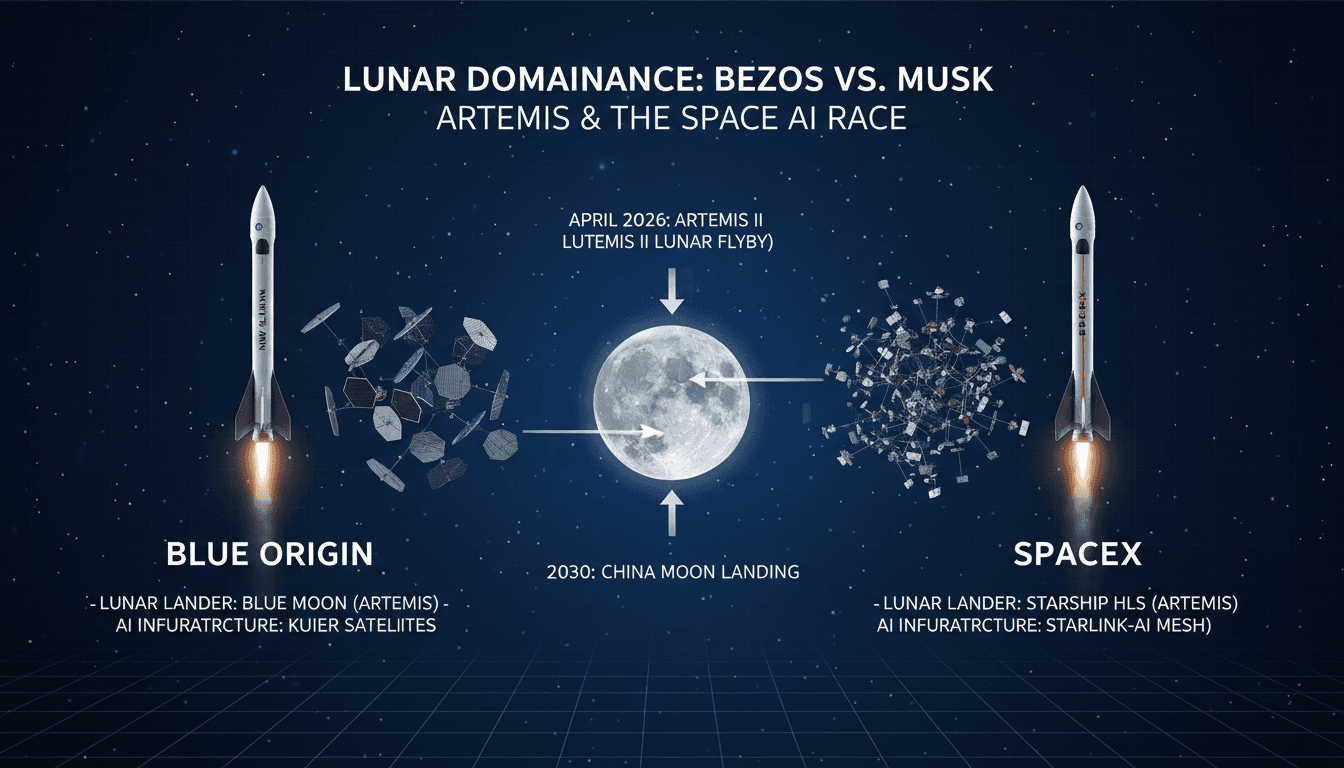
The competition between Jeff Bezos's Blue Origin and Elon Musk's SpaceX is intensifying as both companies vie for dominance in the emerging landscape of lunar exploration and space-based AI infrastructure. The recent success of NASA's Artemis II mission, which marked the first crewed lunar flyby in half a century, has heightened the stakes for both companies. NASA's Artemis program aims to establish a sustainable human presence on the Moon's south pole, a strategic move to counter China's ambitions for lunar landings by 2030.
Both Blue Origin and SpaceX have been awarded multi-billion-dollar contracts to develop Human Landing Systems for the Artemis program. This funding is crucial as it not only supports lunar exploration but also positions these companies as leaders in the burgeoning space economy. SpaceX has already demonstrated its capabilities with the Falcon 9 rocket, achieving 165 launches in 2025, which accounted for 85% of all U.S. orbital activity. Meanwhile, Blue Origin has made significant strides with its New Glenn rocket, achieving orbital capability and booster recovery.
The rivalry is further fueled by the increasing demand for AI computing power, which is pushing companies to explore the feasibility of orbital data centers. Blue Origin has filed with the FCC to deploy 52,000 AI-computing satellites, while SpaceX has proposed a constellation of up to 1 million AI-capable satellites. This shift to space-based infrastructure is driven by the limitations of Earth-based systems, including power constraints and regulatory hurdles.
As both companies race to establish their foothold in lunar operations and AI infrastructure, the implications extend beyond the immediate competition. The U.S. aims to solidify its leadership in space technology, particularly in the face of China's advancements. The establishment of a permanent lunar base, with landings planned every six months post-2028, is a critical component of this strategy. The success of these missions will not only enhance U.S. capabilities but also influence global standards for space exploration and AI applications.
Who feels it first (and how)
- Tech companies: Those involved in AI and satellite technology will need to adapt to new opportunities and competition.
- Investors: Stakeholders in aerospace and technology sectors may see shifts in market dynamics and investment opportunities.
- Government agencies: U.S. regulatory bodies will need to navigate the implications of increased space activity and its impact on national security.
What to watch next
- Artemis III docking tests: Scheduled for mid-2027, these tests will be crucial for assessing the readiness of lunar landers and the overall Artemis program.
- FCC filings for satellite constellations: Watch for developments in Blue Origin and SpaceX's proposals, as they could reshape the landscape of AI computing in space.
- China's lunar missions: The timeline and success of China's planned landings will significantly influence U.S. strategies and responses in the space race.
NASA's Artemis program is advancing with plans for a permanent lunar base.
Increased competition between Blue Origin and SpaceX will drive innovation in space technology and AI infrastructure.
The long-term impacts of this rivalry on global space policy and international cooperation remain to be seen.
Frequently Asked Questions
- Why it matters?
- This rivalry is pivotal for U.S. leadership in space and technology, especially as global competitors like China advance their lunar ambitions.
- What happened (in 30 seconds)?
- NASA's Artemis II mission successfully completed the first crewed lunar flyby in 50 years, reigniting interest in lunar exploration. Blue Origin and SpaceX are competing for lucrative NASA contracts for lunar landers and are proposing orbital AI data centers to meet growing computing demands. China's planned lunar landings by 2030 are pushing U.S. companies to accelerate their efforts in establishing a permanent lunar base.
- What's really happening?
- The competition between Jeff Bezos's Blue Origin and Elon Musk's SpaceX is intensifying as both companies vie for dominance in the emerging landscape of lunar exploration and space-based AI infrastructure. The recent success of NASA's Artemis II mission, which marked the first crewed lunar flyby in half a century, has heightened the stakes for both companies. NASA's Artemis program aims to establish a sustainable human presence on the Moon's south pole, a strategic move to counter China's ambiti
- Who feels it first (and how)?
- Tech companies: Those involved in AI and satellite technology will need to adapt to new opportunities and competition. Investors: Stakeholders in aerospace and technology sectors may see shifts in market dynamics and investment opportunities. Government agencies: U.S. regulatory bodies will need to navigate the implications of increased space activity and its impact on national security.
- What to watch next?
- Artemis III docking tests: Scheduled for mid-2027, these tests will be crucial for assessing the readiness of lunar landers and the overall Artemis program. FCC filings for satellite constellations: Watch for developments in Blue Origin and SpaceX's proposals, as they could reshape the landscape of AI computing in space. China's lunar missions: The timeline and success of China's planned landings will significantly influence U.S. strategies and responses in the space race.
Corporate leadership, finance, technology, and market trends.
"Fortune covers financial trends, leadership, and innovation with a pragmatic editorial approach."
— A47 Editor
The Bezos-Musk space rivalry is shooting for the moon and the winner will not just dominate the cosmos—but the future of AI infrastructure
The competition between Elon Musk's SpaceX and Jeff Bezos' Blue Origin is intensifying as both companies aim to establish a presence on the moon and deploy AI satellites into orbit. This rivalry is not just about space exploration but also about shap...
U.S. business news, corporate developments, and economy.
"The Wall Street Journal is respected for deep financial and economic reporting with a center-right editorial perspective."
— A47 Editor
The Bezos vs. Musk Space Race Is Heating Up
The competition between Jeff Bezos' companies and Elon Musk's SpaceX is intensifying, particularly in the realms of satellite communications and rocket launches, where Bezos-founded firms are making significant advancements. This shift is notable as ...
Tech business coverage, major deals, product launches, and Silicon Valley trends.
"WSJ’s tech section offers authoritative reporting on the intersection of technology and business, including exclusive industry analysis."
— A47 Editor
The Bezos vs. Musk Space Race Is Heating Up
The competition between Jeff Bezos and Elon Musk in the space industry is intensifying, with Bezos-founded companies advancing in satellite connections and rocket launches, areas where Musk's SpaceX has previously held a dominant position. This shift...