
German Firms Shift Investment Focus from US to Asia Amid Tariff Concerns
Here's what it means for you.
If you're in the global supply chain or investment sector, this shift could redefine competitive landscapes and market opportunities.
Why it matters
This trend signals a significant realignment in global investment flows, impacting trade relations and economic stability.
What happened (in 30 seconds)
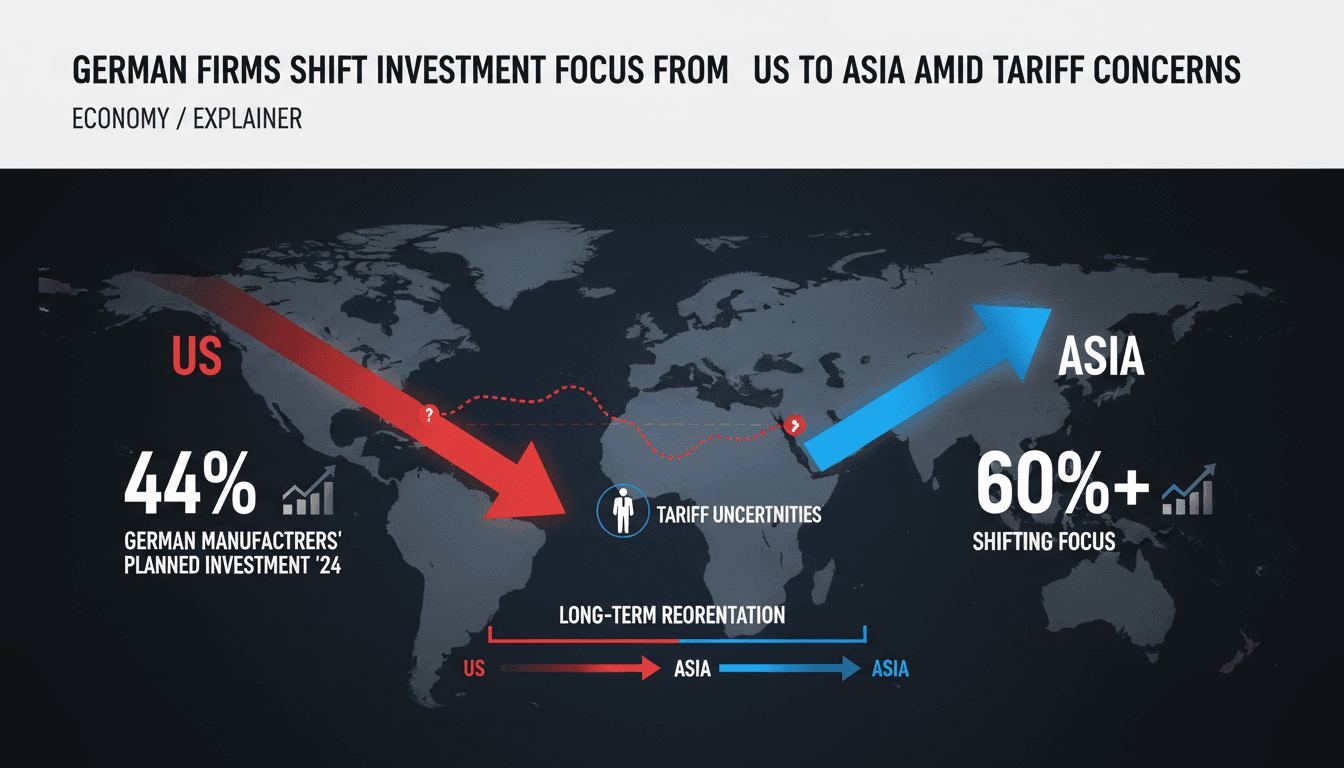
- 44% of German manufacturers plan to invest in the US, down from 48% in 2025.
- 34% are focusing on China, an increase of 3 percentage points, while 26% target Asia-Pacific, up 5 points.
- Trade tariff uncertainties under President Trump are driving firms to localize production in Asia.
The context you actually need
- Tariff implementation: Since Trump's second term began in January 2025, expansive tariffs on imports have created a hostile environment for foreign investment in the US.
- Investment decline: German direct investments in the US plummeted nearly 45% from February to November 2025, contrasting with a surge in investments in China.
- Survey insights: The DIHK survey of 1,700 manufacturers reveals a growing preference for Asian markets, reflecting a strategic pivot in response to geopolitical tensions.
What's really happening
The shift in investment from the US to Asia by German firms is rooted in a complex interplay of economic and geopolitical factors. Since the inauguration of President Trump in January 2025, the introduction of expansive tariffs on imports, particularly from the European Union, has created a climate of uncertainty for German manufacturers. This uncertainty has led to a significant decline in direct investments in the US, which fell nearly 45% from February to November 2025 compared to the previous year.
As firms grapple with the implications of these tariffs, many have opted to delay or cancel their US investment plans. The DIHK survey indicates that nearly 30% of German firms have postponed decisions regarding US investments due to fears surrounding trade barriers. In contrast, investments in China have surged, reaching a four-year high of over €7 billion in 2025. This shift is not merely a reaction to tariffs; it reflects a broader strategy to localize production and sales in Asian markets, which are perceived as more stable and less fraught with trade disputes.
Volker Treier, a representative from DIHK, emphasizes that the ongoing trade dispute with the US is fueling this uncertainty, prompting German firms to pivot towards Asia. The rising interest in China and the Asia-Pacific region is indicative of a strategic realignment, where companies seek to mitigate risks associated with US investments. This trend is likely to continue as firms prioritize stability and growth opportunities in regions less impacted by tariff-related disruptions.
The implications of this shift extend beyond immediate investment figures. As German firms increasingly favor Asian markets, the competitive landscape will evolve, potentially diminishing the US's role as a primary destination for foreign direct investment. This could lead to a reconfiguration of global supply chains, with Asian countries becoming central hubs for manufacturing and distribution.
Who feels it first (and how)
- Manufacturers: Companies reliant on US markets will face immediate impacts on their investment strategies and profitability.
- Investors: Those with stakes in US-based firms may see reduced returns as investment flows shift.
- Asian markets: Countries like China and India will benefit from increased German investments, enhancing their economic growth prospects.
What to watch next
- US tariff policy changes: Any adjustments in trade policy could influence German firms' investment decisions and market dynamics.
- Economic stability in Asia: Monitoring economic indicators in China and the Asia-Pacific region will provide insights into the sustainability of this investment shift.
- German manufacturing sentiment: Future surveys from DIHK will reveal ongoing trends in investment intentions and potential shifts in strategy.
German investments in the US have declined significantly due to tariff uncertainties.
Continued focus on Asian markets by German firms as they seek stability and growth opportunities.
The long-term effects of this shift on US-German trade relations and global supply chains.
Frequently Asked Questions
- Why it matters?
- This trend signals a significant realignment in global investment flows, impacting trade relations and economic stability.
- What happened (in 30 seconds)?
- 44% of German manufacturers plan to invest in the US, down from 48% in 2025. 34% are focusing on China, an increase of 3 percentage points, while 26% target Asia-Pacific, up 5 points. Trade tariff uncertainties under President Trump are driving firms to localize production in Asia.
- What's really happening?
- The shift in investment from the US to Asia by German firms is rooted in a complex interplay of economic and geopolitical factors. Since the inauguration of President Trump in January 2025, the introduction of expansive tariffs on imports, particularly from the European Union, has created a climate of uncertainty for German manufacturers. This uncertainty has led to a significant decline in direct investments in the US, which fell nearly 45% from February to November 2025 compared to the previou
- Who feels it first (and how)?
- Manufacturers: Companies reliant on US markets will face immediate impacts on their investment strategies and profitability. Investors: Those with stakes in US-based firms may see reduced returns as investment flows shift. Asian markets: Countries like China and India will benefit from increased German investments, enhancing their economic growth prospects.
- What to watch next?
- US tariff policy changes: Any adjustments in trade policy could influence German firms' investment decisions and market dynamics. Economic stability in Asia: Monitoring economic indicators in China and the Asia-Pacific region will provide insights into the sustainability of this investment shift. German manufacturing sentiment: Future surveys from DIHK will reveal ongoing trends in investment intentions and potential shifts in strategy.
Macro commentary, policy analysis, growth/inflation themes, and global outlooks.
"Contextual macro coverage that complements day-to-day market headlines."
— A47 Editor
German firms shift investment from US to Asia amid tariff concerns
German firms are increasingly shifting their investments from the United States to Asia, driven by concerns over trade tariffs imposed by the U.S. government. This trend reflects a growing apprehension among these companies regarding the stability an...
Global markets, investing, and macroeconomics from a premier financial newsroom.
"Bloomberg is respected for in-depth financial reporting and data-driven analysis."
— A47 Editor
German Companies Increasingly Favor Asia Over US Investments
A recent survey by the industry lobby group DIHK reveals that fewer German companies are investing in the United States, attributing this shift to President Donald Trump's trade tariffs. Instead, these companies are increasingly directing their inves...