
U.S. Natural Gas Futures Increase 2.2% Amid Geopolitical Tensions and Demand Recovery
Here's what it means for you.
If you're in the energy sector or rely on natural gas, fluctuations in futures prices could impact your operational costs and pricing strategies.
Why it matters
The rise in natural gas futures reflects broader geopolitical tensions that can disrupt global energy markets and influence domestic pricing.
What happened (in 30 seconds)
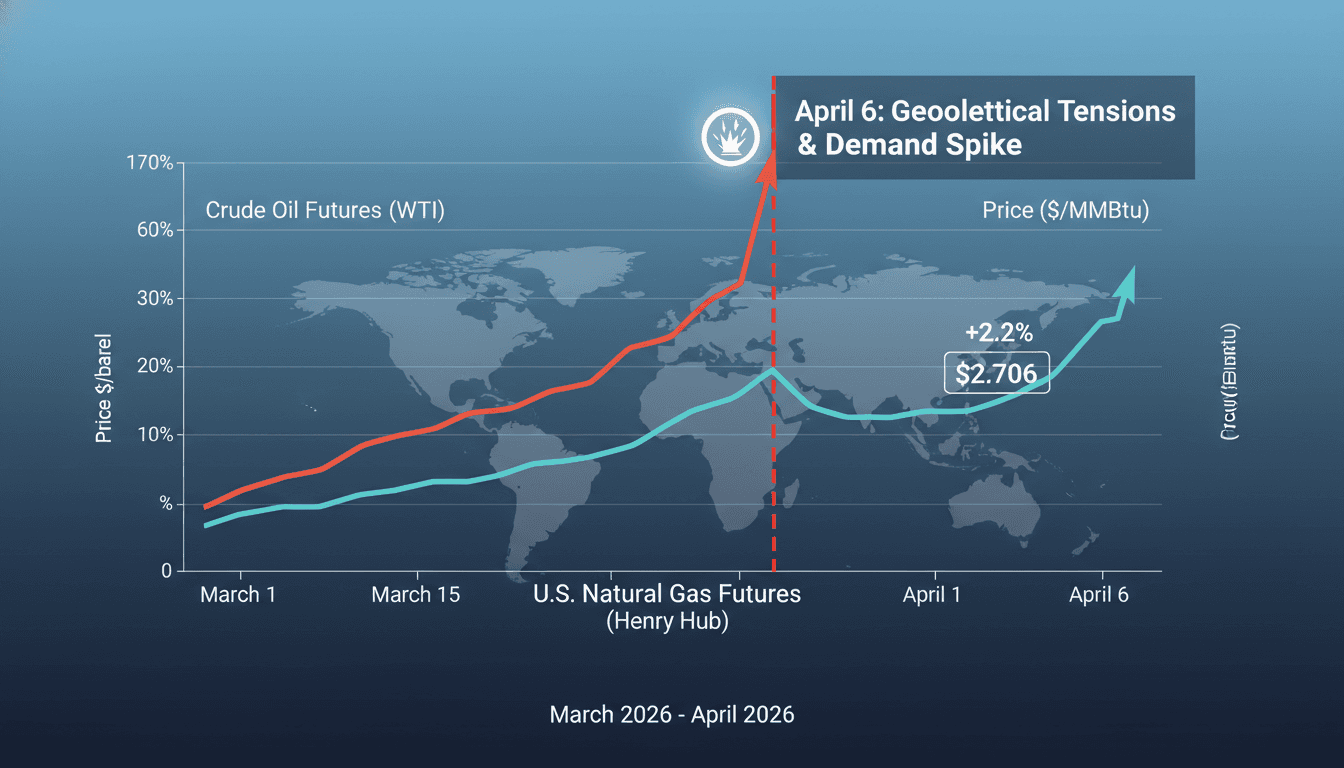
- U.S. natural gas futures rose 2.2% to $2.706 per million British thermal units (mmBtu) on April 6, 2026.
- Geopolitical tensions following the breakdown of U.S.-Iran negotiations and a U.S. naval blockade of the Strait of Hormuz contributed to the price increase.
- Domestic demand outlook improved with forecasts indicating an 8 Bcf/d recovery in physical demand by mid-April.
The context you actually need
- Previous declines: Before this rise, natural gas futures had fallen for five consecutive weeks due to high supply and low demand.
- Geopolitical factors: The U.S.-Iran tensions and the blockade are expected to disrupt global oil and LNG shipments, particularly affecting Qatar.
- Weather impacts: A less bearish domestic weather forecast suggests potential increases in demand for natural gas, influencing price movements.
What's really happening
On April 6, 2026, U.S. natural gas futures experienced a notable gain, climbing 2.2% to $2.706/mmBtu. This uptick was primarily influenced by rising oil prices, which surged following the collapse of U.S.-Iran negotiations. The geopolitical landscape has shifted dramatically, with the U.S. announcing a naval blockade of the Strait of Hormuz, a critical passage for oil and liquefied natural gas (LNG) shipments. The implications of this blockade are significant, as it threatens to disrupt the flow of energy resources from the Middle East, particularly affecting supplies from Qatar, which is a major LNG exporter.
As the situation unfolds, analysts have noted a correlation between natural gas prices and oil prices, driven by the geopolitical climate. The anticipated blockade is expected to constrain global oil supplies, thereby increasing oil prices and, in turn, influencing natural gas futures. In addition to geopolitical factors, the domestic outlook for natural gas demand is improving. Forecasts indicate a recovery in physical demand by approximately 8 billion cubic feet per day (Bcf/d) by April 13, which is a positive sign for the market.
Moreover, the natural gas market has seen increased speculator short positioning following five weeks of losses. This suggests that traders are adjusting their strategies in response to the changing landscape, potentially leading to further volatility in prices. The combination of geopolitical tensions, domestic demand recovery, and speculative trading creates a complex environment for natural gas futures.
The situation is further complicated by domestic factors such as mild spring weather and high storage levels, which had previously exerted downward pressure on prices. However, as the weather outlook shifts and the geopolitical situation evolves, the market is likely to experience fluctuations. The potential for production constraints due to pipeline maintenance and reduced Canadian imports may also support the recent price rally.
In summary, the rise in natural gas futures is a reflection of both external geopolitical pressures and internal market dynamics. As these factors continue to evolve, they will shape the future of natural gas pricing and availability.
Who feels it first (and how)
- Energy sector companies: Fluctuations in natural gas prices directly impact operational costs and pricing strategies.
- Consumers: Households relying on natural gas for heating and cooking may see changes in utility bills.
- LNG importers: Companies importing LNG may face higher costs, affecting pricing structures in various markets.
- Traders and speculators: Those engaged in futures trading will experience immediate impacts on their positions and strategies.
What to watch next
- Geopolitical developments: Continued tensions in the Middle East could further disrupt energy supplies, impacting prices.
- Weather forecasts: Changes in weather patterns could influence domestic demand for natural gas, affecting futures prices.
- Production levels: Monitoring U.S. production rates and Canadian imports will be crucial to understanding supply dynamics.
Natural gas futures are currently rising due to geopolitical tensions and improved demand outlook.
Continued volatility in natural gas prices as geopolitical and domestic factors evolve.
The long-term impact of the U.S.-Iran tensions on global energy markets remains uncertain.
Frequently Asked Questions
- Why it matters?
- The rise in natural gas futures reflects broader geopolitical tensions that can disrupt global energy markets and influence domestic pricing.
- What happened (in 30 seconds)?
- U.S. natural gas futures rose 2.2% to $2.706 per million British thermal units (mmBtu) on April 6, 2026. Geopolitical tensions following the breakdown of U.S.-Iran negotiations and a U.S. naval blockade of the Strait of Hormuz contributed to the price increase. Domestic demand outlook improved with forecasts indicating an 8 Bcf/d recovery in physical demand by mid-April.
- What's really happening?
- On April 6, 2026, U.S. natural gas futures experienced a notable gain, climbing 2.2% to $2.706/mmBtu. This uptick was primarily influenced by rising oil prices, which surged following the collapse of U.S.-Iran negotiations. The geopolitical landscape has shifted dramatically, with the U.S. announcing a naval blockade of the Strait of Hormuz, a critical passage for oil and liquefied natural gas (LNG) shipments. The implications of this blockade are significant, as it threatens to disrupt the flow
- Who feels it first (and how)?
- Energy sector companies: Fluctuations in natural gas prices directly impact operational costs and pricing strategies. Consumers: Households relying on natural gas for heating and cooking may see changes in utility bills. LNG importers: Companies importing LNG may face higher costs, affecting pricing structures in various markets. Traders and speculators: Those engaged in futures trading will experience immediate impacts on their positions and strategies.
- What to watch next?
- Geopolitical developments: Continued tensions in the Middle East could further disrupt energy supplies, impacting prices. Weather forecasts: Changes in weather patterns could influence domestic demand for natural gas, affecting futures prices. Production levels: Monitoring U.S. production rates and Canadian imports will be crucial to understanding supply dynamics.
Markets desk coverage, trading insights, and investor updates.
"WSJ’s markets reporting provides in-depth analysis and context for investors."
— A47 Editor
U.S. Natural Gas Futures Settle Lower on Mild Weather
U.S. natural gas futures settled lower, relinquishing early gains as oil prices and European natural gas futures retreated from previous highs. This decline reflects the ongoing transition into the low-demand spring shoulder season, characterized by ...
Global markets, investing, and macroeconomics from a premier financial newsroom.
"Bloomberg is respected for in-depth financial reporting and data-driven analysis."
— A47 Editor
US Natural Gas Futures Rebound on Oil Price Gain, Cooler Outlook
US natural gas futures have rebounded, driven by a rise in oil prices and a cooler weather outlook, which is expected to increase demand for heating and power generation. This shift comes amidst heightened tensions in the Persian Gulf, particularly f...