
NASA Publishes Earthrise Photograph from Artemis II Lunar Flyby
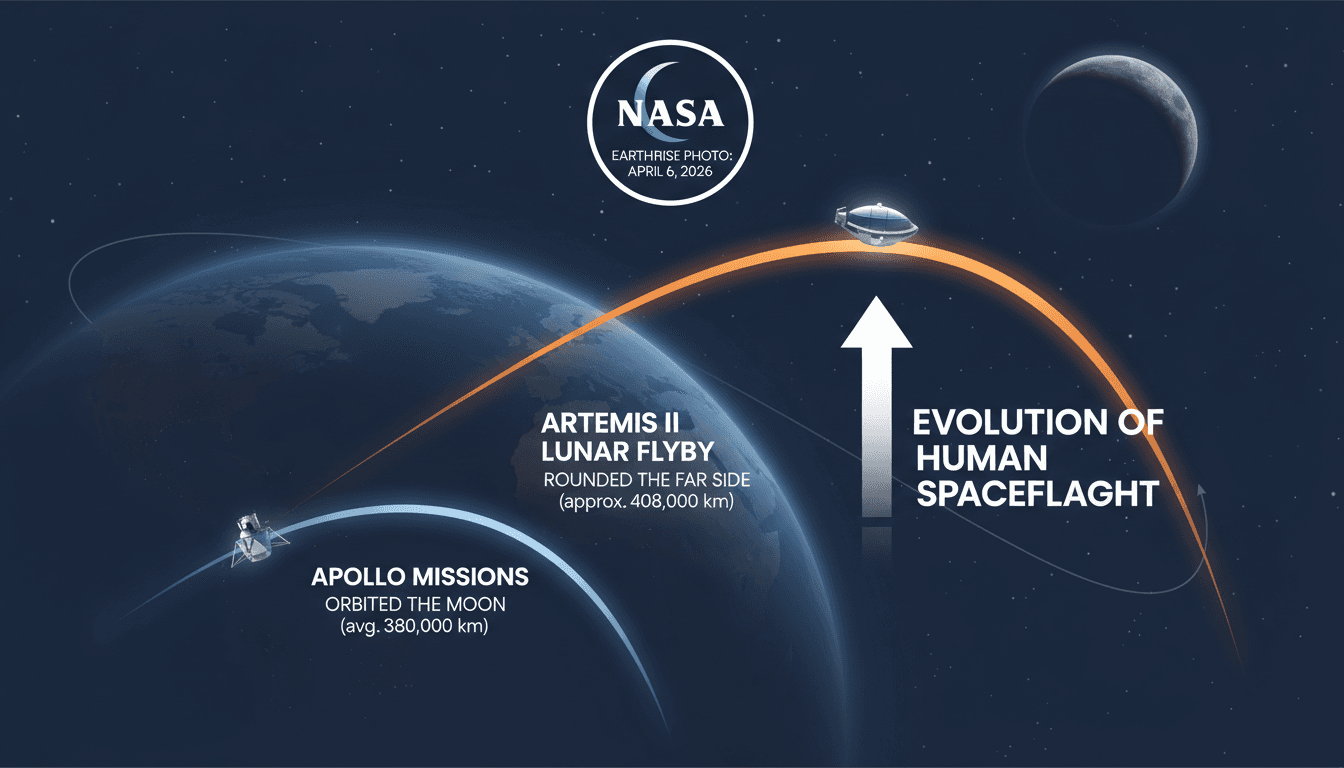
Here's what it means for you.
As global interest in lunar exploration surges, professionals in STEM fields may find new opportunities and funding in the wake of Artemis II's success.
Why it matters
The Artemis II mission marks a pivotal moment in international space collaboration, influencing future investments and advancements in space technology.
What happened (in 30 seconds)
- NASA released an Earthrise photograph captured by the Artemis II crew during their lunar flyby on April 6, 2026.
- The Orion spacecraft achieved a record distance of 252,756 miles from Earth, surpassing Apollo 13's previous record.
- The mission is part of NASA's Artemis program, aimed at establishing a sustainable human presence on the Moon.
The context you actually need
- Artemis II is the first crewed lunar flyby since Apollo 17, reflecting a renewed commitment to lunar exploration.
- International collaboration is key, with the Artemis Accords signed by over 50 nations, including the UAE, enhancing global partnerships in space.
- The mission's success is expected to drive interest and investment in STEM education and careers, particularly in regions like the Middle East.
What's really happening
The Artemis II mission, launched on April 1, 2026, is a significant step in NASA's broader Artemis program, which aims to establish a sustainable human presence on the Moon. This mission mirrors the historic Apollo 8 flyby, showcasing advancements in technology and international cooperation in space exploration. Commanded by Reid Wiseman and featuring a diverse crew, including Canada's Jeremy Hansen, Artemis II is not just a technical endeavor but a symbol of global unity in the face of challenges in space.
During the mission, the Orion spacecraft entered the Moon's sphere of influence and achieved a closest approach of 4,067 miles to the lunar far side. This proximity allowed the crew to capture stunning images, including the iconic Earthrise, which evokes nostalgia for the Apollo era while highlighting the progress made in space exploration. The mission's success is underscored by the record distance achieved—252,756 miles from Earth—setting a new benchmark for human spaceflight.
The Artemis program is designed to build on the achievements of the Apollo missions while addressing contemporary challenges in space exploration. The focus on sustainable lunar presence aims to lay the groundwork for future missions to Mars and beyond. As countries around the world ramp up their space ambitions, the Artemis program serves as a catalyst for innovation and collaboration, encouraging nations to invest in their own space capabilities.
The mission also resonates deeply with the UAE, where local media and institutions have engaged the public in the excitement surrounding Artemis II. The Mohammed Bin Rashid Space Centre's commitment to the Artemis Accords aligns with the UAE's broader ambitions in space, fostering interest in STEM fields and inspiring the next generation of scientists and engineers.
As the mission progresses, scientists will analyze the images captured for insights into lunar geology, further enhancing our understanding of the Moon and its potential resources. The global public's response has been overwhelmingly positive, with many expressing awe at the images and the mission's significance. This enthusiasm is likely to translate into increased support for space initiatives and education programs, particularly in regions actively participating in the Artemis Accords.
Who feels it first (and how)
- STEM professionals: Increased funding and job opportunities in space technology and research.
- Students: Enhanced interest in STEM education, particularly in regions like the UAE.
- Space agencies: Pressure to collaborate and innovate as global competition intensifies.
What to watch next
- Future Artemis missions: Watch for updates on Artemis III, which aims for a lunar landing, influencing global space strategies.
- International collaborations: Monitor new partnerships formed through the Artemis Accords, which could reshape space exploration dynamics.
- STEM funding initiatives: Look for increased investment in education and research programs in response to the mission's success.
The Artemis II mission successfully captured an Earthrise photograph and set a new distance record for human spaceflight.
Increased global interest and investment in lunar exploration and STEM education.
The long-term impact on international space policy and competition among nations.
Frequently Asked Questions
- Why it matters?
- The Artemis II mission marks a pivotal moment in international space collaboration, influencing future investments and advancements in space technology.
- What happened (in 30 seconds)?
- NASA released an Earthrise photograph captured by the Artemis II crew during their lunar flyby on April 6, 2026. The Orion spacecraft achieved a record distance of 252,756 miles from Earth, surpassing Apollo 13's previous record. The mission is part of NASA's Artemis program, aimed at establishing a sustainable human presence on the Moon.
- What's really happening?
- The Artemis II mission, launched on April 1, 2026, is a significant step in NASA's broader Artemis program, which aims to establish a sustainable human presence on the Moon. This mission mirrors the historic Apollo 8 flyby, showcasing advancements in technology and international cooperation in space exploration. Commanded by Reid Wiseman and featuring a diverse crew, including Canada's Jeremy Hansen, Artemis II is not just a technical endeavor but a symbol of global unity in the face of challeng
- Who feels it first (and how)?
- STEM professionals: Increased funding and job opportunities in space technology and research. Students: Enhanced interest in STEM education, particularly in regions like the UAE. Space agencies: Pressure to collaborate and innovate as global competition intensifies.
- What to watch next?
- Future Artemis missions: Watch for updates on Artemis III, which aims for a lunar landing, influencing global space strategies. International collaborations: Monitor new partnerships formed through the Artemis Accords, which could reshape space exploration dynamics. STEM funding initiatives: Look for increased investment in education and research programs in response to the mission's success.
Arabic-language UAE newspaper coverage focused on domestic affairs, public institutions, business, society, and regional developments.
"Al Khaleej coverage generally reflects a mainstream UAE editorial lens with strong attention to public affairs, institutions, and regional developments."
— A47 Editor
«ناسا» تنشر صورة لـ«شروق الأرض» التقطها طاقم «أرتيميس 2»
NASA has released a historic image captured by the Artemis 2 crew, showcasing Earth setting beneath the lunar horizon, reminiscent of the iconic Earthrise photo taken during Apollo 8 over 57 years ago. The crew includes astronauts Reid Wiseman, Chris...
Arabic-language digital news outlet covering UAE, regional, and international developments with broad general-news coverage.
"Al Ain News coverage typically blends UAE-focused reporting with wider Arab regional and international news."
— A47 Editor
طاقم «أرتيميس 2» يوثق غروب الأرض في لقطة حديثة من الفضاء
NASA's Artemis 2 crew recently captured a stunning image of Earth setting behind the Moon, marking a significant moment 57 years after the iconic Earthrise photo taken during Apollo 8. This image highlights the crew's ongoing mission to explore lunar...