
Economic Fallout from Mideast War Dominates IMF and World Bank Meetings
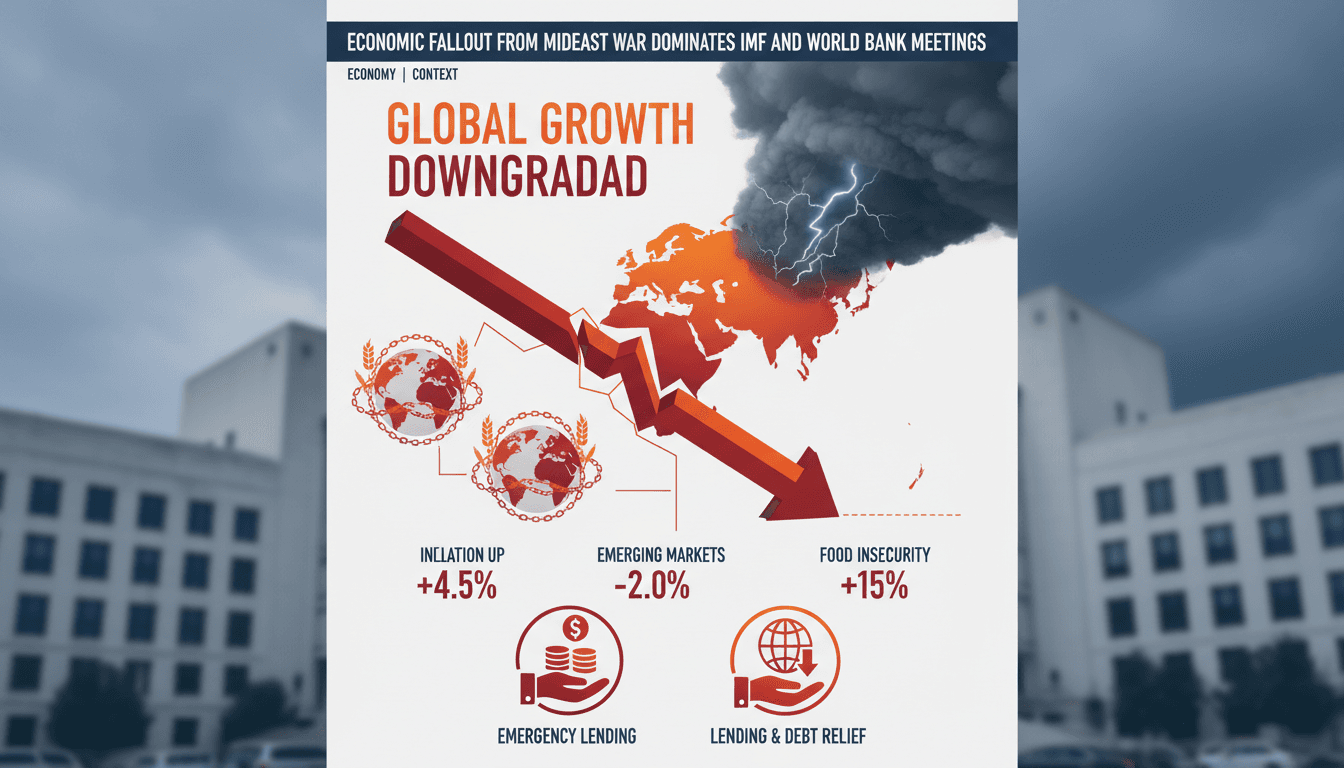
Here's what it means for you.
The ongoing economic fallout from the Mideast war could impact global markets and your professional landscape.
What happened
The IMF and World Bank Spring Meetings in April 2026 are dominated by the economic repercussions of the Mideast war that began on February 28, 2026.
The Context
- Downgraded forecasts: The IMF now projects 3.65% growth and 4.9% inflation for emerging markets, down from earlier expectations.
- Supply chain disruptions: The conflict has caused significant interruptions in energy and fertilizer supplies, exacerbating vulnerabilities in developing economies.
- Emergency measures: Discussions at the meetings include potential emergency lending of $20–50 billion and debt relief for affected nations.
The Number
additional people are projected to face acute food insecurity if the war continues, highlighting the urgent need for coordinated global response.
Takeaway
Expect increased volatility in global markets as nations grapple with the economic fallout and seek collaborative solutions.
Regional and international reporting focused on Middle Eastern politics, diplomacy, and economics.
"Asharq Al-Awsat is a Saudi-owned international newspaper reflecting mainstream Gulf political perspectives."
— A47 Editor
Economic Shock of Mideast War to Cast Shadow over IMF, World Bank Meetings
The ongoing conflict in the Middle East, particularly the war in Iran, is casting a significant shadow over the upcoming meetings of the International Monetary Fund (IMF) and World Bank. The economic repercussions of this war are expected to dominate...
Macro commentary, policy analysis, growth/inflation themes, and global outlooks.
"Contextual macro coverage that complements day-to-day market headlines."
— A47 Editor
Economic shock of Middle East war to cast shadow over IMF, World Bank meetings
The ongoing conflict in the Middle East is expected to significantly impact the upcoming meetings of the International Monetary Fund (IMF) and the World Bank, as economic shocks from the war are anticipated to lead to rising prices and slower global ...
Regional and international reporting focused on Middle Eastern politics, diplomacy, and economics.
"Asharq Al-Awsat is a Saudi-owned international newspaper reflecting mainstream Gulf political perspectives."
— A47 Editor
World Bank Chief: Middle East War to Cut Growth, Deliver Cascading Impact
The World Bank Chief has warned that the ongoing war in the Middle East, particularly the conflict in Iran, is expected to significantly reduce economic growth in the region, projecting a decline to 1.8% by 2026. This situation is anticipated to have...
Economic trends, financial markets, corporate news, and policy from a Russian perspective.
"RT is widely criticized for promoting pro-Kremlin narratives and is considered by many to be a state propaganda outlet."
— A47 Editor
Middle East war triggering global energy ‘shock’ – IMF
The International Monetary Fund (IMF) has issued a warning that the ongoing war in the Middle East is causing significant disruptions in energy supply, leading to a global economic 'shock' that could have lasting effects. This conflict has already re...