
OPEC Oil Production Experiences Historic Drop Amid Iran Conflict
Here's what it means for you.
If you rely on oil for transportation or energy, expect significant price increases and potential shortages in the coming months.
Why it matters
This unprecedented supply shock could lead to a global energy crisis, impacting economies and consumers worldwide.
What happened (in 30 seconds)
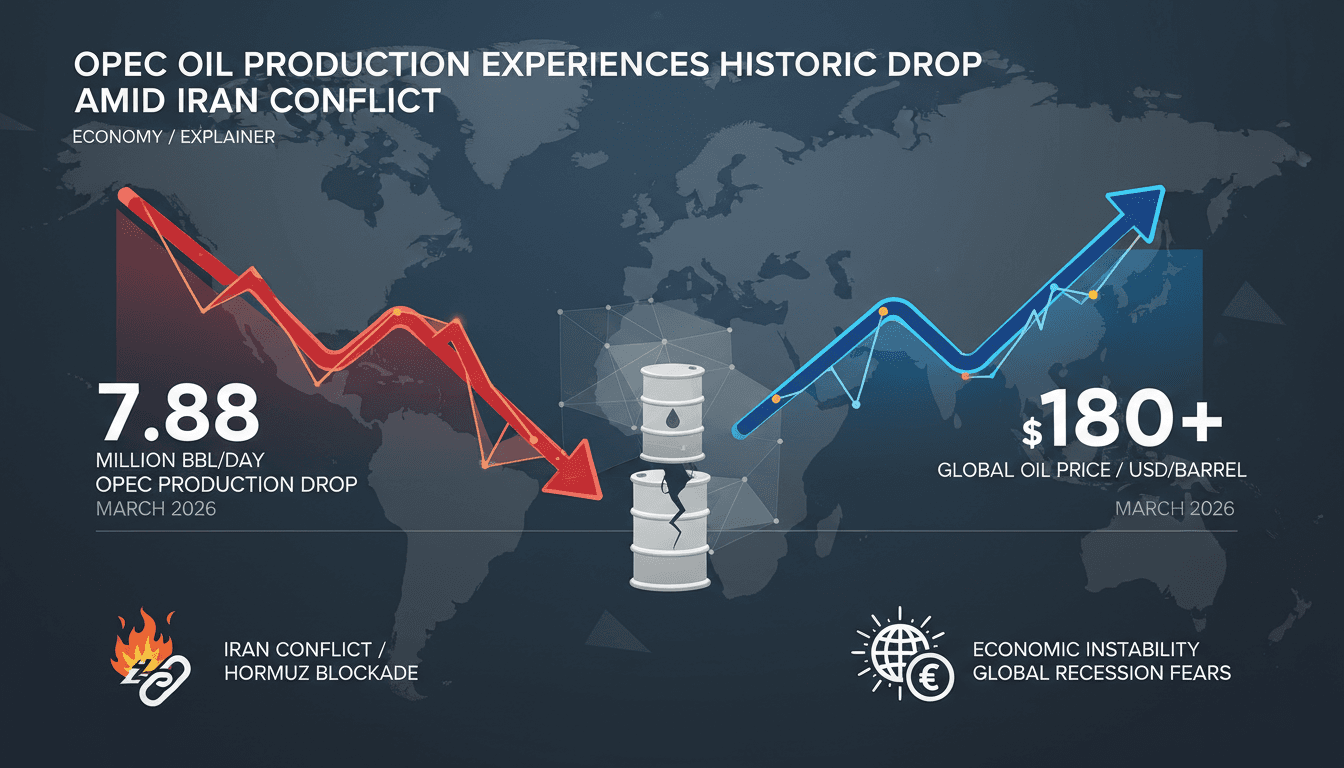
- OPEC's oil output plummeted by 7.88 million barrels per day in March 2026, marking the largest supply disruption in decades.
- Iran's blockade of the Strait of Hormuz and attacks on Gulf energy infrastructure triggered the crisis amid escalating US-Israel-Iran tensions.
- Key producers like Saudi Arabia and Iraq sharply curtailed operations, leading to a total OPEC production of just 20.79 million bpd.
The context you actually need
- OPEC had previously implemented voluntary production cuts starting in late 2022 to stabilize oil prices during the post-COVID recovery.
- The escalation began with US-Israel airstrikes on Iran on February 28, 2026, leading to Iranian retaliation that disrupted oil exports.
- By mid-March, major producers faced severe operational cuts as storage capacities filled, forcing immediate reductions in output.
What's really happening
The oil market is experiencing a seismic shift due to geopolitical tensions and supply chain disruptions. The catalyst for this crisis was the US-Israel airstrikes on Iran, which ignited a series of retaliatory actions from Iran, including the blockade of the Strait of Hormuz. This strategic waterway is critical, as it carries approximately 20 million barrels of oil daily, accounting for about 20% of the world's oil supply.
As the conflict escalated, OPEC members, particularly Saudi Arabia, Iraq, Kuwait, and the UAE, were compelled to cut production sharply. The immediate impact was a staggering drop in output, with OPEC's total production falling to 20.79 million bpd, a level not seen since the early days of the COVID-19 pandemic. This decline surpassed the previous cuts of 6.28 million bpd implemented in 2020, highlighting the severity of the current situation.
The implications of this supply shock are profound. With oil prices already climbing, Brent crude surged to nearly $120 per barrel before stabilizing around $92. This volatility is expected to ripple through global markets, affecting everything from transportation costs to consumer goods. The UAE, for instance, saw its oil production drop by 45%, leading to fuel price increases in Dubai, where Super 98 petrol reached AED 2.59 per liter in March 2026.
As the conflict continues, the International Energy Agency (IEA) has projected that April outages could reach 9.1 million bpd across Gulf states. In response, the IEA released 400 million barrels from emergency reserves to mitigate the impact on global markets. However, the long-term outlook remains uncertain, with demand forecasts for 2026 being revised down by 210,000 bpd.
The situation is further complicated by the interconnectedness of global energy markets. Countries heavily reliant on oil imports will face increased costs, potentially leading to inflationary pressures. The aviation and transport sectors are particularly vulnerable, facing jet fuel shortages and rising operational costs, which could translate to higher prices for consumers.
Who feels it first (and how)
- Consumers: Higher fuel prices will impact daily commuting and transportation costs.
- Aviation sector: Jet fuel shortages and increased prices will lead to higher ticket costs.
- Transport companies: Rising fuel costs will squeeze profit margins, potentially leading to increased shipping fees.
- Economies dependent on oil imports: Countries reliant on imported oil will face inflation and economic strain.
- Investors in energy markets: Volatility in oil prices could lead to significant financial losses or gains.
What to watch next
- OPEC+ meetings: The scheduled May 3 meeting will be crucial in determining future production levels and market stability.
- Geopolitical developments: Continued tensions in the Persian Gulf could further disrupt oil supply and impact prices.
- Global demand forecasts: Watch for revisions in demand projections, as economic conditions and energy consumption patterns evolve.
OPEC's oil production has dropped by 7.88 million bpd, leading to immediate price increases.
Continued geopolitical tensions will exacerbate supply disruptions and keep oil prices volatile.
The long-term impact on global economic growth and energy consumption patterns remains uncertain.
Frequently Asked Questions
- Why it matters?
- This unprecedented supply shock could lead to a global energy crisis, impacting economies and consumers worldwide.
- What happened (in 30 seconds)?
- OPEC's oil output plummeted by 7.88 million barrels per day in March 2026, marking the largest supply disruption in decades. Iran's blockade of the Strait of Hormuz and attacks on Gulf energy infrastructure triggered the crisis amid escalating US-Israel-Iran tensions. Key producers like Saudi Arabia and Iraq sharply curtailed operations, leading to a total OPEC production of just 20.79 million bpd.
- What's really happening?
- The oil market is experiencing a seismic shift due to geopolitical tensions and supply chain disruptions. The catalyst for this crisis was the US-Israel airstrikes on Iran, which ignited a series of retaliatory actions from Iran, including the blockade of the Strait of Hormuz. This strategic waterway is critical, as it carries approximately 20 million barrels of oil daily, accounting for about 20% of the world's oil supply. As the conflict escalated, OPEC members, particularly Saudi Arabia, Ir
- Who feels it first (and how)?
- Consumers: Higher fuel prices will impact daily commuting and transportation costs. Aviation sector: Jet fuel shortages and increased prices will lead to higher ticket costs. Transport companies: Rising fuel costs will squeeze profit margins, potentially leading to increased shipping fees. Economies dependent on oil imports: Countries reliant on imported oil will face inflation and economic strain. Investors in energy markets: Volatility in oil prices could lead to significant financial
- What to watch next?
- OPEC+ meetings: The scheduled May 3 meeting will be crucial in determining future production levels and market stability. Geopolitical developments: Continued tensions in the Persian Gulf could further disrupt oil supply and impact prices. Global demand forecasts: Watch for revisions in demand projections, as economic conditions and energy consumption patterns evolve.
UAE-based English-language newspaper covering regional politics, economics, and global affairs.
"The National reflects Emirati policy perspectives while maintaining international editorial standards."
— A47 Editor
Opec's output falls by nearly 8 million bpd in March in the worst supply shock in decades
Opec's oil output has decreased by nearly 8 million barrels per day (bpd) in March, marking one of the most significant supply shocks in decades. This reduction reflects the challenges faced by the organization in maintaining production levels amid f...
Editor-curated FT homepage stories spanning markets, business, world, and opinion.
"The Financial Times is a globally respected business publication with a centrist/center-left tone and strong markets focus."
— A47 Editor
Opec production falls more than a quarter as Iran war hits oil exports
OPEC's crude oil production fell by more than a quarter in March, marking the largest recorded drop, primarily due to the near-closure of the Strait of Hormuz amid escalating tensions from the ongoing conflict in Iran. This disruption has severely im...