
Eurozone Bond Yields Surge Following U.S.-Iran Peace Talks Breakdown
Here's what it means for you.
Rising bond yields signal potential shifts in borrowing costs and investment strategies in a volatile market landscape.
What happened
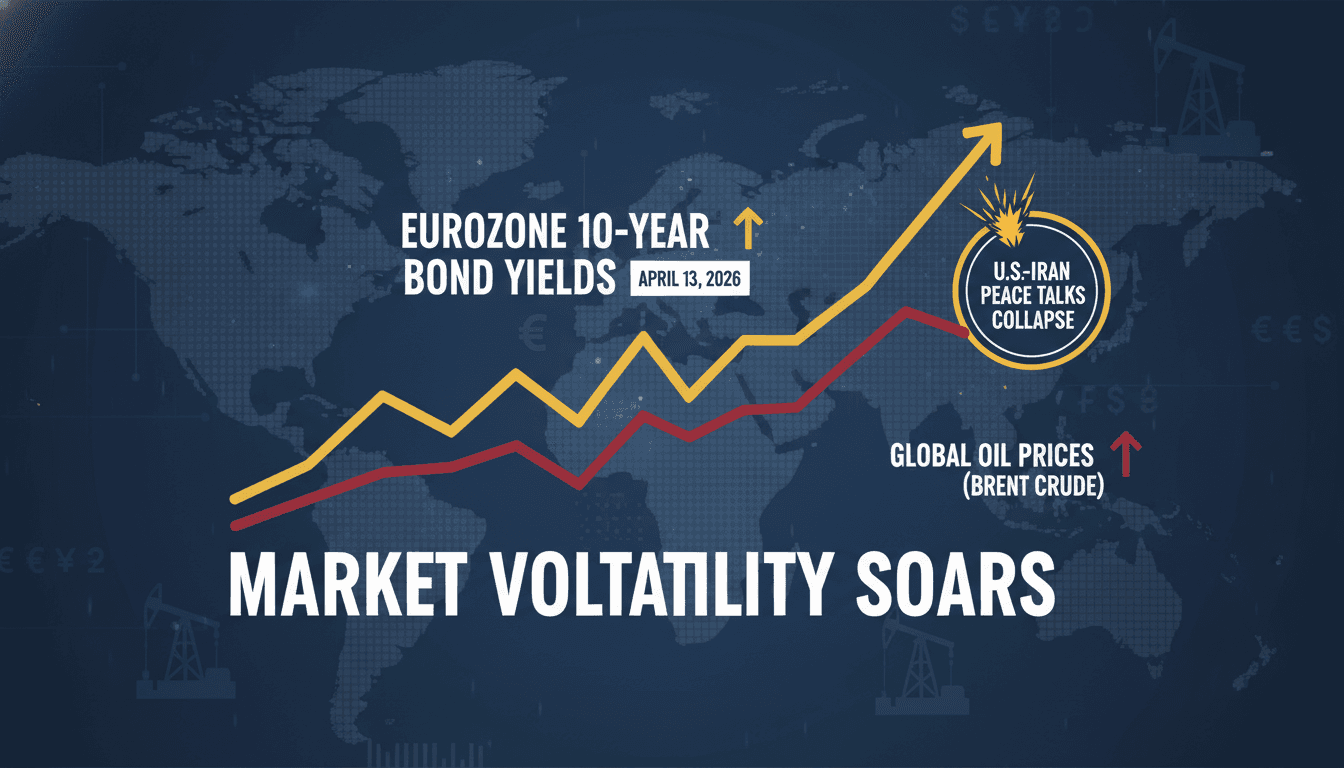
Eurozone government bond yields increased on April 13, 2026, following the collapse of U.S.-Iran peace talks.
The Context
- Geopolitical tensions: The failure of peace talks in Islamabad reignited concerns over Middle East oil supply disruptions, influencing global markets.
- Market reactions: Investors responded with a selloff in bonds, driving yields higher on both German Bunds and U.S. Treasuries.
- Inflation fears: Renewed inflation worries emerged as oil prices surged, impacting economic forecasts and investment strategies.
The Number
— This was the session high for German 10-year Bund yields, reflecting heightened inflation fears that can affect borrowing costs across Europe.
Takeaway
As geopolitical tensions persist, expect continued volatility in bond markets, influencing investment decisions and economic strategies.
Markets desk coverage, trading insights, and investor updates.
"WSJ’s markets reporting provides in-depth analysis and context for investors."
— A47 Editor
Treasury Yields Fall as Investors Worry About Growth
Treasury yields have fallen as investors express growing concerns about economic growth, particularly in light of the U.S. blockade of the Strait of Hormuz, which has raised fears of escalating geopolitical tensions.
Pan-Arab news coverage spanning politics, business, sports, and regional affairs.
"Asharq Al-Awsat reflects a broad Arab editorial perspective with strong attention to regional geopolitics."
— A47 Editor
عوائد سندات اليورو ترتفع مع تعثر المحادثات الأميركية الإيرانية
On Monday, yields on eurozone government bonds increased following a setback in negotiations between the United States and Iran. This development reflects the ongoing tensions in international relations that can impact financial markets.