
IEA warns of significant global oil supply shortfall amid Middle East tensions
Here's what it means for you.
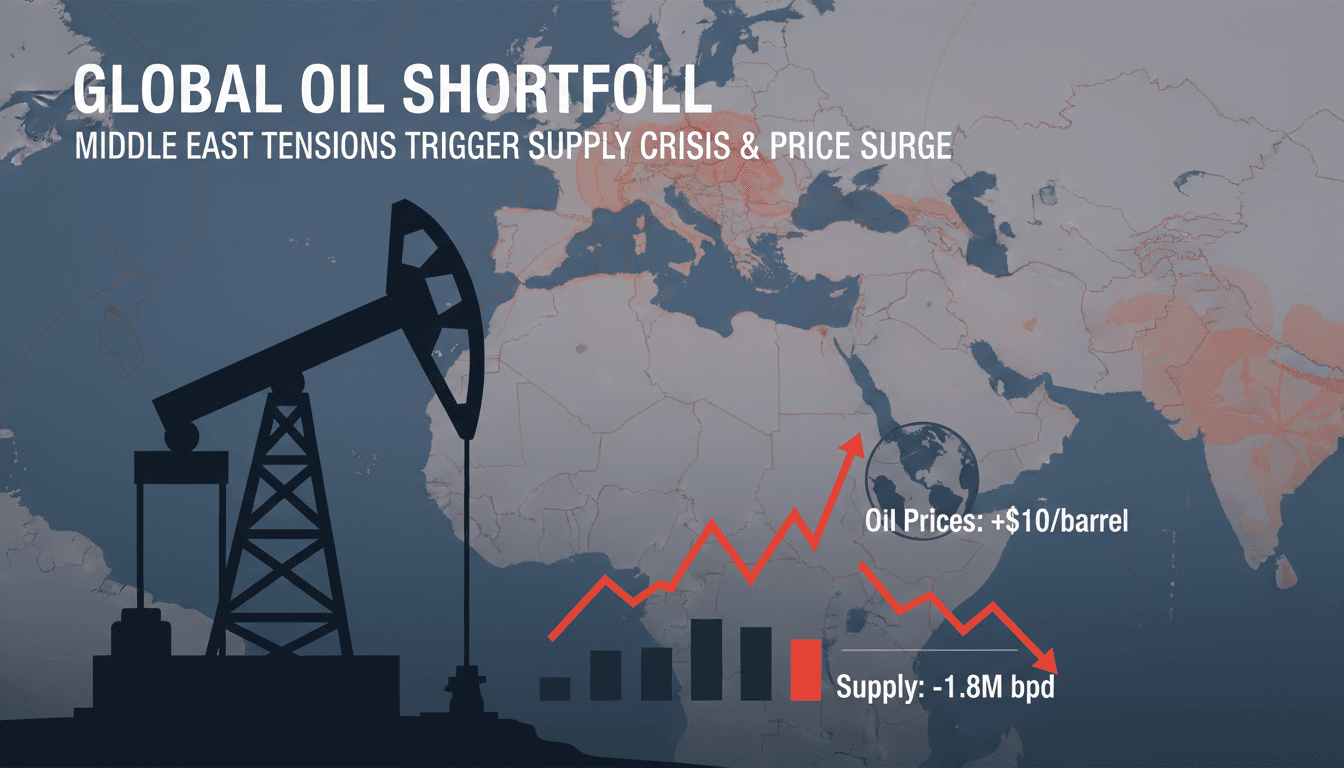
The International Energy Agency's warning about a projected shortfall of 1.8 million barrels per day in global oil supply signals a critical moment for markets and economies worldwide. As tensions in the Middle East escalate, stakeholders must prepare for potential disruptions that could ripple through various sectors. Rising oil prices, which have surged nearly $10 in the past week, may lead to increased costs for consumers and businesses alike. This situation underscores the importance of monitoring geopolitical developments, as they can have immediate and far-reaching impacts on oil supply and pricing. Policymakers and industry leaders should brace for ongoing volatility in the oil markets.
What happened
The International Energy Agency (IEA) has issued a stark warning regarding the state of global oil supply, projecting a shortfall of 1.8 million barrels per day. This alarming forecast is attributed to ongoing conflicts and maritime disruptions in the Middle East, which have exacerbated already dwindling oil inventories. As a result, the price of oil has surged nearly $10 in just one week, nearing the $90 per barrel mark.
The IEA's report highlights the urgency of the situation, indicating that global oil inventories are expected to decrease at more than double the previously estimated rate this quarter. This contraction in supply is likely to have significant implications for fuel prices and consumption patterns.
The Context
The current geopolitical landscape, particularly in the Middle East, plays a crucial role in shaping global oil markets. Renewed hostilities have raised concerns about the stability of oil supply routes, particularly the vital Strait of Hormuz. The IEA has called for the urgent reopening of this strategic passage to alleviate supply pressures and stabilize prices.
As oil prices rise, there is a growing concern that consumption will contract further, impacting economies that heavily rely on oil. The IEA's monthly report indicates a deeper contraction in global oil demand this year, suggesting that the ramifications of these tensions will be felt across various sectors.
Takeaway
Looking ahead, stakeholders should closely monitor developments in the Middle East, as further escalations could lead to additional impacts on oil supply and pricing. The IEA's projections indicate that the current trajectory of geopolitical tensions will likely continue to affect oil markets in the near future.
As prices rise, it will be essential to watch for changes in global oil demand, which may shift as consumers and businesses adjust to the new economic landscape. The potential for ongoing volatility in oil markets suggests that economic repercussions could be widespread.
UK and international business news, economics, and corporate coverage.
"The Guardian’s business section covers finance and markets with a progressive editorial tone."
— A47 Editor
Global energy watchdog warns oil stockpiles ‘rapidly depleting’ – business live
The International Energy Agency has issued a warning regarding the rapid depletion of global oil stockpiles, urging for the urgent reopening of the Strait of Hormuz to alleviate pressure on oil supplies. This situation is exacerbated by ongoing confl...
Top international stories selected by The Guardian editors.
"The Guardian is known for its progressive editorial stance and in-depth analysis."
— A47 Editor
Global energy watchdog warns oil stockpiles ‘rapidly depleting’ – business live
The International Energy Agency has issued a warning regarding the rapid depletion of global oil stockpiles, urging for the urgent reopening of the Strait of Hormuz to alleviate pressure on oil supplies. This situation is exacerbated by ongoing confl...
Global markets, investing, and macroeconomics from a premier financial newsroom.
"Bloomberg is respected for in-depth financial reporting and data-driven analysis."
— A47 Editor
IEA Says Oil Markets Are Facing a Wider Shortfall
The International Energy Agency (IEA) has reported that global oil inventories are expected to decline this quarter at a rate more than double previous estimates, with a projected shortfall of 1.8 million barrels per day due to renewed hostilities an...
UAE-based English-language newspaper covering regional politics, economics, and global affairs.
"The National reflects Emirati policy perspectives while maintaining international editorial standards."
— A47 Editor
IEA deepens 2026 oil supply forecast as Iran war disrupts flows
The International Energy Agency (IEA) has revised its oil supply forecast for 2026, deepening concerns over global oil flows due to disruptions caused by the ongoing conflict in Iran. The agency's adjustments reflect the impact of the war on oil supp...
U.S. business news, corporate developments, and economy.
"The Wall Street Journal is respected for deep financial and economic reporting with a center-right editorial perspective."
— A47 Editor
Hormuz Standoff Derails Oil Supply Recovery and Deepens Demand Slump, IEA Says
The International Energy Agency (IEA) has reported that global oil demand is expected to contract further this year due to renewed hostilities in the Middle East, which have disrupted shipping and increased fuel prices, negatively impacting consumpti...