
IEA Lowers 2026 Oil Supply Forecast Amid Middle East Conflicts
Here's what it means for you.
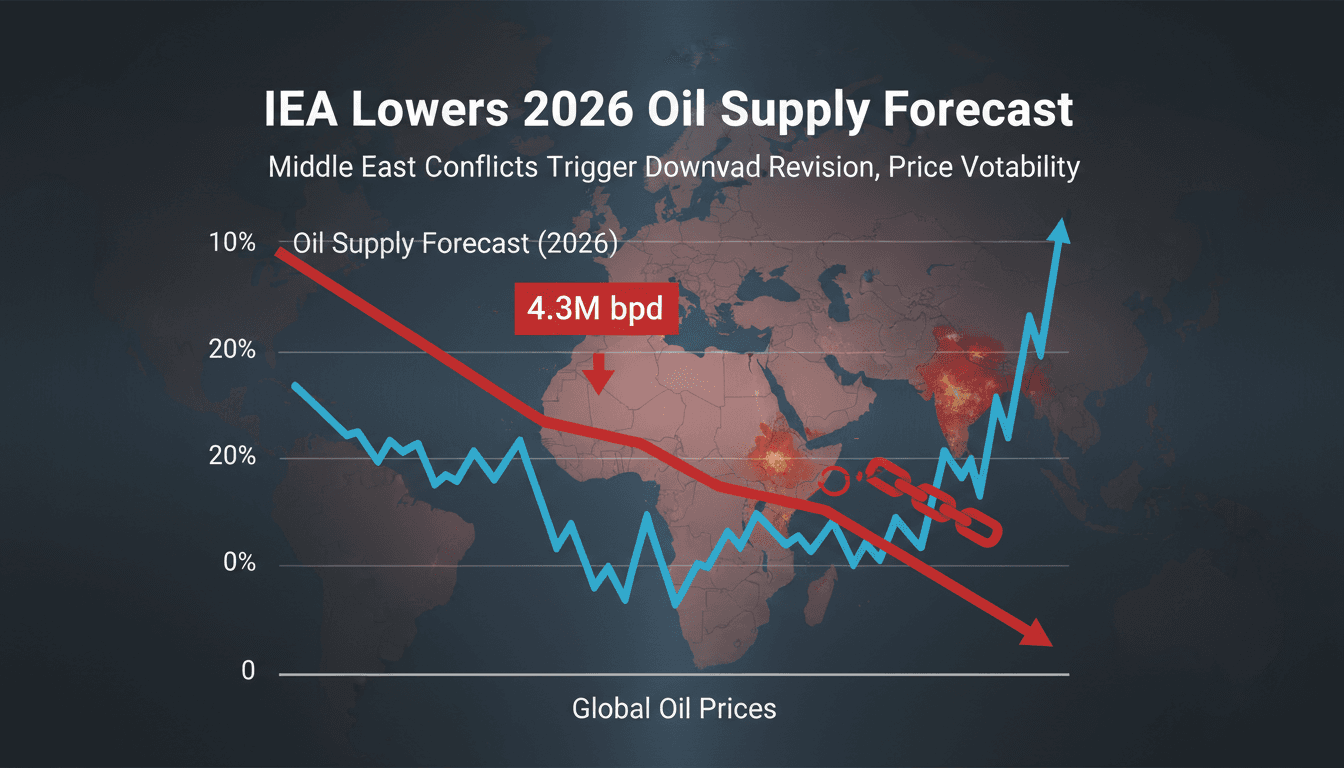
The International Energy Agency's recent forecast adjustment signals a significant shift in the global oil landscape, driven by ongoing geopolitical tensions. A reduction of 4.3 million barrels per day in the 2026 oil supply forecast indicates potential instability in energy markets, impacting pricing and availability. Stakeholders, including policymakers and energy producers, must navigate this evolving situation carefully to mitigate risks associated with supply disruptions. As conflicts in the Middle East continue, the fragility of oil supply chains becomes increasingly apparent. This development could lead to heightened volatility in global oil prices, affecting consumers and businesses alike.
What happened
The International Energy Agency (IEA) has revised its oil supply forecast for 2026 downward by 4.3 million barrels per day. This adjustment reflects a significant decrease in expectations for global oil supply and demand, primarily due to ongoing hostilities in the Middle East. The situation has particularly impacted the critical Strait of Hormuz, a vital chokepoint for oil transportation.
The IEA's announcement highlights the broader implications of geopolitical tensions on energy markets. As conflicts disrupt production and transportation, the agency's forecast adjustments underscore the uncertainty facing the global oil landscape.
The Context
The ongoing conflict in the Middle East has severely disrupted oil supply chains, prompting the IEA to reassess its forecasts. The Strait of Hormuz remains a crucial passage for global oil transportation, making its stability essential for energy security. The IEA's downward revision indicates a 4% decrease in global oil supply this year, reflecting the challenges posed by the current geopolitical climate.
As the situation evolves, stakeholders must remain vigilant. The IEA has already cut its oil demand forecast multiple times due to the ongoing war affecting oil production, signaling a trend that could continue if hostilities persist.
Takeaway
Looking ahead, continued instability in the Middle East could lead to further revisions in oil supply forecasts. Analysts will closely monitor developments in the region, particularly regarding their impact on oil supply and pricing. The outlook for the oil market remains cautious, with stakeholders needing to adapt to potential supply disruptions and fluctuating prices.
As geopolitical tensions persist, the energy market faces increased volatility, making it essential for industry players to stay informed and responsive to changes in the landscape.
Pan-Arab news coverage spanning politics, business, sports, and regional affairs.
"Asharq Al-Awsat reflects a broad Arab editorial perspective with strong attention to regional geopolitics."
— A47 Editor
وكالة الطاقة الدولية تخفض توقعاتها لإمدادات النفط في 2026 جراء الحرب
The International Energy Agency (IEA) has announced a reduction in global oil supply forecasts for 2026, projecting a decline of 4.3 million barrels per day, or approximately 4 percent, attributed to ongoing conflicts.
Regional and international reporting focused on Middle Eastern politics, diplomacy, and economics.
"Asharq Al-Awsat is a Saudi-owned international newspaper reflecting mainstream Gulf political perspectives."
— A47 Editor
IEA Cuts 2026 Oil Demand Forecast Again as Hormuz Remains Shut
The International Energy Agency (IEA) has once again revised its oil demand forecast for 2026 downward, attributing this adjustment to the ongoing closure of the Strait of Hormuz, a critical maritime route for oil shipments. This closure has been inf...
Oil, metals, and agriculture: supply/demand headlines, OPEC chatter, inventories, and price action.
"Solid tape for energy and metals traders tracking macro and micro catalysts."
— A47 Editor
IEA lowers 2026 oil supply forecast on renewed Middle East hostilities
The International Energy Agency (IEA) has revised its oil supply forecast for 2026 downward, citing renewed hostilities in the Middle East as a significant factor. This adjustment reflects ongoing geopolitical tensions that have raised concerns about...