
Oil Prices Surge as Houthi Strikes Target Saudi Energy Infrastructure Amid Regional Escalation
Sustained double-digit energy price inflation is accelerating your baseline freight, operating, and electricity costs across import-heavy supply chains.
Why it matters
Physical strikes on critical Middle Eastern refining infrastructure directly reintroduce an asymmetric geopolitical risk premium into global crude pricing, challenging corporate margin assumptions worldwide.
What happened (in 30 seconds)
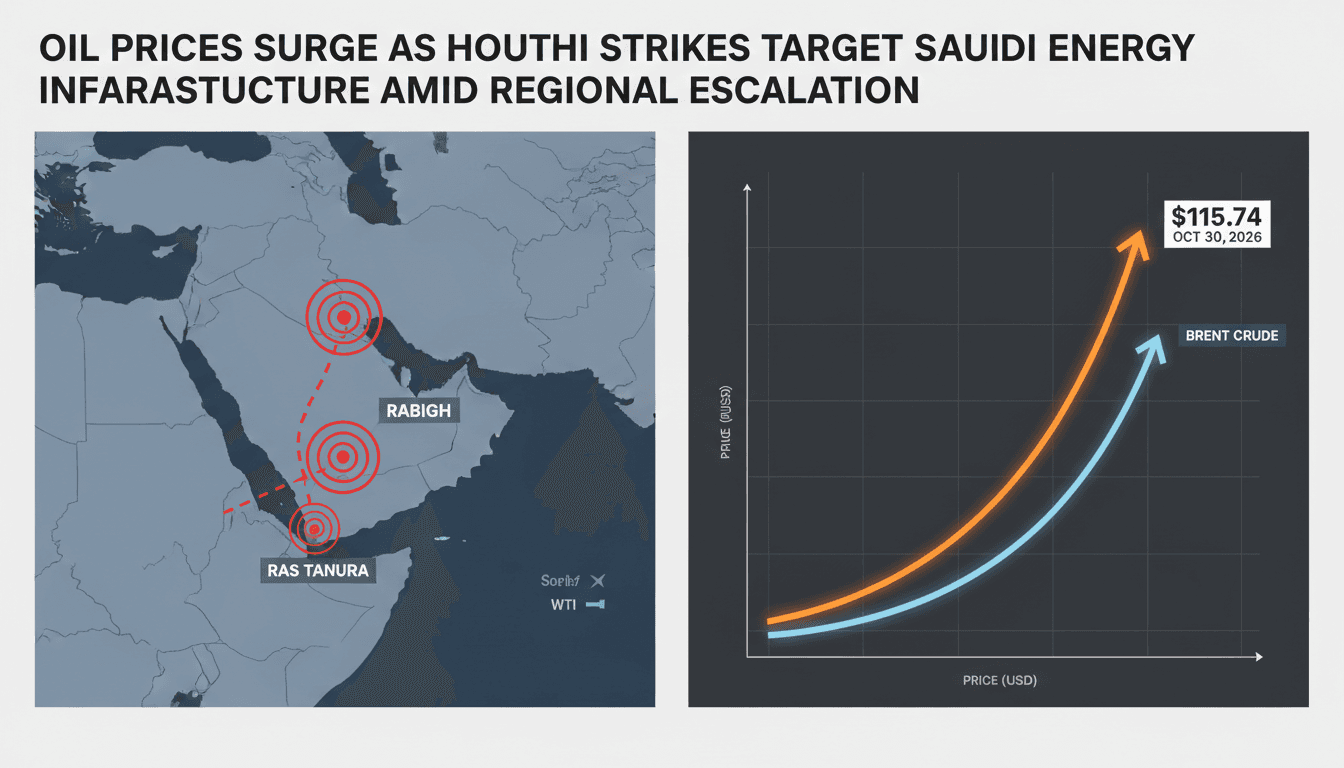
- Refining hubs targeted: Houthi militants launched strikes targeting core Saudi energy assets, including the 550,000-barrel-per-day Ras Tanura facility, Rabigh refinery, and Abqaiq processing plants.
- Crude benchmarks surged: Brent crude futures climbed to $115.74 per barrel—on track for nearly 14% monthly gains—while West Texas Intermediate reached $102.72 per barrel.
- Evacuations and defense responses: Saudi Aramco issued evacuation notices for specific facilities as defense systems intercepted incoming projectiles, while OPEC+ scheduled an emergency Sunday review of production policy.
The context you actually need
- A multi-year conflict architecture: Regional tensions trace back to 2015 between Saudi-led coalitions and Iran-aligned Houthi forces, increasingly manifesting as targeted disruption against cross-border energy infrastructure.
- Persistent maritime vulnerability: Maritime chokepoints along the Red Sea, Bab al-Mandab, and the Strait of Hormuz have repeatedly absorbed military frictions, transforming transit corridors into volatile cost centers.
- Compounding external pressure: Heightened alerts regarding potential post-midterm U.S. military action involving Iran have converged with physical supply threats, driving December Brent futures to settle at $115.32 on October 28.
What's really happening
The spike in benchmark crude to $115.74 per barrel represents more than a reaction to direct physical disruption; it reflects an institutional recalculation of regional energy safety margins. When infrastructure such as Ras Tanura—responsible for 550,000 barrels per day of refining capacity—and Abqaiq come under attack, the market prices in structural processing vulnerability rather than temporary supply friction. The physical reality of intercepted projectiles matters less to futures curves than the demonstration of delivery range and the associated operational response, evidenced by Saudi Aramco issuing precautionary evacuation notices.
This dynamic exposes the operational incentives driving regional actors. For Houthi forces, targeting high-profile processing nodes creates immediate international market leverage without requiring the sustained closure of an entire export terminal. For global energy consumers, the friction manifests as an immediate liquidity drain. Brent’s four-month consecutive advance, culminating in a near 14% monthly gain, signals that physical stockpiles and spare capacity are increasingly perceived as insufficient buffers against multi-point logistical threats.
Simultaneously, the geopolitical perimeter has widened. Market pricing has factored in U.S. diplomatic alerts and advisories to Gulf partners regarding potential military escalations post-midterm elections. This introduces an unresolved sovereign variable: whether broader military interventions will target upstream actors, specifically Iran, or if diplomatic channels will attempt to contain skirmishes to border zones.
OPEC+ producers face a rigid operational trade-off as they convene for an unscheduled Sunday policy review. While sustained prices above $110 per barrel bolster sovereign balance sheets across exporting states, they risk triggering demand destruction in energy-importing economies and accelerating technical overbought conditions across capital markets. Because crude forms the underlying cost basis for maritime bunkering, aviation fuel, and petrochemical feedstocks, downstream suppliers have zero economic incentive to absorb these spikes. The financial mechanism is direct: producers preserve margins by passing forward insurance surcharges, rerouting costs, and refining spreads to enterprise buyers.
Who feels it first (and how)
- Aviation and logistics operators: Exposure to elevated jet fuel and bunker fuel prices forces carriers to immediately hike fuel surcharges, compressing cargo operating margins.
- Gulf-based enterprise and retail consumers: Businesses and residents in regional trade centers like Dubai absorb higher domestic transportation and cooling tariffs alongside downward pressure on regional equity markets.
- Import-dependent manufacturers: Producers dependent on petroleum-derived feedstocks and long-haul freight face higher working-capital demands and inventory financing hurdles.
- Energy trading desks and institutional asset managers: Portfolio managers navigating overbought technical conditions must recalibrate hedging models against widening intraday volatility spreads.
What to watch next
- OPEC+ Sunday policy determination: The alliance's decision to maintain current quotas or release spare capacity will dictate whether the $115 level acts as a floor or a ceiling.
- Aramco operational throughput reports: Verified data on operational uptime or structural damage at Ras Tanura and Rabigh will confirm actual physical supply deficits versus speculative risk pricing.
- Post-election diplomatic and defense posturing: Concrete military deployments or strategic statements from the United States regarding regional shipping lanes will signal the likelihood of prolonged maritime rerouting.
Brent crude traded up to $115.74 per barrel following confirmed strikes and attempted attacks on Saudi energy facilities, marking four straight months of price gains.
Shipping underwriters will increase maritime war risk premiums for the Red Sea and Gulf transit corridors, driving up landed import costs.
Whether the targeted strikes caused prolonged damage to refining units that could force Saudi Aramco into declaring force majeure on select product shipments.
Frequently Asked Questions
- Why it matters?
- Physical strikes on critical Middle Eastern refining infrastructure directly reintroduce an asymmetric geopolitical risk premium into global crude pricing, challenging corporate margin assumptions worldwide.
- What happened (in 30 seconds)?
- Refining hubs targeted: Houthi militants launched strikes targeting core Saudi energy assets, including the 550,000-barrel-per-day Ras Tanura facility, Rabigh refinery, and Abqaiq processing plants. Crude benchmarks surged: Brent crude futures climbed to $115.74 per barrel—on track for nearly 14% monthly gains—while West Texas Intermediate reached $102.72 per barrel. Evacuations and defense responses: Saudi Aramco issued evacuation notices for specific facilities as defense systems intercepted i
- What's really happening?
- The spike in benchmark crude to $115.74 per barrel represents more than a reaction to direct physical disruption; it reflects an institutional recalculation of regional energy safety margins. When infrastructure such as Ras Tanura—responsible for 550,000 barrels per day of refining capacity—and Abqaiq come under attack, the market prices in structural processing vulnerability rather than temporary supply friction. The physical reality of intercepted projectiles matters less to futures curves tha
- Who feels it first (and how)?
- Aviation and logistics operators: Exposure to elevated jet fuel and bunker fuel prices forces carriers to immediately hike fuel surcharges, compressing cargo operating margins. Gulf-based enterprise and retail consumers: Businesses and residents in regional trade centers like Dubai absorb higher domestic transportation and cooling tariffs alongside downward pressure on regional equity markets. Import-dependent manufacturers: Producers dependent on petroleum-derived feedstocks and long-haul freig
- What to watch next?
- OPEC+ Sunday policy determination: The alliance's decision to maintain current quotas or release spare capacity will dictate whether the $115 level acts as a floor or a ceiling. Aramco operational throughput reports: Verified data on operational uptime or structural damage at Ras Tanura and Rabigh will confirm actual physical supply deficits versus speculative risk pricing. Post-election diplomatic and defense posturing: Concrete military deployments or strategic statements from the United State
Global political, business, and cultural coverage from WSJ international desks.
"The Wall Street Journal offers extensive international reporting with a reputation for financial insight and a center-right editorial stance."
— A47 Editor
Oil Prices Rise on Worries of Middle East Conflict Escalation
Oil prices rose as market concerns grew over a possible U.S. military escalation against Iran after next week's midterm elections, and over renewed threats to Middle East energy supplies after Yemen's Houthi militants said they had targeted Saudi Ara...
Oil, metals, and agriculture: supply/demand headlines, OPEC chatter, inventories, and price action.
"Solid tape for energy and metals traders tracking macro and micro catalysts."
— A47 Editor
Yemen’s Houthis say they hit Saudi Ras Tanura oil refinery with missile
Yemen's Houthis said they struck Saudi Arabia's Ras Tanura oil refinery with a missile, according to a report published by Investing.com on 27 October 2026. The base article's headline attributes the claim to the Houthi group, and the story is catego...
Regional coverage and analysis focused on politics, diplomacy, and business across the Middle East.
"Al-Monitor is known for analytical reporting on Middle East politics and policy developments."
— A47 Editor
Saudi oil infrastructure in crosshairs as Houthis claim Ras Tanura strike
Saudi Arabia's Ras Tanura, home to the kingdom's largest refinery and one of the world's most important oil export terminals, was reportedly targeted in a ballistic missile attack claimed by Yemen's Iran-aligned Houthis, who said the strike caused a ...
Regional coverage and analysis focused on politics, diplomacy, and business across the Middle East.
"Al-Monitor is known for analytical reporting on Middle East politics and policy developments."
— A47 Editor
Yemen's Houthis say they launched an attack on Saudi Ras Tanura oil refinery
Yemen's Iran-aligned Houthis said on Tuesday, October 27, that they had launched a ballistic missile attack on Saudi Arabia's Ras Tanura oil refinery, the kingdom's largest, on the Gulf west of the Strait of Hormuz, causing a fire according to their ...