
Brazilian Markets Plunge Over 13 Percent After Lula Wins Presidential Runoff
Why it matters
A sudden shift in fiscal policy expectations can trigger structural market unwinds, recalibrate sovereign credit spreads, and reshape global capital flows across emerging markets in a single trading session.
What happened (in 30 seconds)
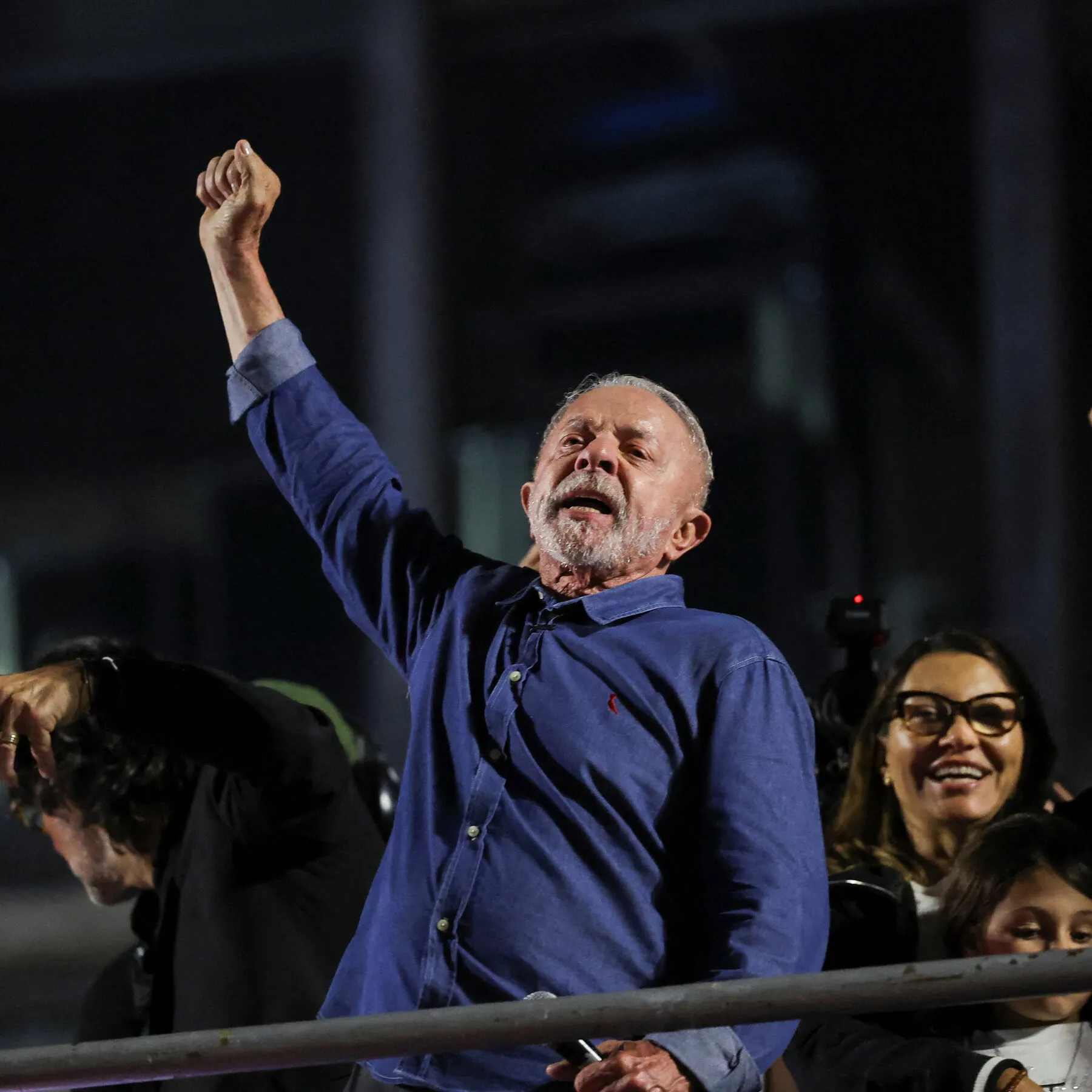
- President Luiz Inácio Lula da Silva secured re-election, capturing approximately 51.8 percent of the vote compared to 48.2 percent for challenger Flávio Bolsonaro in the October 25, 2026 runoff.
- The Bovespa equity index plunged roughly 14 percent, falling more than 10 percent at the opening bell on October 26, 2026, which triggered a mandatory 30-minute circuit breaker.
- The Brazilian real dropped sharply against the dollar, weakening more than 8 percent alongside surging government bond yields and individual equity declines of 20 to 60 percent.
The context you actually need
- First-round results shifted positioning, as Flávio Bolsonaro's initial lead on October 4, 2026, led institutional investors to price in an agenda centered on fiscal restraint and deregulation.
- Lula’s unexpected runoff win reversed market sentiment, unwinding weeks of bullish positioning driven by expectations of business-friendly policy changes.
- A circuit breaker occurred on the exchange, halting trading within minutes of the market open for the first time since the liquidity stress of March 2020.
What's really happening
The mechanics behind the October 26 market move reflect an abrupt repricing of sovereign fiscal risk rather than simple sentiment. Financial markets operate on pricing forward cash flows against anticipated policy environments. Following the October 4 first round, capital flowed into Brazilian sovereign debt, foreign exchange holdings, and domestic equities on the assumption that a Bolsonaro administration would prioritize tight fiscal rules, expenditure caps, and public asset privatizations.
When Lula won the runoff with 51.8 percent of the vote, those assumptions broke down instantly. Institutional participants faced a stark structural divergence: Lula’s historic economic framework focuses on public-led infrastructure investment, expanded social expenditure, and an active role for state-owned institutions. The immediate market response was a synchronized liquidity withdrawal. Triggers went off across systematic and algorithmic portfolios, which drove the Ibovespa index down more than 10 percent within minutes of trading. That drop activated a mandatory 30-minute halt to restore order, but selling resumed immediately, closing the index down 13.9 to 14 percent.
The sell-off reached well beyond equities. The Brazilian real saw intraday drops exceeding 10 to 12 percent before closing down more than 8 percent against the U.S. dollar. In bond markets, yields surged across the sovereign curve, reflecting demand for higher risk premiums to compensate for projected widening fiscal deficits. Multiple individual equities dropped between 20 and 60 percent as capital rotated toward hard-currency preservation.
At the same time, Flávio Bolsonaro rejected the runoff outcome and requested an annulment on procedural grounds, adding political risk to an already shifting macroeconomic picture. When institutional investors face higher baseline spending alongside questions around institutional continuity, asset discount rates rise. The market is not merely responding to political leadership; it is balancing the structural trade-off between higher state-led spending and sovereign debt sustainability.
Who feels it first (and how)
- Emerging market portfolio managers, who face immediate margin adjustments, elevated tracking error, and the need to rebalance benchmark weights across Latin American equity funds.
- Cross-border corporate treasurers, who must address higher hedging costs as Brazilian real volatility rises and foreign exchange spreads widen.
- Fixed-income allocators, who see baseline valuations compress as Brazilian government bond yields jump across the entire maturity curve.
- Brazilian corporate leadership, especially within sectors that saw share declines of 20 to 60 percent, who face higher local debt financing costs and constrained equity capital markets.
What to watch next
- Sovereign bond yield stabilization, because persistent upward pressure on the domestic yield curve will signal whether investors expect long-term debt deterioration.
- Currency volatility in the real, which serves as the primary gauge for international capital preservation versus local-market reinvestment.
- Runoff dispute developments, as legal challenges and calls for annulment from the Bolsonaro campaign directly shape political risk premiums.
Lula secured roughly 51.8 percent of the vote; the Ibovespa closed down approximately 14 percent after triggering its first circuit breaker since March 2020; the real fell over 8 percent; and Flávio Bolsonaro contested the results.
Market volatility will remain elevated as global and domestic funds finish unwinding long positions built between October 4 and October 25.
The degree to which legal disputes over the election results will affect baseline governance and determine the scope of future fiscal policy changes.
Frequently Asked Questions
- Why it matters?
- A sudden shift in fiscal policy expectations can trigger structural market unwinds, recalibrate sovereign credit spreads, and reshape global capital flows across emerging markets in a single trading session.
- What happened (in 30 seconds)?
- President Luiz Inácio Lula da Silva secured re-election, capturing approximately 51.8 percent of the vote compared to 48.2 percent for challenger Flávio Bolsonaro in the October 25, 2026 runoff. The Bovespa equity index plunged roughly 14 percent, falling more than 10 percent at the opening bell on October 26, 2026, which triggered a mandatory 30-minute circuit breaker. The Brazilian real dropped sharply against the dollar, weakening more than 8 percent alongside surging government bond yields a
- What's really happening?
- The mechanics behind the October 26 market move reflect an abrupt repricing of sovereign fiscal risk rather than simple sentiment. Financial markets operate on pricing forward cash flows against anticipated policy environments. Following the October 4 first round, capital flowed into Brazilian sovereign debt, foreign exchange holdings, and domestic equities on the assumption that a Bolsonaro administration would prioritize tight fiscal rules, expenditure caps, and public asset privatizations. W
- Who feels it first (and how)?
- Emerging market portfolio managers, who face immediate margin adjustments, elevated tracking error, and the need to rebalance benchmark weights across Latin American equity funds. Cross-border corporate treasurers, who must address higher hedging costs as Brazilian real volatility rises and foreign exchange spreads widen. Fixed-income allocators, who see baseline valuations compress as Brazilian government bond yields jump across the entire maturity curve. Brazilian corporate leadership, especia
- What to watch next?
- Sovereign bond yield stabilization, because persistent upward pressure on the domestic yield curve will signal whether investors expect long-term debt deterioration. Currency volatility in the real, which serves as the primary gauge for international capital preservation versus local-market reinvestment. Runoff dispute developments, as legal challenges and calls for annulment from the Bolsonaro campaign directly shape political risk premiums.
Global markets, investing, and macroeconomics from a premier financial newsroom.
"Bloomberg is respected for in-depth financial reporting and data-driven analysis."
— A47 Editor
Investors Jolted by Lula Win Seek Bottom After Brazil Rout
Brazilian markets fell sharply after President Luiz Inácio Lula da Silva won a fourth term in a knife-edge runoff against right-wing challenger Flávio Bolsonaro, an outcome many investors had not preferred. The real plunged about 12%, posting its ste...
Editor-curated FT homepage stories spanning markets, business, world, and opinion.
"The Financial Times is a globally respected business publication with a centrist/center-left tone and strong markets focus."
— A47 Editor
Lula faces a fiscal reckoning after Brazil’s market rout
Brazil's currency suffered its steepest one-day fall since 1999 and São Paulo's stock exchange sold off heavily after President Luiz Inácio Lula da Silva won a fourth term in a knife-edge runoff against right-wing challenger Flávio Bolsonaro, whom ma...
A curated Gulf News feed featuring major stories across news, business, opinion, and lifestyle.
"Gulf News is a major UAE newspaper whose featured stories feed reflects a broad editorial mix shaped for a Gulf audience."
— A47 Editor
Lula win rattles Brazil markets over spending spree fears
Brazil's currency and markets reacted negatively after Luiz Inácio Lula da Silva, 80, won a fourth, non-consecutive presidential term in the October 25, 2026 runoff, narrowly defeating far-right Senator Flávio Bolsonaro, with about 99% of votes count...
UAE-based newspaper covering Gulf politics, society, and international developments.
"Gulf News is one of the UAE’s most prominent English-language publications."
— A47 Editor
Lula win rattles Brazil markets over spending spree fears
Brazil's currency and markets reacted negatively after Luiz Inácio Lula da Silva, 80, won a fourth, non-consecutive presidential term in the October 25, 2026 runoff, narrowly defeating far-right Senator Flávio Bolsonaro, with about 99% of votes count...
Global political, business, and cultural coverage from WSJ international desks.
"The Wall Street Journal offers extensive international reporting with a reputation for financial insight and a center-right editorial stance."
— A47 Editor
How Brazil’s Lula Pulled Off an Upset No One Saw Coming
Brazilian President Luiz Inácio Lula da Silva, 80, won a fourth, non-consecutive presidential term after narrowly defeating far-right Senator Flávio Bolsonaro in the October 25, 2026 runoff, with nearly 99% of votes counted showing Lula at about 51.7...
Capitol Hill news, legislation, and policy insight.
"The Hill specializes in U.S. politics and policy, with a focus on Capitol Hill developments and a reputation for insider reporting."
— A47 Editor
Lula bucks prediction markets with Brazilian presidential win
Brazilian President Luiz Inácio Lula da Silva won a fourth term in the October 25 presidential runoff, defeating far-right challenger Flávio Bolsonaro despite prediction markets on Kalshi and Polymarket rating him an underdog at about 20 percent on S...
Markets desk coverage, trading insights, and investor updates.
"WSJ’s markets reporting provides in-depth analysis and context for investors."
— A47 Editor
Brazilian Markets Crash After Lula’s Surprise Election Win Stuns Investors
Brazil's main stock index fell to a two-month low and the real weakened sharply after President Luiz Inácio Lula da Silva won a fourth term in a knife-edge runoff against right-wing challenger Flávio Bolsonaro, an outcome many investors had not prefe...
Editor-curated FT homepage stories spanning markets, business, world, and opinion.
"The Financial Times is a globally respected business publication with a centrist/center-left tone and strong markets focus."
— A47 Editor
Brazil’s currency plunges most since 1999 after Lula’s surprise victory
Brazil's currency plunged by its steepest margin since 1999 and São Paulo's stock exchange sustained a heavy sell-off after leftist incumbent Luiz Inácio Lula da Silva won a fourth term in a knife-edge runoff against right-wing challenger Flávio Bols...
Markets desk coverage, trading insights, and investor updates.
"WSJ’s markets reporting provides in-depth analysis and context for investors."
— A47 Editor
Tech Shares Rally After Anthropic Files for Historic IPO
U.S. stocks gained as tech shares rallied, with investors seemingly setting aside AI-related jitters that had weighed on some stocks earlier in the session, following news that Anthropic has filed for a historic initial public offering.
Global news coverage with extensive reporting on Middle Eastern conflicts and geopolitics.
"Al Jazeera is a Qatar-based broadcaster known for wide regional coverage and alternative perspectives."
— A47 Editor
Brazil’s real sinks after Lula’s re-election victory
Brazil's currency, the real, sank sharply after Luiz Inácio Lula da Silva was re-elected president in the October 25 runoff, narrowly defeating far-right Senator Flávio Bolsonaro with about 99% of votes counted showing Lula at 51.75% and Bolsonaro at...
Comprehensive coverage of Middle Eastern and global issues.
"Al Jazeera is a prominent voice from the Global South, especially the Middle East, with an emphasis on underreported stories."
— A47 Editor
Brazil’s real sinks after Lula’s re-election victory
Brazil's currency, the real, sank sharply after Luiz Inácio Lula da Silva was re-elected president in the October 25 runoff, narrowly defeating far-right Senator Flávio Bolsonaro with about 99% of votes counted showing Lula at 51.75% and Bolsonaro at...
Macro commentary, policy analysis, growth/inflation themes, and global outlooks.
"Contextual macro coverage that complements day-to-day market headlines."
— A47 Editor
Analysts forecast Brazil market plunge after Lula turnaround win
Brazilian President Luiz Inácio Lula da Silva won a fourth term in a knife-edge runoff against right-wing challenger Flávio Bolsonaro, an outcome many investors had not preferred, triggering a sharp selloff in Brazilian assets as markets reversed exp...
News across North, Central, and South America including politics and economics.
"France 24 is viewed as a globally focused outlet with balanced coverage and a European perspective."
— A47 Editor
Brazil's Lula reelected president in runoff vote: A look back at his career
Brazilian President Luiz Inacio Lula da Silva won a historic fourth, non-consecutive term in the October 25 runoff, narrowly defeating far-right Senator Flavio Bolsonaro with about 99% of votes counted showing Lula at 51.75% and Bolsonaro at 48.25%, ...
Markets, economy, and company analysis from NYT’s business desk.
"The New York Times is a globally recognized newspaper offering authoritative reporting with a center-left editorial stance."
— A47 Editor
Brazilian Markets Convulse After Unexpected Election Result
Brazilian markets sold off sharply after President Luiz Inácio Lula da Silva won a fourth term in a knife-edge presidential runoff against right-wing challenger Flávio Bolsonaro, whom many investors had preferred, leaving financial markets reversing ...
Currency market headlines, FX rates, central-bank chatter, and macro drivers moving major pairs.
"Investing.com’s forex stream is useful for fast updates across USD, EUR, JPY, GBP and emerging-market FX."
— A47 Editor
Brazil’s real weakens 12% as Lula wins reelection
Brazil's real plunged about 12% after President Luiz Inácio Lula da Silva won a fourth term in a knife-edge runoff against right-wing challenger Flávio Bolsonaro, the candidate many investors had preferred. Currency and São Paulo equity markets sold ...
Global political, business, and cultural coverage from WSJ international desks.
"The Wall Street Journal offers extensive international reporting with a reputation for financial insight and a center-right editorial stance."
— A47 Editor
Brazil-Exposed Companies Slide After Surprise Lula Victory
Spanish and Portuguese equities, along with Brazil-exposed companies, slid after Lula da Silva, 80, won a fourth, non-consecutive presidential term by narrowly defeating far-right Senator Flávio Bolsonaro in the October 25, 2026 runoff, with nearly 9...
Markets desk coverage, trading insights, and investor updates.
"WSJ’s markets reporting provides in-depth analysis and context for investors."
— A47 Editor
Stock Market News, Oct. 26, 2026: Tech Shares Rally After Anthropic Files for Historic IPO
U.S. stocks rallied on Monday, October 26, 2026, as tech shares climbed after Anthropic filed for a historic initial public offering, with Claude's provider set to go public next month. Investors appeared to set aside AI-related jitters that had weig...
Editor-curated FT homepage stories spanning markets, business, world, and opinion.
"The Financial Times is a globally respected business publication with a centrist/center-left tone and strong markets focus."
— A47 Editor
How Lula turned his election fortunes around in three weeks
Brazilian President Luiz Inácio Lula da Silva reversed a deteriorating electoral position in roughly three weeks between the first and second rounds, using an energetic online campaign and social giveaways to reignite his bid, according to the Financ...
Macro commentary, policy analysis, growth/inflation themes, and global outlooks.
"Contextual macro coverage that complements day-to-day market headlines."
— A47 Editor
Investors expect markets to unwind as Brazil’s Lula reelected
Investors are bracing for market adjustments following the re-election of Brazilian President Luiz Inácio Lula da Silva, who won a fourth term in a knife-edge runoff, according to Investing.com. The base report frames the outcome as negative for mark...