
Federal Reserve to Cut Rate-Setting Meetings From 2027 Under Chairman Warsh
Why it matters
The Federal Reserve is altering an operational framework unchanged since 1981, stretching the intervals between benchmark rate decisions and reshaping how global liquidity prices risk.
What happened (in 30 seconds)
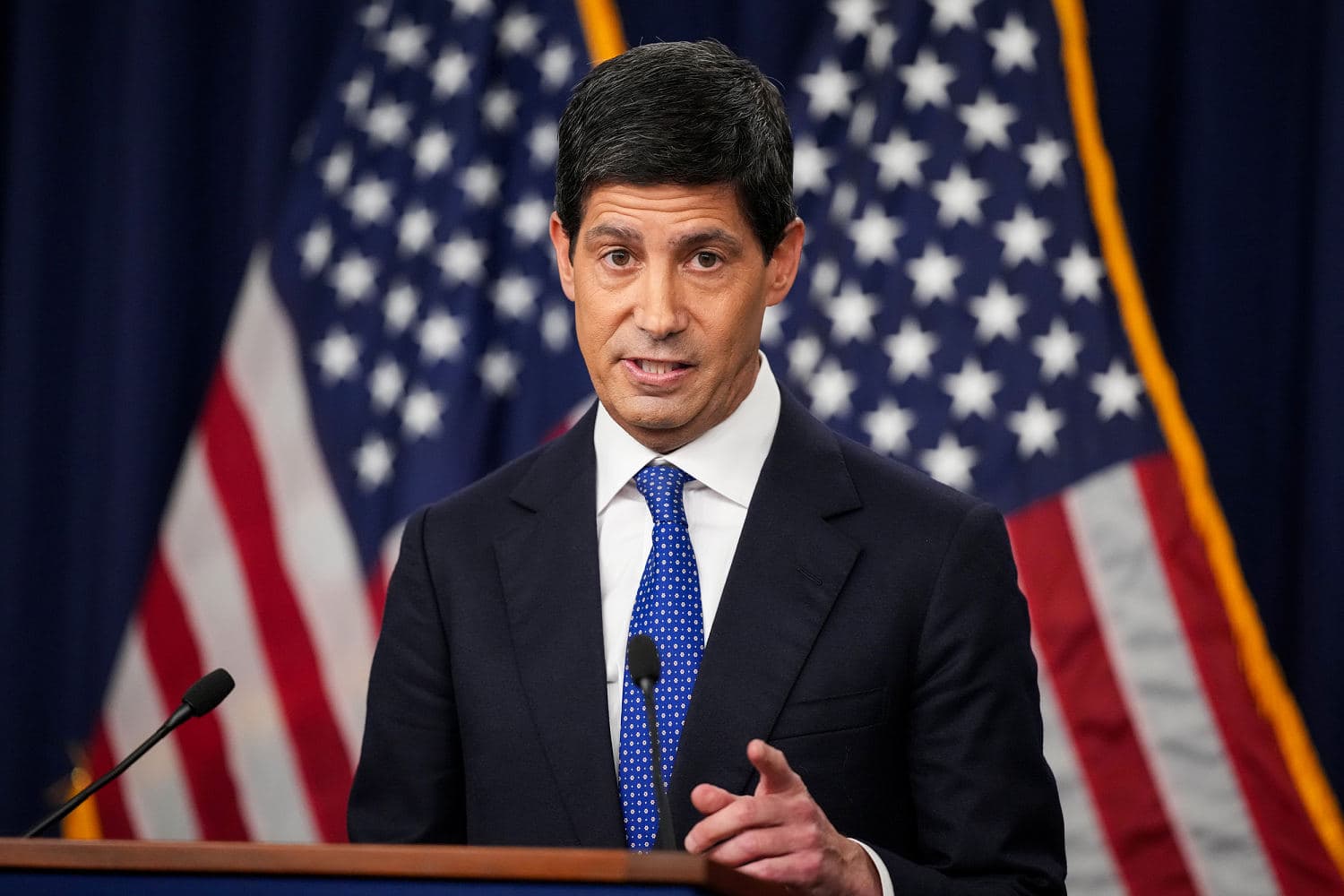
- The policy vote schedule shrinks: Chairman Kevin Warsh announced on October 28, 2026, that the Federal Open Market Committee (FOMC) will reduce the number of meetings dedicated to setting interest rates from eight down to seven in 2027 and six in 2028.
- The meeting cadence remains steady: The committee will continue to convene eight times per calendar year, but will convert one session in 2027 and two sessions in 2028 exclusively into broad strategic economic deliberations without rate votes or policy statements.
- Rates were held constant: The structural announcement arrived alongside the FOMC’s scheduled decision to keep the federal funds rate unchanged, leaving existing benchmark borrowing costs intact for now.
The context you actually need
- A four-decade baseline ends: The FOMC has operated on an eight-meeting annual voting cadence since 1981, establishing the predictable six-week cycle that has governed global treasury desks and debt issuances for 45 years.
- Warsh’s systematic communication overhaul: Since assuming leadership in May 2026, Chairman Warsh has methodically stripped back institutional signaling by shortening official statements, eliminating formal forward guidance, and floating meeting reductions in the July 2026 FOMC minutes.
- Data aggregation over immediate response: The stated institutional rationale centers on providing policymakers extended runways to evaluate accumulating economic indicators rather than reacting to short-term monthly prints.
What's really happening
The decision to decouple physical FOMC gatherings from rate decisions is an intentional structural intervention in market plumbing. For decades, the global financial system anchored its rhythm to eight scheduled rate votes per year. That six-week interval forced institutional investors, corporate treasurers, and sovereign asset allocators into high-frequency positioning around every statement release. Chairman Warsh is dismantling that operational cadence.
By turning one meeting in 2027 and two in 2028 into strategy sessions that yield no rate adjustments and no policy statements, the central bank is deliberately widening the latency between monetary policy interventions. The underlying incentive is structural: high-frequency decision cycles risk amplifying economic noise. When rate-setting bodies vote every six weeks, market participants demand granular adjustments to high-frequency economic reports, which often undergo substantial revisions in subsequent quarters. Extending the functional gap between voting sessions allows macroeconomic data to compound, offering a clearer picture of structural trends before capital costs are altered.
However, this design brings an operational trade-off. In a modern economy where capital moves instantaneously, reducing the number of voting events from eight to six per year concentrates market expectations into fewer, higher-stakes events. When a central bank reduces its decision touchpoints while simultaneously stripping away forward guidance and shortening official text, private markets lose the intermediate calibration mechanisms they rely on to absorb shocks incrementally.
If unexpected economic shocks occur between these elongated intervals, the central bank retains emergency authorities to convene unscheduled meetings. Yet relying on unscheduled policy moves introduces asymmetric friction into asset pricing. The consequence is a structural redistribution of volatility: instead of continuous, low-amplitude repricing distributed across eight annual cycles, capital markets must navigate wider policy plateaus punctuated by sharper adjustments.
For global financial centers operating on dollar pegs or managing substantial cross-border sovereign flows, this recalibration alters liquidity planning. Central banks and commercial lenders tied to the dollar must manage liquidity across wider intervals without the continuous guidance that defined the post-1981 era.
Who feels it first (and how)
- Corporate treasurers and CFOs: Debt-issuance windows become more polarized; teams will face fewer official rate dates to anchor commercial paper, corporate bond pricings, and revolving credit facilities.
- Fixed-income and foreign exchange traders: Traders must price sovereign yield curves across longer stretches without official Fed guidance, increasing the risk premiums embedded in medium-term interest rate swaps.
- Real estate developers and mortgage desks in dollar-pegged hubs: Regional hubs like Dubai—where borrowing costs directly mirror Fed movements via the pegged dirham—will see local lending rates freeze for longer stretches before resetting in larger, less frequent increments.
- Sovereign wealth funds and global macro allocators: Institutional portfolio managers will need to adjust cash-drag assumptions and cross-border hedging durations as quarterly rate expectations consolidate into six primary events.
What to watch next
- The 2027 calendar formalization: Monitor the specific scheduling of the first strategic-only session in fall 2027 to see whether it falls during traditional seasonal liquidity dips or critical fiscal quarters.
- Volatility index divergence: Track rate-volatility indices (such as the MOVE Index) between voting cycles; an upward drift will reveal whether the market is demanding a higher risk premium for the lack of intermediate guidance.
- Emergency session protocols: Watch for commentary regarding the thresholds required to trigger unscheduled FOMC actions, which will signal how high the barrier is for intervening between formal votes.
The FOMC will keep holding eight physical meetings annually, but will formally cut rate-setting votes to seven in 2027 and six in 2028; the federal funds rate was left unchanged at the October 2026 meeting.
Market pricing around the remaining voting meetings will become significantly more concentrated, raising the trading volume and bid-ask spreads on policy announcement days.
Whether the reduction in scheduled rate adjustments will force the central bank to rely more frequently on unscheduled inter-meeting interventions during periods of sudden financial stress.
Frequently Asked Questions
- Why it matters?
- The Federal Reserve is altering an operational framework unchanged since 1981, stretching the intervals between benchmark rate decisions and reshaping how global liquidity prices risk.
- What happened (in 30 seconds)?
- The policy vote schedule shrinks: Chairman Kevin Warsh announced on October 28, 2026, that the Federal Open Market Committee (FOMC) will reduce the number of meetings dedicated to setting interest rates from eight down to seven in 2027 and six in 2028. The meeting cadence remains steady: The committee will continue to convene eight times per calendar year, but will convert one session in 2027 and two sessions in 2028 exclusively into broad strategic economic deliberations without rate votes or p
- What's really happening?
- The decision to decouple physical FOMC gatherings from rate decisions is an intentional structural intervention in market plumbing. For decades, the global financial system anchored its rhythm to eight scheduled rate votes per year. That six-week interval forced institutional investors, corporate treasurers, and sovereign asset allocators into high-frequency positioning around every statement release. Chairman Warsh is dismantling that operational cadence. By turning one meeting in 2027 and two
- Who feels it first (and how)?
- Corporate treasurers and CFOs: Debt-issuance windows become more polarized; teams will face fewer official rate dates to anchor commercial paper, corporate bond pricings, and revolving credit facilities. Fixed-income and foreign exchange traders: Traders must price sovereign yield curves across longer stretches without official Fed guidance, increasing the risk premiums embedded in medium-term interest rate swaps. Real estate developers and mortgage desks in dollar-pegged hubs: Regional hubs lik
- What to watch next?
- The 2027 calendar formalization: Monitor the specific scheduling of the first strategic-only session in fall 2027 to see whether it falls during traditional seasonal liquidity dips or critical fiscal quarters. Volatility index divergence: Track rate-volatility indices (such as the MOVE Index) between voting cycles; an upward drift will reveal whether the market is demanding a higher risk premium for the lack of intermediate guidance. Emergency session protocols: Watch for commentary regarding th
Markets, economy, and company analysis from NYT’s business desk.
"The New York Times is a globally recognized newspaper offering authoritative reporting with a center-left editorial stance."
— A47 Editor
Fed Will Hold Fewer Rate-Setting Meetings Starting Next Year
Federal Reserve Chairman Kevin M. Warsh said the central bank will vote on interest rates seven times in 2027 and six times in 2028, down from the eight meetings it has traditionally held each year, as the Fed begins reducing its rate-setting schedul...
Macro commentary, policy analysis, growth/inflation themes, and global outlooks.
"Contextual macro coverage that complements day-to-day market headlines."
— A47 Editor
Warsh to attend Fed jobs and productivity task force hearing to refine views
Federal Reserve Chairman Kevin Warsh is set to attend a Fed jobs and productivity task force hearing as he works to refine his views on the economy, according to the base report from Investing.com, which describes the development in neutral terms.
Global business headlines with AI angles.
"General business outlet that frequently covers AI."
— A47 Editor
Fed Chair Warsh Says Current Conditions are Helping Create a Path Toward Lower Inflation
Federal Reserve Chair Kevin Warsh said in a press conference following the central bank's policy decision that recent changes in financial and credit conditions are helping create a path toward lower inflation, while the Fed chose to leave interest r...
Global markets, investing, and macroeconomics from a premier financial newsroom.
"Bloomberg is respected for in-depth financial reporting and data-driven analysis."
— A47 Editor
Fed's Warsh Says Monetary 'Medicine' Starting to Work
The Federal Open Market Committee voted 10-2 to hold its benchmark federal funds rate in a range of 3.75% to 4%, leaving borrowing costs unchanged, with Governor Lisa Cook and Cleveland Fed President Beth Hammack dissenting. At a news conference afte...
National headlines across the United States including breaking stories and societal issues.
"NBC News is a mainstream media outlet known for comprehensive national and international news coverage with a centrist to slightly left-leaning editorial tone."
— A47 Editor
Fed plans to eliminate some rate-setting meetings, chairman says
Federal Reserve Chairman Kevin Warsh said Wednesday that the Fed plans to eliminate some rate-setting meetings over the next couple of years, according to NBC News. The announcement came the same day the Fed voted to hold interest rates steady at 3.7...