
Brent Crude Falls Below $100 as Post-Midterm Democratic Gains Revive Hopes for U.S.-Iran War De-escalation
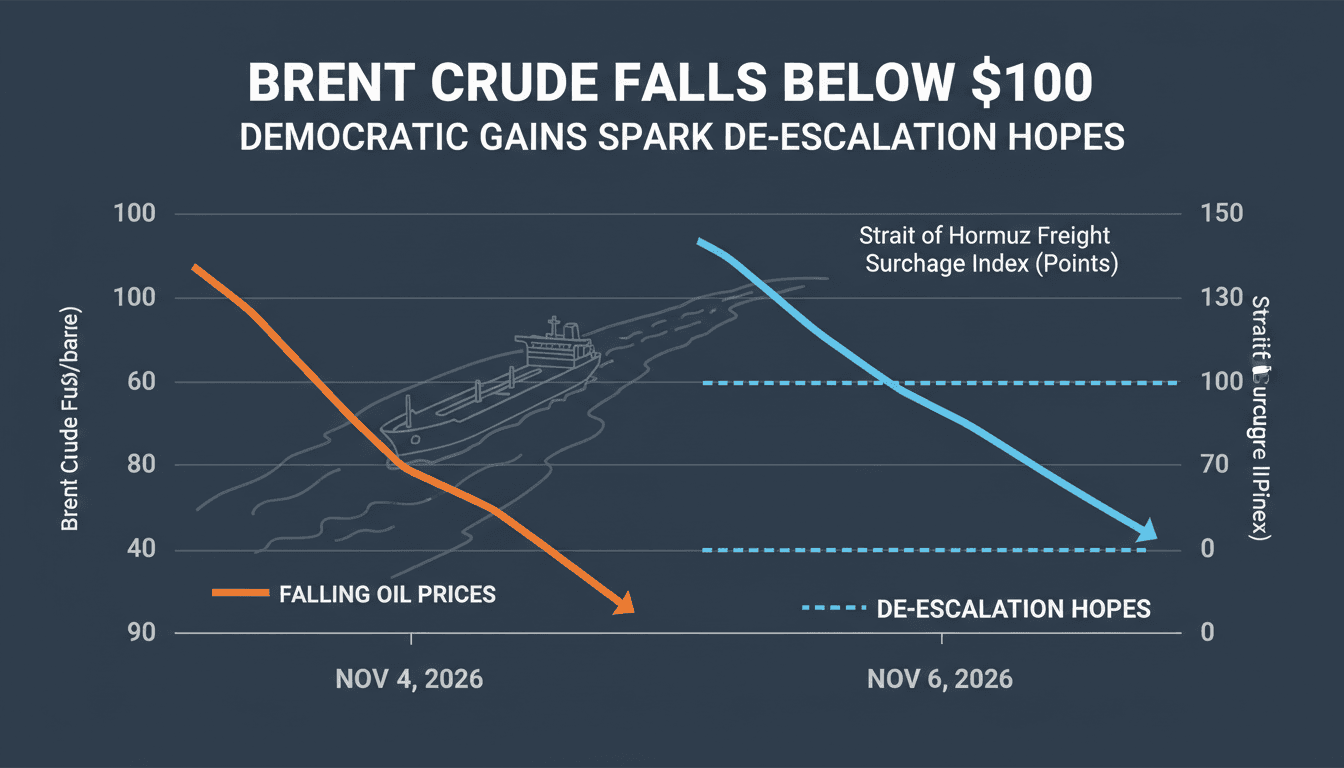
Why it matters
Crude pricing below $100 per barrel signals that commodities markets are aggressively repricing geopolitical risk downward following shifts in domestic legislative incentives within the world's largest economy.
What happened (in 30 seconds)
- Prices broke triple digits: Brent crude fell to between $94 and $97 per barrel between November 4 and November 6, 2026, recording an 8% single-day drop on November 4 down to $94.62, while West Texas Intermediate slipped to $88.12.
- Midterm results shifted expectations: Markets adjusted immediately after the U.S. midterm elections delivered congressional control to Democrats, altering the balance of power in Washington.
- Leadership linked ballots to barrels: Vice President JD Vance publicly attributed Republican electoral defeats to elevated energy costs generated by the eight-month-old conflict with Iran, reinforcing market expectations of an impending policy pivot toward diplomatic de-escalation.
The context you actually need
- An eight-month regional disruption: Since early 2026, military engagements and regional militia activity—including drone and missile strikes in the Strait of Hormuz and Red Sea operations by Houthi militants—have disrupted Gulf oil transits, keeping a sustained risk premium embedded in global shipping rates.
- Electoral accountability on fuel prices: Elevated energy prices directly drove up domestic cost-of-living metrics in the United States, creating an acute political liability that culminated in decisive losses for the governing party in Congress.
- A divided legislative branch: A Democratic-controlled Congress introduces direct institutional constraints on future military funding allocations, creating structural incentives for the executive branch to pursue negotiated off-ramps rather than expanded operations.
What's really happening
The drop below $100 per barrel is not an indicator that physical oil supply expanded overnight. Instead, it reflects a rapid recalibration of the geopolitical risk premium that traders had factored into futures contracts over the past eight months.
When military operations disrupted maritime logistics across the Strait of Hormuz and the southern Red Sea earlier in 2026, energy traders added an operational buffer to every barrel shipped out of the Gulf. That premium reflected the probability of a widening confrontation that could physically close regional waterways. The outcome of the November 2026 U.S. midterm elections inverted those calculations.
The primary mechanism driving this market shift is institutional leverage. Under a divided federal government where the opposition controls Congress, the administrative pathway to funding protracted naval and military actions narrows. Markets recognize that executive branch priorities must adapt when continued conflict carries a demonstrated domestic electoral penalty. Vice President JD Vance's public attribution of congressional losses to conflict-driven fuel inflation served as an operational signal: sustaining high energy prices is no longer politically viable for the current administration.
Consequently, trading desks moved from pricing in a potential supply disruption to pricing in an incentive-driven push for diplomatic de-escalation.
However, the physical mechanics of regional energy logistics remain complicated. While paper markets sold off contracts—driving a weekly decline of nearly 14%—physical supply chains in the Gulf are still operating under real operational friction. Regional maritime routes continue to face intermittent harassment from armed groups, meaning private maritime insurers have not yet retracted wartime coverage rates.
To prevent physical cargoes from losing competitiveness against falling benchmark prices, major regional suppliers like Saudi Aramco have had to calibrate their official selling prices, adjusting differentials to help international buyers absorb elevated freight and protection expenses. The price drop represents a structural bet by financial markets that the political incentives for de-escalation will override the operational momentum of an active regional theater.
Who feels it first (and how)
- Corporate procurement heads: Operating budgets exposed to aviation fuel, diesel, and maritime bunker fuel gain short-term margin relief as prompt-month energy contracts fall toward the mid-$90s.
- Gulf trading and logistics operators: Companies managing supply chains through Dubai and Gulf ports see relief on base fuel costs, though real freight charges remain partially elevated due to ongoing security precautions along regional waterways.
- Regional state producers: Energy giants like Saudi Aramco must actively adjust their pricing structures and discounts to offset persistent transit costs for end-customers while managing lower headline fiscal revenues.
- Institutional commodity desks: Traders holding long positions on crude volatility face accelerated margin adjustments following the 14% weekly drop, forcing capital reallocations across broader macro portfolios.
What to watch next
- Congressional appropriations schedules: Monitor legislative debates on supplemental defense spending; formal spending caps or statutory constraints on Middle East military operations will confirm whether markets were correct to price in lower escalation risk.
- Saudi Aramco monthly price differentials: Track whether Gulf producers widen or narrow their official selling price discounts to Asian and European buyers, which reveals whether physical freight costs are normalizing or remaining elevated.
- Maritime insurance premiums in Hormuz: Watch commercial marine underwriting rates for tankers transiting the Strait of Hormuz; until these surcharges drop, the physical cost of moving oil remains disconnected from the benchmark paper price.
Brent crude fell to $94–$97 per barrel following the November 4 midterms, locking in a weekly decline of nearly 14%, while U.S. leadership publicly cited war-related energy inflation as the primary cause of legislative defeats.
The combination of a divided Congress and clear voter sensitivity to fuel prices will disincentivize further naval escalation in Gulf shipping corridors over the near term.
Whether regional militia networks will pause maritime actions in the Red Sea and Gulf, and whether diplomatic engagement can yield a formal framework before physical logistics suffer further disruptions.
Frequently Asked Questions
- Why it matters?
- Crude pricing below $100 per barrel signals that commodities markets are aggressively repricing geopolitical risk downward following shifts in domestic legislative incentives within the world's largest economy.
- What happened (in 30 seconds)?
- Prices broke triple digits: Brent crude fell to between $94 and $97 per barrel between November 4 and November 6, 2026, recording an 8% single-day drop on November 4 down to $94.62, while West Texas Intermediate slipped to $88.12. Midterm results shifted expectations: Markets adjusted immediately after the U.S. midterm elections delivered congressional control to Democrats, altering the balance of power in Washington. Leadership linked ballots to barrels: Vice President JD Vance publicly attribu
- What's really happening?
- The drop below $100 per barrel is not an indicator that physical oil supply expanded overnight. Instead, it reflects a rapid recalibration of the geopolitical risk premium that traders had factored into futures contracts over the past eight months. When military operations disrupted maritime logistics across the Strait of Hormuz and the southern Red Sea earlier in 2026, energy traders added an operational buffer to every barrel shipped out of the Gulf. That premium reflected the probability of
- Who feels it first (and how)?
- Corporate procurement heads: Operating budgets exposed to aviation fuel, diesel, and maritime bunker fuel gain short-term margin relief as prompt-month energy contracts fall toward the mid-$90s. Gulf trading and logistics operators: Companies managing supply chains through Dubai and Gulf ports see relief on base fuel costs, though real freight charges remain partially elevated due to ongoing security precautions along regional waterways. Regional state producers: Energy giants like Saudi Aramco
- What to watch next?
- Congressional appropriations schedules: Monitor legislative debates on supplemental defense spending; formal spending caps or statutory constraints on Middle East military operations will confirm whether markets were correct to price in lower escalation risk. Saudi Aramco monthly price differentials: Track whether Gulf producers widen or narrow their official selling price discounts to Asian and European buyers, which reveals whether physical freight costs are normalizing or remaining elevated.
U.S. business news, corporate developments, and economy.
"The Wall Street Journal is respected for deep financial and economic reporting with a center-right editorial perspective."
— A47 Editor
Oil Slides Below $100 a Barrel, With Focus on Iran Outlook After U.S. Midterms
Brent crude fell below $100 a barrel in a sharp weekly drop as traders awaited Washington's next move on Iran, according to The Wall Street Journal. The decline followed a volatile stretch in which prices were pressured by uncertainty over U.S.-Iran ...
Oil, metals, and agriculture: supply/demand headlines, OPEC chatter, inventories, and price action.
"Solid tape for energy and metals traders tracking macro and micro catalysts."
— A47 Editor
Oil on pace for sharp weekly drop amid post-midterms hopes for Iran war detente
Oil prices were on track for a sharp weekly decline, with the base Investing.com report tying the drop to hopes that a détente over the Iran conflict could follow the US midterm elections, a shift that pushed sentiment in oil markets firmly negative.
Arabic-language economic and business reporting with strong UAE market relevance.
"Emarat Al Youm business coverage often centers UAE property, banking, consumer issues, and economic policy."
— A47 Editor
النفط يتجه إلى انخفاض أسبوعي حاد النفط يتجه إلى انخفاض أسبوعي حاد
Oil prices are on track to record a sharp weekly decline, as markets anticipate that the conflict involving Iran may subside following electoral losses suffered by the party Hezbollah (حزب), according to a report published by Emarat Al Youm on 6 Nove...
Markets desk coverage, trading insights, and investor updates.
"WSJ’s markets reporting provides in-depth analysis and context for investors."
— A47 Editor
Oil Set for Sharp Weekly Fall After U.S. Midterms
Oil prices fell below $100 a barrel after the U.S. midterm elections, as investors focused on Washington's next move regarding Iran, marking a sharp weekly decline in crude markets.
Global markets, investing, and macroeconomics from a premier financial newsroom.
"Bloomberg is respected for in-depth financial reporting and data-driven analysis."
— A47 Editor
Oil Swings as Traders Assess Iran War De-Escalation Prospects
Oil prices swung as traders weighed diplomatic efforts to de-escalate the Iran war and reach a resolution that could support energy flows from the Middle East, according to Bloomberg. The move followed a sharp slump earlier in the week as market part...