
China Trade Surplus Surpasses $1 Trillion in First Ten Months of 2026 on Record Pace
Why it matters
A surplus expanding at this speed signals that global capital expenditures in artificial intelligence infrastructure are actively carrying manufacturing margins, even as trade balances face renewed pushback from Western regulators and the IMF.
What happened (in 30 seconds)
- Surpassing the threshold: China recorded a cumulative trade surplus of $1.04 trillion in the first ten months of 2026, crossing the $1 trillion mark a full month earlier than it did in 2025.
- Double-digit trade expansion: Official data from the General Administration of Customs shows October exports rose 35.2% year-on-year, while imports grew 41.6%, generating a single-month surplus of $105.3 billion.
- High-tech export concentration: Semiconductor shipments surged over 111% during the period, driven by global demand for artificial intelligence hardware and advanced components.
The context you actually need
- A widening imbalance: The 2025 full-year surplus established a benchmark of $1.2 trillion; crossing $1 trillion in October puts 2026 on track to exceed that full-year record.
- Domestic headwinds: Subdued local consumption and a prolonged property market correction have reduced domestic absorption, reinforcing industrial reliance on export channels for top-line revenue.
- Institutional friction: The International Monetary Fund and trade officials in the United States and the European Union have raised pressure on Beijing to shift its economic model from outward supply-side manufacturing toward domestic household demand.
What's really happening
The mechanics behind this trade surplus reflect a clear structural divergence between domestic absorption and external capital expenditure. Within the domestic market, the protracted slump in the real estate sector continues to weigh on household balance sheets. When real estate assets soften, domestic consumer spending naturally slows. As a direct consequence, industrial capacity cannot easily clear through internal retail or real estate channels.
Faced with muted local retail demand, industrial balance sheets must deploy their output overseas to maintain operational scale, protect operational employment, and amortize fixed costs. This domestic supply-side pressure coincides with an external buyer profile: the global race to construct artificial intelligence infrastructure. Global data centers, server producers, and consumer technology supply chains are consuming elevated quantities of computational inputs.
Because semiconductor shipments from Chinese facilities expanded by more than 111% through October, the composition of the surplus has heavily skewed toward high-value, high-complexity tech goods. Instead of broad-based, low-margin assembly, advanced electronic and semiconductor outputs are carrying the trade surplus. This hardware specialization accounts for both the speed of the expansion and the sheer volume of net outflows, as average unit prices for advanced tech outpace traditional consumer goods.
The trade dynamic reveals classic economic incentives at work. For producers, continuous factory throughput minimizes the unit cost penalty of idle facilities. For international enterprise buyers, Chinese advanced component suppliers offer the volume needed to meet artificial intelligence buildout timetables.
However, this dynamic intensifies cross-border friction. When export surges occur in high-tech categories rather than purely low-margin textiles, they land squarely in capital-intensive sectors that Western economies seek to onshore or protect. Trading partners in Washington and Brussels face trade deficits that widen faster than domestic industrial policies can absorb. By expanding external surpluses while internal consumption lags, manufacturing ecosystems keep global input prices competitive, but build up political incentives across export destinations to erect retaliatory barriers by early 2027.
Who feels it first (and how)
- Global Hardware and AI Procurement Directors: Gain near-term cost and volume advantages for server assemblies and semiconductor inputs, but face growing administrative exposure to potential cross-border trade restrictions.
- Western Industrial Manufacturers: Encounter intensified price competition in high-value electronic categories, accelerating calls from industry trade groups for trade remedies and anti-dumping investigations.
- Logistics Operators and Regional Trade Hubs: Experience high outbound container volumes and robust freight flows from Asian ports, providing indirect support for transit networks, energy flows, and commodity clearing hubs like Dubai.
- Emerging Market Importers: Benefit from access to high-spec hardware and capital goods at scale, allowing domestic infrastructure projects to advance within tighter capital constraints.
What to watch next
- 2027 Tariff Announcements from the US and EU: Any formal retaliatory filings or administrative reviews will indicate whether the $1.04 trillion run-rate triggers immediate trade restrictions.
- Fourth-Quarter Semiconductor Run-Rates: Tracking whether the 111% export growth pace in semiconductors holds through year-end will reveal whether high-tech hardware demand is plateauing or accelerating.
- Domestic Consumption Policy Indicators: Direct fiscal measures targeting consumer demand or property stabilization will signal if internal buying power can begin absorbing industrial output.
The cumulative ten-month surplus reached $1.04 trillion through October 2026, propelled by a 35.2% export increase and an October surplus of $105.3 billion.
Total 2026 trade surplus figures will exceed the previous full-year record of $1.2 trillion established in 2025, maintaining structural trade friction through mid-2027.
Whether the volume of high-tech exports will prompt formal multilateral tariff actions before year-end, or if import growth—which stood at 41.6% in October—will narrow the gap over the coming quarters.
Frequently Asked Questions
- Why it matters?
- A surplus expanding at this speed signals that global capital expenditures in artificial intelligence infrastructure are actively carrying manufacturing margins, even as trade balances face renewed pushback from Western regulators and the IMF.
- What happened (in 30 seconds)?
- Surpassing the threshold: China recorded a cumulative trade surplus of $1.04 trillion in the first ten months of 2026, crossing the $1 trillion mark a full month earlier than it did in 2025. Double-digit trade expansion: Official data from the General Administration of Customs shows October exports rose 35.2% year-on-year, while imports grew 41.6%, generating a single-month surplus of $105.3 billion. High-tech export concentration: Semiconductor shipments surged over 111% during the period, driv
- What's really happening?
- The mechanics behind this trade surplus reflect a clear structural divergence between domestic absorption and external capital expenditure. Within the domestic market, the protracted slump in the real estate sector continues to weigh on household balance sheets. When real estate assets soften, domestic consumer spending naturally slows. As a direct consequence, industrial capacity cannot easily clear through internal retail or real estate channels. Faced with muted local retail demand, industr
- Who feels it first (and how)?
- Global Hardware and AI Procurement Directors: Gain near-term cost and volume advantages for server assemblies and semiconductor inputs, but face growing administrative exposure to potential cross-border trade restrictions. Western Industrial Manufacturers: Encounter intensified price competition in high-value electronic categories, accelerating calls from industry trade groups for trade remedies and anti-dumping investigations. Logistics Operators and Regional Trade Hubs: Experience high outboun
- What to watch next?
- 2027 Tariff Announcements from the US and EU: Any formal retaliatory filings or administrative reviews will indicate whether the $1.04 trillion run-rate triggers immediate trade restrictions. Fourth-Quarter Semiconductor Run-Rates: Tracking whether the 111% export growth pace in semiconductors holds through year-end will reveal whether high-tech hardware demand is plateauing or accelerating. Domestic Consumption Policy Indicators: Direct fiscal measures targeting consumer demand or property stab
Arabic-language coverage of international news and geopolitics.
"RT Arabic is a Russian state-funded outlet often criticized for promoting Kremlin-aligned narratives."
— A47 Editor
الصين تسجل فائضا تجاريا يتجاوز تريليون دولار
China's customs authority announced on Tuesday that the country's trade surplus reached $1.04 trillion during the first ten months of 2026, driven by growth in exports to global markets.
Curated tech headlines including AI stories.
"Influential aggregator surfacing the day’s top tech/AI links."
— A47 Editor
China's trade surplus hit $1.04T in the first 10 months of 2026, topping $1T for a second year in a row, as AI-driven tech exports offset weak domestic demand (Reuters)
China's trade surplus reached $1.04 trillion in the first ten months of 2026, surpassing the $1 trillion mark for a second consecutive year, as exports of AI-related technology offset weak domestic demand, according to Reuters.
Major U.S. developments and regional news.
"ABC News delivers broad national coverage with a mainstream editorial stance, focusing on accessibility and balanced reporting."
— A47 Editor
China says its trade surplus exceeded $1 trillion for a 2nd straight year, as exports in October surged 35%
China reported that its trade surplus exceeded $1 trillion for a second straight year, as exports in October surged 35%, according to ABC News.
Sports reporting with a focus on Saudi and regional competitions.
"Okaz sports coverage is broad and audience-friendly, with strong attention to Saudi teams and leagues."
— A47 Editor
الفائض التجاري للصين يتجاوز تريليون دولار للعام الثاني توالياً
China's trade surplus surpassed $1 trillion for the second consecutive year, according to the General Administration of Customs, as exports rose 35.2% in October from a year earlier, driven by high-tech goods such as semiconductors and automobiles, w...
Global political, business, and cultural coverage from WSJ international desks.
"The Wall Street Journal offers extensive international reporting with a reputation for financial insight and a center-right editorial stance."
— A47 Editor
China’s Trade Surplus Surged Past $1 Trillion in October
China's trade surplus surged past $1 trillion in October as Chinese exports continued to climb despite broader economic gloom and rising global trade tensions, according to a report from The Wall Street Journal.
Markets, economy, and company analysis from NYT’s business desk.
"The New York Times is a globally recognized newspaper offering authoritative reporting with a center-left editorial stance."
— A47 Editor
China’s Trade Surplus Passes $1 Trillion at Record Pace
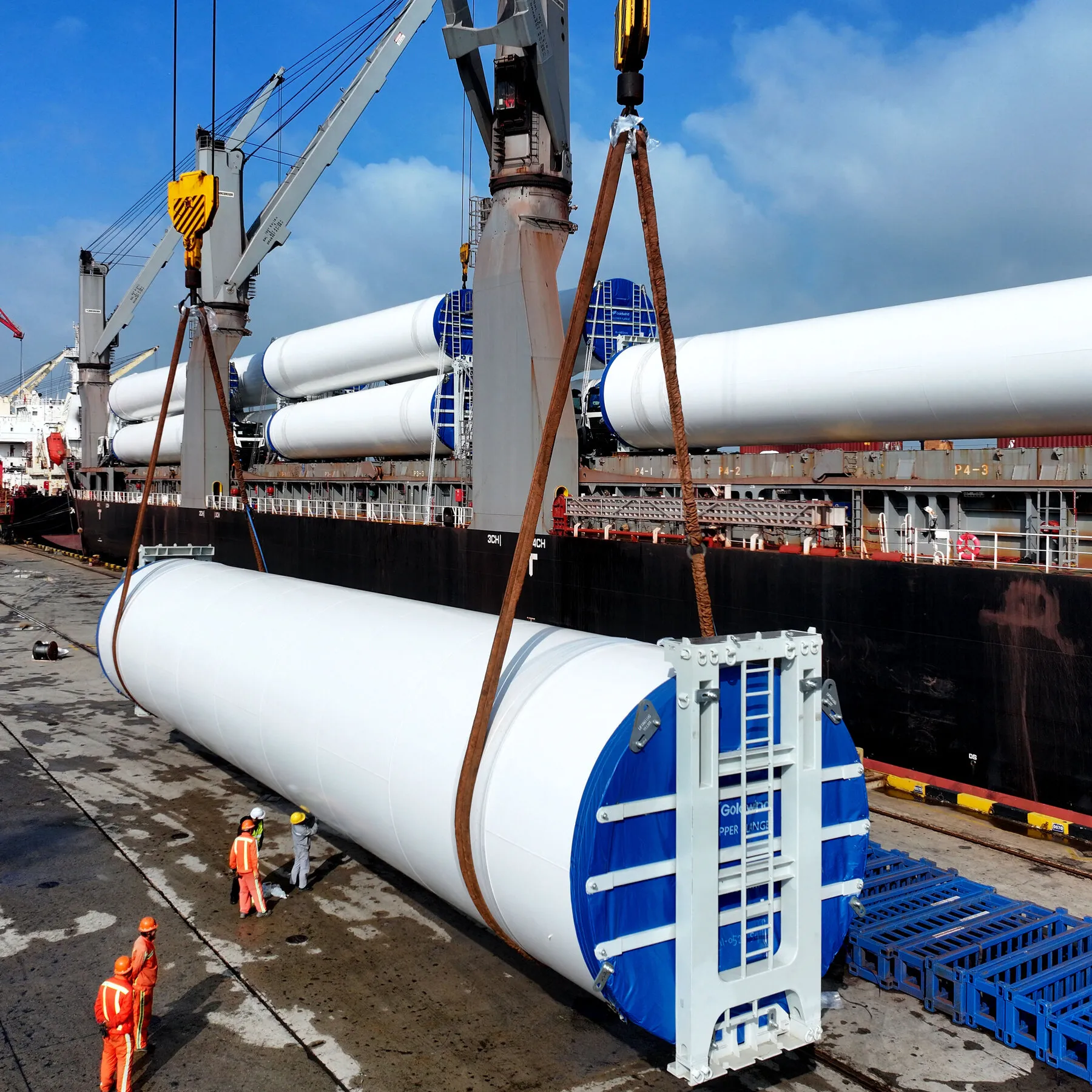
China's trade surplus has passed $1 trillion at a record pace as its factories find eager buyers worldwide, according to The New York Times. Wind turbines loaded at the port of Lianyungang last week were set for export to Oman, illustrating the bread...